Learn how to play pokies like a pro. Our expert guide covers rules, paylines, RTP, and tips for New Zealand players. Play safely and understand the odds today.

How to Play Pokies: A Beginner’s Guide for New Zealand Players

Pokies — the spinning-reel games known elsewhere as slots or fruit machines — are the most-played form of gambling in New Zealand and also the least understood by many of the people feeding them. If you have only ever pressed Spin and hoped, this guide explains what is actually happening behind the reels: how a result is decided, what the symbols and settings do, what the published return figure really means, and the small handful of decisions that change what a session costs and how long it lasts.
How a pokie spin actually works
Every modern pokie, online or in a venue, is driven by a random number generator (RNG) — software that produces thousands of outcomes every second. The instant you press Spin, it locks in whichever outcome is current, and the spinning reels you see are simply an animation of a result that has already been decided. Nothing about the previous spin carries over to the next one.
That single fact kills most pokie myths. There are no hot or cold machines, no streaks that are “due”, and no lucky time of day. A game that has gone two hundred spins without a feature is exactly as likely to pay on the next spin as one that just paid twice in a row. Believing otherwise is the gambler’s fallacy, and it is the most expensive misconception in gambling because it keeps people playing to “correct” a run that was never unbalanced in the first place.
Winning means landing matching symbols in a way the game rewards. On a payline game, that means symbols lining up along one of a fixed number of paths across the reels, usually read from left to right starting at the first reel. On a ways-to-win game there are no fixed paths at all — matching symbols pay wherever they land on adjacent reels. Games range from a single payline up to 243, 1,024 or even 117,649 ways to win.
You will meet two broad types. Three-reel classics have one to five paylines, simple symbols and few extra features, which makes them genuinely good for learning the basics. Five-reel video pokies are the modern standard, with multiple lines or ways, wild and scatter symbols, free-spin rounds and sometimes a progressive jackpot. Newer releases add six or seven reels, cluster payouts, or “Megaways” engines where the number of symbols on each reel changes on every spin.
The symbols and settings, translated
Before the jargon stops meaning anything, here is what the common terms actually do. The one line worth memorising is total bet — the coin value multiplied by the number of active lines. That is the amount that actually leaves your balance on every spin, and it is rarely the number the game displays most prominently.
Pokie Terms Explained
| Term | What it means | Worth knowing |
|---|---|---|
| Payline | A path across the reels where matching symbols pay. Most games pay left to right from the first reel. | Some games pay both ways. |
| Ways to win | No fixed paths — matching symbols on adjacent reels pay wherever they land. | Ranges from 243 up to 117,649. |
| Wild | Substitutes for most symbols to complete a win. Can expand across a reel, stay in place for several spins, or shift a reel at a time. | Rarely substitutes for scatters. |
| Scatter | Pays regardless of position. Three or more usually triggers the free-spins round. | Where much of the return sits. |
| Multiplier | Multiplies a win by a set factor, and often stacks during bonus rounds. | Usually bonus-round only. |
| Total bet | Coin value multiplied by active lines. This is what you actually stake per spin. | The only number that really matters. |
A common tip is to reduce your paylines to spend less. It is the wrong lever. Lower the coin value instead. Cutting lines does shrink your stake, but on many games it also switches off features that need every line active, and it can lock you out of bonus rounds and jackpot eligibility entirely — which is why modern games usually keep the lines fixed. Reducing the coin value costs you nothing but the size of the wins; reducing the lines can cost you the part of the game the return is built around.
All of this is written down in the paytable — the “i” or “?” button tucked into a corner of the game. It lists every symbol’s value, how the bonus triggers, the number of lines, and usually the return percentage and a volatility rating. Reading it takes about two minutes, and it is the only reading that changes anything.
Autoplay, turbo and spin speed
Autoplay is usually presented as a convenience. It is worth understanding why one major regulator took the opposite view and removed it entirely.
In October 2021 the British Gambling Commission banned autoplay from every licensed online slot. It went further: it also prohibited turbo and quick-spin modes, set a minimum spin duration of 2.5 seconds, and stopped operators letting a player run several slots at once. The stated reasoning was that these features remove the player’s decision from each individual wager, speed up losses, and loosen any awareness of the money leaving.
The maths behind that is simple, because the house edge applies per spin, not per hour. At one spin every five seconds, an hour at NZ$1 a spin is roughly 720 spins; on a 96% game the expected cost is around NZ$29. Switch on autoplay with turbo and you can take close to twice as many spins in the same hour — and so pay the edge close to twice as often. Nothing about the odds changed. You simply bought twice as many of the same bet.
New Zealand is heading the same way. Under the rules being brought in for licensed New Zealand operators, autoplay will be prohibited, as will running more than one pokie at a time. Until those licensed sites launch, offshore casinos are not bound by it, so autoplay and turbo are still available on many games reachable from New Zealand today. In the meantime the simplest safeguard is to press the button yourself — and if a game is only enjoyable on autoplay, that is worth noticing in itself.
Before your first spin
A few decisions made once, before you open a game, do far more for a session than anything you can do during it.
Before You Spin Checklist
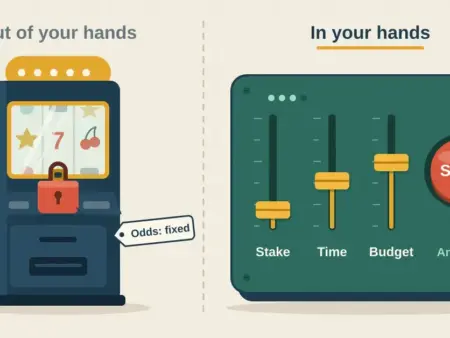
- Decide the amount, and treat it as spent. “I’m playing with $40 for 45 minutes.” When either limit is reached, close the tab. Decide it before you open the game, not after a losing run.
- Set a deposit limit in your account. A limit you set is stronger than a limit you intend, and most operators build in a delay before it can be raised. Do it at registration, while the decision is easy.
- Try it in demo mode first. Free, instant, and it shows you the volatility before your money does. Fifty spins without a feature is normal on a high-volatility game — much better to learn that for nothing.
- Read the return figure in the game, not in a review. The same title can ship at different settings. The number in the information panel is the one that applies to you — and at some casinos it is not published at all, which is itself worth knowing.
- Check the total bet, not the coin value. Coin value multiplied by active lines is what leaves your balance each spin. A “2 cent” coin across 50 lines is a dollar a spin — roughly NZ$900 of turnover in an hour at four seconds a spin.
- Verify your identity now, not at the withdrawal. Photo ID and proof of address are required before any payout. Doing it at registration removes the most common cause of withdrawal delays.
Two of those decisions matter most: decide the amount and the time in advance and treat both as already spent; and read the return figure inside the game rather than in a review, because the same title can ship at different settings and at some casinos the figure is not published in the game at all — which is itself worth knowing before you play there.
Two tools work regardless of which casino you use. A bank gambling block covers every site at once, is free from most New Zealand banks, and carries a delay before it can be lifted. BetBlocker, free software from a registered charity, blocks thousands of gambling sites across your devices and cannot be switched off early once a period is set. Our self-exclusion guide covers both in detail, and neither depends on an operator noticing anything.
Return to player and volatility: the maths
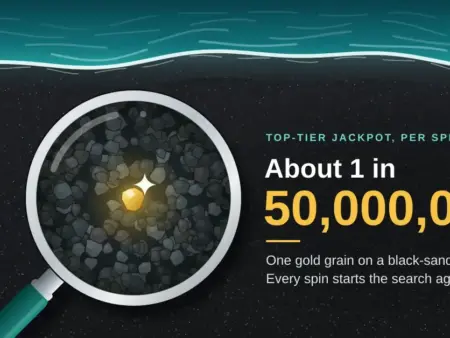
Return to player (RTP) is the share of everything wagered that a game pays back over millions of spins. A 96% game keeps 4% — that 4% is the house edge. It is a long-run average across enormous numbers of spins, not a forecast for your session or your evening; over a single hour you can finish well up or well down regardless of the figure.
As a rule of thumb, aim for 96% or higher. Many well-known titles sit in the 96–97% band — Starburst is around 96.1% and NetEnt’s Blood Suckers around 98% — while some games run at 92–94%, which costs you roughly twice as much over the same number of spins. Our guide to the best-paying pokies explains how to read and compare those figures.
Progressive jackpot games are the exception. A well-known networked progressive such as Mega Moolah returns only about 88% in its base game, because a slice of every wager funds the shared jackpot pool rather than being paid back in ordinary play. Our jackpot guide covers what that trade actually buys.
Volatility describes how the return arrives, not how much of it there is. Low volatility means frequent, smaller wins that stretch a modest budget; high volatility means rare, larger wins and needs a bankroll that can survive long dry runs. Two games with identical RTP can feel completely different, and matching volatility to your budget is often the difference between an hour of play and five minutes. Our online pokies guide goes deeper on choosing a game.
Where New Zealand pokies fit
Pokies in New Zealand come in more than one setting, and they do not all pay the same. Around 15,000 Class 4 gaming machines operate in pubs and clubs, regulated by the Department of Internal Affairs (DIA), which treats Class 4 as high-risk, high-turnover gambling. These machines run under a different minimum standard from online games and are permitted materially lower returns than the 94–98% typical of online play. Our pokie machines guide covers what that gap costs over a session.
Class 4 operators must return a share of their gaming-machine proceeds to authorised community purposes, whereas offshore online operators return nothing to New Zealand — a real difference in where the money ends up, though not one that makes a pub machine a better deal for the person playing it.
Online casino gambling is now covered by the Online Casino Gambling Act 2026. This is law, not a bill before Parliament. The DIA is running a licensing process for up to fifteen operators: an auction was held in September 2026, and in October 2026 around eleven companies were confirmed as eligible to apply for a licence. Operators that did not enter the process must stop serving New Zealanders from 1 December 2026, with penalties of up to NZ$5 million, and the first licences are expected to be issued from early 2027. Licensed operators will have to offer the autoplay ban, mandatory deposit and session limits, and self-exclusion that takes effect quickly. Our New Zealand gambling laws guide sets out the full timeline.
Four mistakes that cost the most
- Chasing losses. Betting more to win back what is gone is the one habit that turns a bad hour into a bad month. The RNG has no memory of what you are owed.
- Skipping the paytable. Two minutes of reading tells you the lines, the bonus trigger, the RTP and the volatility — and it is the only reading that changes anything.
- Playing with no limit on money or time. Decide both in advance and treat them as spent. A limit set during a losing run is not a limit.
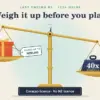
- Ignoring wagering requirements. A NZ$50 bonus at 40x playthrough is NZ$2,000 of turnover, at an expected cost near NZ$80 — more than the bonus itself. Our wagering requirements guide shows how to work the real cost out.
Getting help in New Zealand
Most people who gamble do so without harm. The New Zealand Gambling Survey for 2023/24, released in 2025, found that about 64% of adults had gambled in the previous year. Within that, around 2.4% of adults — roughly 104,000 people — were experiencing moderate-risk or problem gambling, made up of about 1.9% at moderate risk and 0.5% classified as problem gamblers. Gaming machines are among the activities most often linked to harm.
Free, confidential help is available at any hour. The Gambling Helpline is on 0800 654 655 or free text 8006; PGF Services is on 0800 664 262; and the Salvation Army’s Oasis service offers free counselling nationwide on 0800 53 00 00. All of them support whānau and friends as well as the person gambling. Our responsible gaming page has more.
You must be 18 or older to gamble online in New Zealand, and 20 or older to enter a physical New Zealand casino.
Disclaimer
This guide is published for information only. It is not financial, legal or gambling advice, and nothing in it is a recommendation to gamble.
Nothing here is a system, a strategy or a way to win. Pokies have no skill element and no playable edge. Understanding the mechanics changes what a session costs and how long it lasts; it does not change who the game is built to favour. Every figure here describes a long-run average across millions of spins, not the outcome of any session, and no bet described has a positive expected return.
Published return percentages, game features, regulations and operator practices all change over time. Confirm the figures in the game’s own information panel and the current rules on the regulator’s website before relying on anything here.
Sources
- Gambling Commission — new rules to make online games safer by design — the autoplay ban, the turbo and quick-spin ban, and the 2.5-second minimum spin, in force October 2021.
- Senet — New Zealand’s online casino gambling regulations — the game-design rules for licensed New Zealand operators, including the autoplay prohibition.
- DIA — online gambling information for players — the licensing timetable and what it will change for New Zealanders.
- DIA — gambling in pubs and clubs (Class 4) — how non-casino gaming machines are regulated, and the community-funding requirement.
- DIA — gaming machine standards and Class 4 game rules — the standard governing permitted returns and random number generation on New Zealand machines.
- DIA — gambling statistics — machine and venue numbers and community returns.
- New Zealand Gambling Survey (Health New Zealand) — participation rates and risk prevalence in the adult population.
- Safer Gambling Aotearoa — how gambling works — odds, randomness and game design, from Health New Zealand | Te Whatu Ora.
- GambleAware — how gambling product design affects play — speed, near misses and reward scheduling.
- Wizard of Odds — slot machine mathematics — returns, volatility and how the house edge accumulates per spin.
- Wizard of Odds — progressive jackpot returns — why the base game returns less when a jackpot is funded from every wager.
- eCOGRA — independent testing agency for random number generators and return verification.
- BetBlocker — free device-blocking software run by a registered charity.
- Oasis (Salvation Army) — free gambling-harm counselling, nationwide.
- PGF Services — free counselling and financial mentoring, including for whānau and friends.
- Gambling Helpline Aotearoa New Zealand — free, confidential support, 24 hours a day.
Frequently asked questions
Is a pokie ever “due” to pay?
No. Every spin is produced independently by a random number generator with no memory of what came before, so a game that has not paid in hours is no more likely to pay on the next spin. Expecting otherwise is the gambler’s fallacy, and it is the most expensive misconception in gambling.
Should I use autoplay?
It is best avoided. Britain banned autoplay and turbo modes for licensed online slots in 2021, and licensed New Zealand operators will be prohibited from offering it too. It removes your decision from each wager and can roughly double what an hour of play costs, without improving your odds at all.
Can I reduce my paylines to spend less?
Lower the coin value instead. Cutting lines does reduce your stake, but on many games it also disables features and can lock you out of bonus rounds and jackpot eligibility, so you pay less and get less of the game.
What RTP should I look for?
Aim for 96% or higher, and check the figure in the game’s own information panel rather than in a review, because the same title can ship at different settings. If a casino does not publish the figure inside the game, that is worth knowing before you play there.
Do pub pokies pay less than online games?
Generally yes. Class 4 machines in pubs and clubs run under a different minimum standard and are permitted materially lower returns than the 94–98% typical of online pokies, although a share of their proceeds is returned to community funding.
Recent Gambling News