Wondering how to win on pokie machines NZ? Learn the best strategies, RTP secrets, and expert tips for New Zealand players to boost your odds safely.

Pokie Machines in New Zealand: What You Can Control

There is no system, no timing, no machine choice and no betting pattern that will make a pokie machine profitable over time. That has to be the first line, because it is the honest answer to the question that brings most people to a page like this. What follows is what genuinely is within your control — and it is worth more than most people assume.
What you can control, and what you can’t
A pokie (the New Zealand term for a slot machine) has no skill element. Unlike blackjack or poker, there is no decision that improves your result. The return to player, or RTP — the share of all money wagered that a game pays back over the very long run — is fixed in the game’s software, and every spin draws on the same odds regardless of what you do.
That does not leave you powerless. It just moves the question from “how do I win?” to “how much is this costing me, and how do I make it cost less?” The table below separates the two.
Key Points
Nothing you do changes the odds. Several things change the cost.
| What you can control | Changes the odds? | Changes what it costs? |
|---|---|---|
| Choosing a higher-returning game | No | Yes — substantially |
| Betting less per spin | No | Yes |
| Playing fewer spins | No | Yes |
| Matching volatility to your budget | No | Not the cost — the shape of it |
| Stopping after a win | No | Yes — you stop paying |
| Timing, patterns, machine choice, betting systems | No | No |
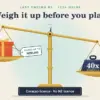
Every spin is independent and carries the same built-in edge, so nothing in your control alters the probability of any outcome. What you control is how much you pay for the entertainment, and that is worth real money. A 96% game against a 90% one, at NZ$1 a spin over a thousand spins, is roughly NZ$40 of expected cost against NZ$100 — the same odds on every spin, sixty dollars of difference.
You cannot play a pokie well the way you can play blackjack or poker well; there is no decision to get right. You can choose a cheaper game, bet less on it and stop earlier, and that is the whole of it. The figures here are long-run averages across enormous numbers of spins, and every game described has a negative expected return.
If you want the mechanics in more depth, our guide on how to play pokies walks through paylines, features and bet sizing step by step.
Pub pokies are a different product
Class 4 gaming machines — the pokies in New Zealand pubs, clubs and TAB venues — are regulated separately from both casinos and online games. The Department of Internal Affairs (DIA), which administers the Gambling Act 2003, classifies them as high-risk, high-turnover gambling, and the rules that apply to them are not the rules that apply online.
Pub Pokies vs Online Pokies
A pub machine and an online pokie are not the same product. They run under different rules, stakes and returns, and carry a different harm profile.
| Feature | Pub & club pokies (Class 4) | Online pokies |
|---|---|---|
| Regulator’s description | Classified by the DIA as high-risk, high-turnover gambling | Covered by the new Online Casino Gambling Act licensing regime |
| Maximum stake | NZ$2.50 per play, a statutory cap | No equivalent cap; set by the game and operator |
| Return to player (RTP) | Permitted materially lower returns; not displayed on the machine | Commonly 94–98%, shown in the game’s information panel |
| Minimum age | 18 (and 20 to enter a casino gambling floor) | 18+ |
| Where the money goes | At least 40% of gaming machine profit funds authorised community purposes | Offshore operators return nothing to New Zealand |
In the Department’s own words, pokies are one of the most harmful forms of gambling and the leading reason people seek gambling-related help in Aotearoa. It cites research finding that 50.3% of people who played pub or club machines at least monthly experienced some level of gambling harm — about half of regular players, not a fringe.
Returns vary even online, because the same title can ship at different settings, so the number in the game’s own information panel is the one that applies to you. Progressive jackpot pokies sit well below the normal range — some near 88% in the base game — because a slice of every wager funds the prize pool.
Two differences deserve spelling out. Every play on a Class 4 machine is capped at NZ$2.50, a statutory limit that applies at every pub and club in the country; casino and online games have no equivalent ceiling. And the money a Class 4 machine takes is distributed differently: at least 40% of gaming machine profit must go to authorised community purposes such as sports clubs and rescue services, host venues keep up to 16%, and the remainder covers gambling duty, GST and the society’s running costs. Offshore online operators return nothing to New Zealand.
None of that makes a pub machine a better deal for you personally — the expected cost is still a loss. It is a real difference in where the loss ends up, and worth knowing rather than being told one option is simply superior.
It is also why the venue rules changed. The Gambling (Harm Prevention and Minimisation) Amendment Regulations 2023, in full effect from 1 December 2023, introduced tighter monitoring: staff must patrol gambling areas several times an hour, track how long individuals have been playing, and act on signs of harm — because the DIA found that existing requirements were not identifying harm consistently.
Three myths worth dropping
Three ideas appear in almost every pokies guide, and all three cost players money.
“Play with house money.” The moment money is in your balance it is yours. There is no separate pot belonging to the casino, and a dollar you won spends exactly like a dollar you deposited. The phrase does damage because it licenses looser decisions: people who mentally reclassify winnings as the casino’s money tend to bet larger, play longer and stop later than they would with the same amount thought of as their own. The sensible version survives if you say it differently — withdrawing after a win is worth doing, not because it beats the odds but because money in your bank account is no longer being wagered. Treat it as a decision to stop, not a strategy.
“Free spin rounds are extra chances at no cost.” Those rounds are paid for out of the base game. A pokie with a generous bonus feature has a correspondingly thinner base game — the return has been moved, not added. It is redistributed return, not extra return, and it is the main reason two games with identical published percentages can feel completely different to play.
“A bonus is free money.” A deposit bonus is a credit you cannot withdraw until you have wagered a multiple of it, and that wagering is done with real money at a real house edge. At 40× on a NZ$100 bonus, that is NZ$4,000 of turnover, which costs roughly NZ$160 on a 96% game to convert the NZ$100. Bonuses can still be worth taking at low multiples — think of them as a discount on entertainment, not a source of funds. Our guide to wagering requirements shows how to work out what any offer really costs; under 30× is usually worth a look, above 50× rarely is.
One related trap: a delay between requesting a payout and receiving it creates the opportunity to cancel the withdrawal and gamble it back. Britain treated this as a harm feature, introducing a temporary block during 2020 and confirming a permanent ban on reverse withdrawals in 2021. The practical lesson is simple — withdraw the whole balance, log out, and leave it alone until it clears.
How the machine actually works
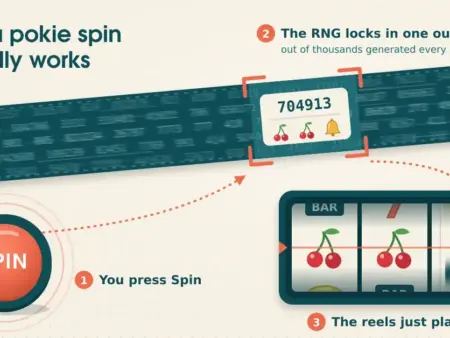
Every spin is generated independently by a random number generator — software producing thousands of outcomes a second — and the result is fixed the instant you press spin. There is no memory of previous spins and no pattern to read. Our explainer on how online casino algorithms work covers this in detail.
That means there are no hot or cold machines, and nothing is ever “due.” A machine that has not paid all week is exactly as likely to pay on the next spin as one that just hit. Believing otherwise is the gambler’s fallacy, and it is the most expensive misconception in gambling.
The return figure is the house edge in reverse. A game returning 96% keeps 4% of everything wagered through it, averaged over millions of spins. Your own session will look nothing like that — you might double your money in twenty minutes or lose it in ten — but the long-run figure is what the game is built to do.
Volatility describes how those returns arrive, not how large they are in total. Low volatility means smaller wins more often and a budget that lasts longer; high volatility means long dry runs and occasional larger hits, and needs a bigger bankroll to see through. Progressive jackpots are the extreme end, with a base return well below normal because a slice of every wager funds the pool — our guide to progressive jackpot pokies covers those. Two games with identical returns can feel completely different, so matching volatility to your budget is the difference between a session that lasts an hour and one that lasts five minutes.
Choosing a game online
Read the information panel first. It shows the return, often a volatility rating, and how the bonus rounds trigger. Two minutes before your first spin, it is the only reading that changes anything.
Aim above 96%. Widely published examples at the better end of the common range include Book of Dead at about 96.21% and Starburst at about 96.09%. Operators sometimes license lower-returning versions of the same title, so check the figure inside the game — the number in the panel is the one that applies to you. For a fuller comparison, see our guide to the best paying pokies in NZ.
A big top-symbol payout is not a value signal. Games where the top symbol pays 200 to 500 times your bet are telling you about volatility, not value. It means the return is concentrated in rare outcomes, and says nothing about whether the game pays more overall.
Use demo mode. It is free, instant, and shows you the volatility before your money does — useful on high-volatility games, where fifty spins without a feature is normal and much better discovered for nothing. Demo play never improves your chances with real money; it simply tells you how a game behaves.
Betting maximum does not help on a standard pokie; it only increases what each spin costs. The one exception is a progressive that requires a qualifying bet for the top tier — and there the sensible choice is either to meet it or to play something else, since there is no point funding a jackpot you cannot win.
Two final habits. Which games sit under “popular” or “featured” is often paid placement rather than editorial judgement, so use the filters — sorting by provider or by return answers your question. And before depositing anywhere, search the site’s name alongside “withdrawal complaints” and “licence check”; it takes two minutes and is the kind of thing most promotional pages avoid printing.
Staying in control
Set a deposit limit before you start, not after a losing run — every reputable operator offers them. Decide the amount before you open the app or walk into the venue, and treat it as spent, the way you would a ticket to something.
Never top up mid-session. That single decision is what turns a fifty-dollar evening into a three-hundred-dollar one.
Warning signs worth taking seriously include spending more than you planned, playing to recover losses, hiding it from people close to you, feeling anxious when you are not playing, and cancelling a withdrawal you had already requested.
Venue exclusion carries legal weight. A New Zealand venue must offer self-exclusion on request, staff are trained to process it, and the venue commits an offence if it lets an excluded person gamble — different in kind from anything an offshore website offers. The Multi-Venue Exclusion scheme lets you exclude yourself from many venues in your area with a single form; ask at any venue or through Safer Gambling Aotearoa. Our guide to self-exclusion options also covers bank gambling blocks and device-blocking software.
New Zealand is also changing how online play is regulated. Under the Online Casino Gambling Act, the DIA is licensing a limited number of operators (up to 15): unlicensed sites must leave the New Zealand market, licensed ones must meet set player-protection standards, and a public register and a registration icon will show which sites are approved. Players who stay on unlicensed platforms do not get those protections.
Free, confidential help is available at any hour. The Gambling Helpline is on 0800 654 655, or free text 8006. PGF Services, on 0800 664 262, also offers free financial mentoring, and the Salvation Army’s Oasis centres are on 0800 53 00 00. All of them support family, whānau and friends as well as the person gambling.
You must be 18 or older to play pub and club pokies, and 20 or older to enter the gambling floor of a New Zealand casino.
Disclaimer
This page is published for information. It is not financial, legal or gambling advice, and nothing on it is a recommendation to gamble. You must be 18 or older to play pub and club pokies in New Zealand, and 20 or older to enter the gambling floor of a casino.
Despite the question in the title, there is no way to win on a pokie machine over time, and nothing here is a system. Pokies have no skill element and no playable edge: no timing, pattern, machine choice, staking plan or betting system changes the probability of any spin. What this page describes is what a session costs and how to make it cost less — not a way to come out ahead.
Return percentages and expected-cost figures are long-run averages across enormous numbers of spins, not predictions of any session, and every game described has a negative expected return. Published returns vary by game version and are not shown on a Class 4 machine at all. Regulations, licensing and bonus terms change; confirm the current position on the regulator’s own website before relying on it.
Gambling costs money over time by design. Decide what you will spend before you start and treat it as spent. Free, confidential support is available in New Zealand 24 hours a day on 0800 654 655, or by free text to 8006.
Reference sources
- DIA — reducing pokies harm — the Department’s statement that pokies are among the most harmful forms of gambling and the leading reason people seek help.
- DIA — minimising gambling harm — the 50.3% figure for monthly pub and club machine players, the 2023 amendment regulations and venue monitoring duties.
- DIA — gambling in pubs and clubs (Class 4) — the high-risk, high-turnover classification and how the Class 4 sector is licensed.
- DIA — gaming machine standards and Class 4 game rules — the technical standards behind permitted returns and the maximum stake.
- PGF Services — Class 4 gambling fact sheet — how gaming machine profit is distributed, including the 40% minimum to community purposes.
- Safer Gambling Aotearoa — how gambling works — odds, randomness and the house edge, from Health New Zealand | Te Whatu Ora.
- Safer Gambling Aotearoa — blocking gambling and venue exclusion — bank blocks, blocking software and the Multi-Venue Exclusion scheme.
- Wizard of Odds — slot machine mathematics — returns, volatility and how the house edge accumulates per spin.
- Wizard of Odds — progressive jackpot returns — why the base game returns less when a jackpot is funded from every wager.
- GambleAware — how gambling product design affects play — near misses, losses disguised as wins, and speed of play.
- UK Gambling Commission — prohibition of reverse withdrawals — why cancelling a withdrawal is treated as a harm feature and was banned for remote operators.
- DIA — information for online casino customers — the new licensing regime, the public register and what it changes for players.
- BetBlocker — free device-blocking software, run by a registered charity.
- Salvation Army Oasis — free gambling-harm counselling, nationwide.
- PGF Services — free counselling and financial mentoring, including for whānau and friends.
- Gambling Helpline Aotearoa New Zealand — free, confidential support, 24 hours a day.
Frequently asked questions
Can I improve my odds on pokies?
No. Nothing changes the probability of any spin. You can choose a cheaper game, bet less and stop earlier, which changes what the game costs you, not what it pays.
Is there a maximum bet on a pub pokie?
Yes. NZ$2.50 per play, a statutory cap that applies at every Class 4 venue in New Zealand. Casino and online games have no equivalent limit.
Is a machine that hasn’t paid out “due” for a win?
No. That is the gambler’s fallacy. Every spin is independent and carries the same probability, regardless of what came before it.
Do pub machines pay less than online pokies?
Generally yes. Class 4 machines run under a different minimum standard that permits materially lower returns than the 94–98% common online, and the figure is not displayed on the machine.
Should I bank my winnings and play with the profit?
Withdraw it if you want to keep it, but there is no “profit” that spends differently. Once money is in your balance it is yours, and every spin after a win costs exactly the same as every spin before it.
Recent Gambling News