Learn best paying pokies nz with our NZ guide — rules, strategy, RTP, and tips to play smarter.

Best Paying Pokies in NZ: RTP, Volatility and Payouts Explained

For New Zealand players, the phrase “best paying pokies” points to one thing you can actually measure: how much a game is built to return over the long run. That figure is the Return to Player (RTP) percentage, and it works alongside volatility and hit frequency to shape how a session really feels. This guide explains what those terms mean, how payout percentages are set and audited, how a few well-known titles compare, and what New Zealand’s new online gambling rules mean for Kiwi players in 2026 — without pretending any pokie can be made to pay on demand.
Key Points
- Best paying = highest RTP: aim for a Return to Player percentage of 96% or higher.
- RTP is a long-run average, not a promise for your session; the house edge (100% minus RTP) always favours the operator over time.
- Volatility is separate from RTP: low volatility pays small and often, high volatility pays rarely but larger.
- Every spin is independent (RNG-driven), so no game is ever “due” and no strategy changes the odds.
- Check the in-game info panel for the exact RTP of the version being run.
- NZ law is changing: the Online Casino Gambling Act 2026 is in force, the DIA will license up to 15 operators, and no operator holds a DIA licence yet.
What “best paying” actually means
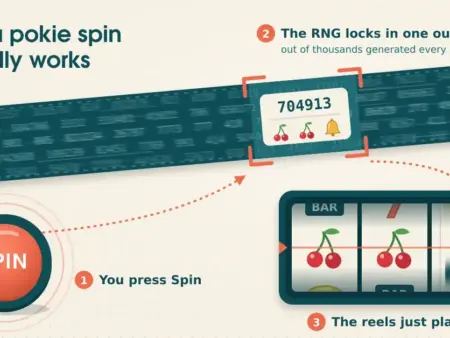
A pokie (the New Zealand and Australian word for a slot machine) is driven entirely by a Random Number Generator, or RNG — software that produces an independent, unpredictable result on every spin. Because every spin is independent, “best paying” cannot mean a game that is due to pay. It means a game whose published maths give players more back, on average, across a very large number of spins. Three numbers describe that maths.
Return to Player (RTP)
RTP is the share of all money wagered that a game is designed to pay back over millions of spins. A pokie with a 96% RTP is built to return about NZ$96 for every NZ$100 staked over the long term. It is a statistical average, not a promise for your session: over a few hundred spins you can finish well above or well below that figure. When people hunt for high-paying pokies, they are usually looking for titles with an RTP of 96% or higher, since that is roughly the industry’s modern baseline.
House edge
The house edge is simply the flip side of RTP: 100% minus the RTP. A 96% RTP game carries a 4% house edge, meaning the operator expects to keep about NZ$4 of every NZ$100 wagered over time. The house edge is always positive, so the mathematics favour the operator over the long run on every pokie, no matter how high the RTP. Understanding this is the core of knowing how pokies actually work.
Volatility and hit frequency
Volatility (also called variance) describes how wins are distributed, and it is independent of RTP. A low-volatility pokie pays small amounts often; a high-volatility pokie pays rarely but can pay big. Two games can share a 96% RTP yet feel completely different because of volatility. Hit frequency is a related figure: it is how often any winning combination lands, regardless of size. A game can have a high hit frequency but low average payouts, or vice versa. Providers rarely publish volatility as a single number, so it is usually described as low, medium or high and inferred from the paytable and maximum-win potential.
How RTP is set and why it varies
Game studios build the RTP into a pokie’s maths model before release, and independent testing laboratories such as eCOGRA, iTech Labs and GLI verify that the live RNG matches the stated model. Two points often surprise players:
- The same game can ship with different RTP settings. Many studios release a title in several configurations (for example 96.5%, 94% and 92%), and the operator chooses which to run. That is why the “RTP” you see quoted online is not always the version a given site uses.
- The game’s info screen is the source of truth. The actual RTP for the version you are playing is shown in the in-game information or help panel, not in marketing copy. Checking it before you spin is the single most reliable habit for a payout-focused player.
Because the RNG is what ultimately decides each outcome, it helps to understand how online casino algorithms work rather than relying on myths about “hot” or “cold” machines.
Comparing pokie payout profiles
The table below shows commonly published RTP figures for several well-known titles, alongside their volatility profile and type. Treat the numbers as indicative: as noted above, operators may run alternative RTP versions, so always confirm against the in-game info panel. The point of the comparison is to show how RTP and volatility combine, not to rank games as “winners”.
RTP Comparison
| Pokie | Provider | Published RTP* | Volatility | Type |
|---|---|---|---|---|
| Blood Suckers | NetEnt | ~98% | Low | Fixed payout |
| Starburst | NetEnt | ~96.09% | Low | Fixed payout |
| Book of Dead | Play’n GO | ~96.21% | High | Fixed payout |
| Mega Moolah | Games Global (Microgaming) | ~88.12% (base game) | High | Progressive jackpot |
*Indicative figures from provider and testing-lab information. Operators may run alternative RTP versions, so confirm the live figure in each game’s info panel.
Reading across the table, a classic low-volatility title with a high RTP (such as Blood Suckers) is built for steady, frequent small returns, while a progressive game like Mega Moolah shows a much lower base-game RTP because a slice of every bet is diverted to fund the jackpot pool.
Progressive jackpots versus fixed-payout pokies
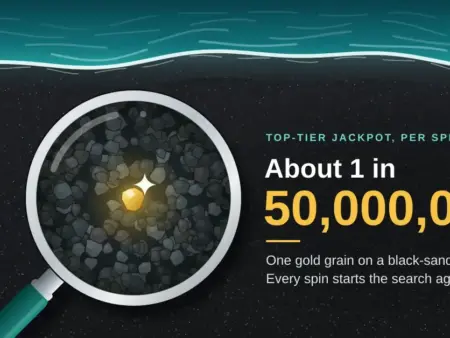
A progressive jackpot is a prize that grows every time anyone plays the linked game across a network of casinos, sometimes reaching several million NZD. The trade-off is mathematical: because part of each wager feeds the jackpot, the base-game RTP of a progressive is usually lower than that of a comparable fixed-payout pokie. In pure payout terms, a high-RTP fixed-jackpot game typically offers better long-run value than chasing a life-changing but extremely unlikely top prize. Whether that trade-off is worthwhile depends on what you want from the session — the dream of a rare, huge win, or more consistent returns. If the jackpot chase appeals to you, it is worth understanding the realistic odds behind progressive jackpot pokies before committing a larger budget.
Pokies or slots? Clearing up the terminology
There is no mechanical difference between a “pokie” and a “slot”. “Pokies” is the local term used in New Zealand and Australia; “slots” is used in the United Kingdom, United States and most of the rest of the world. The games, the RNG, the RTP and the volatility are identical — only the name changes. You will see both words used interchangeably across the range of online pokies available in New Zealand.
The legal picture: online casino regulation in New Zealand (2026)
This is where a lot of older guides are now wrong. New Zealand has historically had no domestic licensing system for online casinos, so Kiwis played on offshore sites that were not regulated here. That is changing. The Online Casino Gambling Act 2026 is now in force, and the Department of Internal Affairs (DIA) is building a licensing regime through its Online Gambling Regulatory Implementation programme.
- The DIA will license up to 15 online casino operators, with no single operator permitted to hold or control more than three licences.
- The process runs in stages: expressions of interest (held mid-2026), a competitive auction (expected around September 2026), then full licence applications. Applicants pay a NZ$19,000 application fee and must demonstrate access to at least NZ$7.5 million in capital.
- Licences are expected to be issued in early 2027, with the regulated market anticipated to be fully operational during 2027.
- As of late 2026, no operator yet holds a DIA licence. That means the New Zealand-regulated market is not live yet, and any site currently accepting Kiwi players is doing so from offshore, outside New Zealand’s new consumer protections.
Once the regime is live, licensed operators will also face advertising and harm-minimisation rules. For the fuller background, see our guides to New Zealand’s gambling laws and the specifics of licensing for online pokies. The only long-standing NZ-regulated casino gambling is land-based, at venues such as those covered in our SkyCity Auckland casino review.
Checking a site is safe and fair
A high RTP is meaningless if the platform holding your money is not trustworthy. While the DIA regime beds in, these are the checks that matter most:
- Regulatory status: look for a current licence and, in time, a New Zealand DIA licence. Until DIA licences are issued, understand that offshore licences (from jurisdictions such as Malta or the UK) do not give you New Zealand regulatory recourse.
- Independent RNG testing: transparent certification from laboratories such as eCOGRA, iTech Labs or GLI indicates the payout percentages are audited rather than self-reported.
- Published RTP information: reputable games show RTP in the info panel; reputable sites do not hide it.
- Responsible-gambling tools: deposit, loss and session limits, time-outs and self-exclusion should be built in and easy to find.
- Clear terms: bonus wagering requirements and withdrawal limits should be stated plainly, not buried.
Common mistakes payout-focused players make
- Confusing high RTP with frequent wins. A 97% RTP, high-volatility game can still drain a modest balance quickly, because the returns are concentrated in rare large hits.
- Ignoring the version actually in play. Quoting a game’s “best” RTP from a review while the site runs a lower-RTP version is a frequent error — always check the in-game panel.
- Letting a bonus override the maths. High wagering requirements can cancel out the value of playing a high-RTP title; read the bonus terms first.
- Chasing losses. Because spins are independent, a game is never “due”. Increasing stakes to recover losses only increases exposure to the house edge.
- Missing the max-bet rule. On some games, qualifying for the top paytable tier or jackpot requires a maximum bet; playing below it quietly caps your potential return.
How to read a pokie before you play
A simple, repeatable routine keeps a session disciplined and payout-aware:
- Open the in-game info or help panel and note the stated RTP for that specific version.
- Check the volatility rating and maximum win (often shown as a multiple of your stake, e.g. 5,000x) to judge whether the payout rhythm suits your budget.
- Read the paytable to see which symbols trigger bonus rounds, multipliers or free spins.
- Confirm whether a max bet is required to unlock the top tier or any jackpot.
- Set a deposit and loss limit before you start, and size your bet so your bankroll covers a reasonable number of spins rather than a few expensive ones.
Who high-RTP pokies suit
High-RTP, lower-volatility pokies suit players who value a longer, steadier session and treat the spend as entertainment. Players chasing a rare, very large outcome may prefer high-volatility or progressive titles, accepting a lower base RTP and longer dry spells in exchange. Neither choice changes the fundamental fact that the house edge applies over time, so the right pick is the one that matches your budget and tolerance for swings — not the one that promises to “pay”.
Responsible gambling in New Zealand
This article is general information, not advice, and it is intended for adults. Gambling is a form of paid entertainment, not a way to make money: every pokie carries a built-in house edge, no strategy or “demo play” changes the odds, and losses over time are the statistically expected outcome. Set a budget you can afford to lose, treat it as the cost of entertainment, and never gamble to recover losses.
If gambling is causing you or someone you know harm, free and confidential help is available 24/7 from the Gambling Helpline Aotearoa on 0800 654 655 (or text 8006). You can also read our overview of responsible gambling support in New Zealand.
Sources
Frequently Asked Questions (FAQ)
What RTP counts as a high-paying pokie?
An RTP of 96% or higher is generally considered the baseline for a high-paying pokie, and some low-volatility classics publish figures around 97–98%. Remember that RTP is a long-run average across millions of spins, not a guaranteed return for your session, and operators sometimes run lower-RTP versions of the same game.
Where do I find a pokie’s actual RTP?
Open the game’s information or help panel, usually reached from a menu or an “i” icon. The RTP shown there reflects the specific version the site is running, which is more reliable than a figure quoted in a review or advert.
Are progressive jackpot pokies the best paying games?
Not in terms of regular returns. Progressive games divert part of every wager into the jackpot pool, so their base-game RTP is usually lower than a comparable fixed-payout pokie. They offer the chance of a rare, very large prize rather than consistent payouts, so they suit a different goal and a larger budget.
Is playing online pokies legal in New Zealand right now?
Playing is not an offence for individuals, but the regulated market is still being built. The Online Casino Gambling Act 2026 is in force and the Department of Internal Affairs is issuing up to 15 licences, with the market expected to be fully operational during 2027. As of late 2026 no operator holds a DIA licence yet, so any site currently open to Kiwi players operates offshore, without New Zealand’s new consumer protections.
Can any strategy improve my chances on pokies?
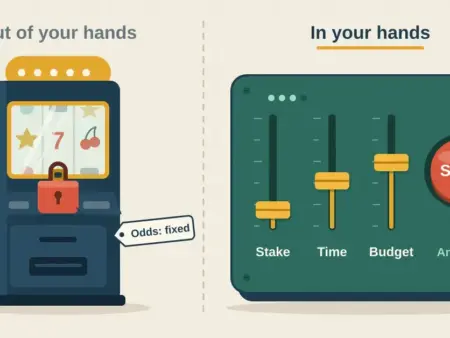
No betting pattern or timing can change the outcome, because every spin is produced independently by a Random Number Generator. The only things within your control are choosing games with a higher published RTP, understanding volatility so a game matches your budget, and setting firm deposit and loss limits before you play.
Recent Gambling News