Understand New Zealand gambling laws. Learn about the Gambling Act 2003, tax-free winnings, and legal offshore sites for Kiwis. Stay safe and play smart.

New Zealand Gambling Laws: The 2026 Rules Explained

New Zealand’s gambling law has changed, and the change is already done rather than pending. The Online Casino Gambling Act 2026 — the country’s first law written specifically for online casinos — has been in force since 1 May 2026. The licences it creates were auctioned in late 2026, and there is a hard cut-off on 1 December 2026 for operators that do not join the new system.
This guide explains, in plain terms, what the law now says, how online casino gambling is being licensed, why sports betting is treated completely differently, what is and is not legal for you as a player, and where the rules on tax, age and getting help actually stand. Every figure below has been checked against the legislation and the regulator’s own pages.
Key points
- The Online Casino Gambling Act 2026 has been in force since 1 May 2026 — New Zealand’s first dedicated online casino law.
- A maximum of 15 online casino licences will be issued. A late-2026 auction cleared 11 companies to apply, at NZ$15 million per licence.
- From 1 December 2026, any operator that has not lodged an application must stop serving New Zealand residents.
- Playing at an offshore casino is not an offence for you as an individual — the law targets operators, not players.
- Online sports and racing betting is separate: only TAB NZ may lawfully take those bets.
- Gambling winnings are not taxed in New Zealand for recreational players.
How New Zealand regulates gambling
Two separate statutes do most of the work, and knowing which one covers what removes most of the confusion.
The Gambling Act 2003 still governs land-based gambling: the six licensed casinos, the gaming machines (pokies) in pubs and clubs, and the lottery and racing frameworks. It was written before smartphones, and its central weakness was reach — it could only act against operators based in New Zealand, which is why a large offshore online market grew up outside anyone’s control here.
The Online Casino Gambling Act 2026 fixes that gap for one specific product: online casino games. Crucially, it applies to any operator that enables play from New Zealand, wherever the company is registered. An operator in Malta, Curaçao or anywhere else is now within the law’s reach if it takes New Zealand customers. Its supporting regulations took effect on 3 July 2026.
The Department of Internal Affairs (DIA) administers both Acts and runs the licensing process. The Gambling Commission is a separate statutory body that handles licensing decisions and appeals. A third instrument, the Racing Industry Amendment Act 2025, deals with sports and racing betting — more on that below.
The online casino licensing timeline
The new system is built around a fixed number of licences awarded by auction, rather than licensing everyone who qualifies. Here is how the process has run, with the dates confirmed by the DIA.
Licensing timeline
| When | What happens |
|---|---|
| 1 May 2026 | The Online Casino Gambling Act 2026 comes into force, and the ban on advertising offshore gambling begins. |
| 3 July 2026 | The Act’s supporting regulations take effect. |
| 17 July 2026 | Expression-of-interest (EOI) stage opens: NZ$19,000 non-refundable per submission, and applicants must show at least NZ$7.5 million in capital. |
| 14 August 2026 | EOI stage closes. |
| 29 Sep – 12 Oct 2026 | Ascending-clock auction: 32 bidders over 10 rounds, clearing at NZ$15 million per licence. |
| 13 October 2026 | The DIA names 11 companies cleared to apply, covering all 15 licence slots between them. |
| From October 2026 | Successful bidders lodge full licence applications and undergo assessment. |
| 1 December 2026 | Operators without an application must stop taking bets, deposits or registrations from New Zealand residents. The deadline is binding. |
| 1 June 2027 | The transitional exemption ends; operators still without a licence must exit the market. |
| During 2027 | Licences are issued and the regulated market goes live (expected from around 1 July 2027). |
The shape of the market that emerges is deliberately small. There will be a maximum of 15 licences, each valid for up to three years with a possible renewal of up to a further five years. Each licence covers a single brand, and no company may hold more than three. The auction — an ascending-clock format where the price rises until demand matches supply — ran from 29 September to 12 October 2026, drew 32 bidders across 10 rounds, and cleared at NZ$15 million per licence. On 13 October 2026 the DIA named the 11 companies that won the right to apply, with the application rights spread across all 15 licence slots.
This is a scarcity model, and that is the point. Most regulated markets license every operator that meets the standard; New Zealand is instead auctioning a capped number of seats so each licensee can be supervised closely. Winning the auction is only the right to apply — each company must still pass a full suitability assessment before a licence is granted. You can follow how the market is forming in our overview of the New Zealand online casino market.
What is lawfully available right now
Because different products sit under different rules, it helps to see them side by side. As the system stands during the transition:
- Online sports and racing betting: TAB NZ only.
- Lotteries, Powerball and Keno online: Lotto NZ only.
- Online casino games: offshore operators during the transition, moving to a maximum of 15 licensed operators during 2027.
- Casino games in person: six licensed venues, all regulated in New Zealand under the Gambling Act 2003.
- Gaming machines (pokies) in pubs and clubs: run by non-profit societies, with a share of the proceeds returned to the community as grants.
The reason for the split is funding. TAB NZ’s profits support the racing industry and Lotto NZ’s support community grants, so both were kept as protected monopolies. Casino gambling has no equivalent domestic beneficiary, which is why it was opened to competitive licensing instead of being handed to a single operator.
Sports and racing betting works differently
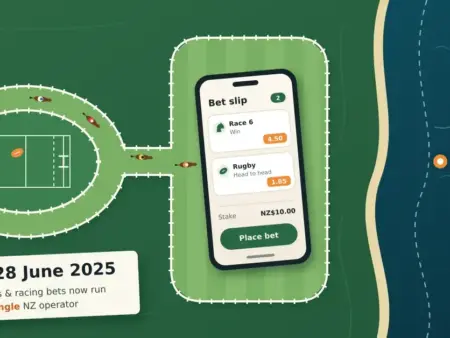
This is the detail that trips people up. Online casino gambling is moving to a competitive, auction-based licensing model. Online sports and racing betting is not. New Zealand has kept a deliberate monopoly here: TAB NZ is the only operator that may lawfully accept a sports or racing bet from someone in New Zealand (its online sportsbook brand, Betcha, runs under the same TAB NZ licence).
That monopoly was extended to offshore bookmakers by the Racing Industry Amendment Act 2025, which received Royal Assent on 27 June 2025. Before that change, overseas bookmakers freely took New Zealand bets; they were then required to withdraw.
Why does this catch people out? Many well-known offshore brands run a casino and a sportsbook on the same account, and older guides routinely recommended exactly that — “bet on the rugby and spin a few pokies without logging out.” That combination is no longer lawfully available to you in New Zealand, and any review still recommending it has not been updated. It is one of the clearest signs a gambling guide is out of date. If you place bets online, our look at how operators split their licensed and offshore businesses shows why the brand on the login screen is not always the company holding the money.
Is it legal for you to play online?
Yes, for you as an individual. Neither Act makes it an offence for a person in New Zealand to gamble at an offshore site. Both target operators, not players. That does not change when the licensed market goes live — what changes is which operators may lawfully offer you a game, and what happens when something goes wrong.
Advertising is a different matter. The Online Casino Gambling Act 2026’s advertising prohibition began on 1 May 2026. It bans advertising within 30 minutes either side of a live broadcast, bans sponsorship and naming rights, bans celebrity or fictional endorsers, and bans affiliate marketing arrangements. Promoting overseas gambling to people in New Zealand was already an offence under the Gambling Act 2003, carrying fines of up to NZ$10,000 for an individual and NZ$50,000 for a company. On top of that, the new Act introduces civil pecuniary penalties of up to NZ$5 million for a company and up to NZ$300,000 for an individual for breaching its rules. Operators allowed to keep trading during the transition may continue to take customers but may not advertise while their application is assessed.
What changes for you
Most of the day-to-day difference is about protection and recourse rather than the games themselves. The table below sets out the practical before-and-after.
What changes for you
| Now (transition) | From the licensed market (2027) | |
|---|---|---|
| If something goes wrong | Complain to a regulator overseas | A New Zealand regulator with real enforcement powers |
| Checking a site is legitimate | Find the licence number, check a foreign register | One New Zealand public register, one search |
| Choice of operators | Hundreds, unvetted | 15 at most |
| Welcome bonuses | Large headline offers at high wagering multiples | Smaller and more tightly controlled |
| Tax on your winnings | None | None — unchanged |
| Playing offshore as an individual | Not an offence | Still not an offence — the law targets operators |
Two things are worth doing before the December deadline if you hold an offshore account. First, do not leave a balance sitting at an offshore casino. Operators that do not apply must stop serving New Zealanders, and withdrawing from a site that is winding down its market is harder than withdrawing from one that is not. Second, complete identity verification now. Unfinished verification is the most common cause of a delayed or blocked withdrawal, and it is the one part of the process entirely within your control.
A smaller market is not automatically a worse one. Fifteen operators is far fewer than today’s offshore field, but a capped market avoids the pattern seen elsewhere, where dozens of licensees compete on bonus size rather than on player safety. Fewer, better-supervised operators is the trade being made — and that is also why welcome bonuses are expected to shrink and tighten under the new rules.
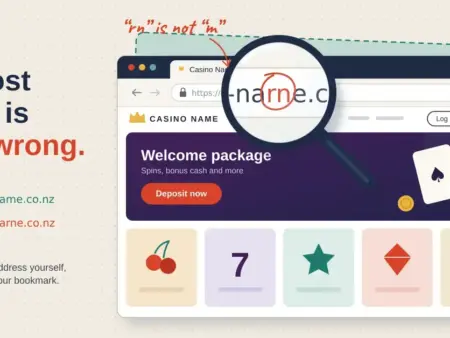
Until a New Zealand public register exists, checking an operator is still a manual job. Find the operating company and licence number in the site’s footer, then search that company — not the brand — on the regulator’s own website: the Malta Gaming Authority, the UK Gambling Commission or the Curaçao Gaming Control Board, depending on where it is licensed. If there is no licence number, there is nothing to check. Our guide to spotting and avoiding scam casinos walks through how to do this without being fooled by a cloned register page.
Tax on gambling winnings
Gambling winnings are not taxable in New Zealand. Inland Revenue treats them as windfall gains rather than income, and that applies whether you win NZ$50 or NZ$50,000, at a venue or online, in New Zealand or offshore. You do not declare a jackpot and you do not pay tax on it.
The exception is narrow. If gambling is effectively your profession — your main income, pursued in a systematic, business-like way — it can be assessed as business income. In practice this is rare, and it is not a status you fall into simply by having a good year. If you deposit or withdraw in cryptocurrency, note that the crypto disposal itself may be separately taxable even though the gambling is not; that is a different rule under a different regime. Our detailed explainer on gambling and tax in New Zealand covers both points, and an accountant is worth a call if crypto is involved.
Age limits
There are two legal ages, and they are easy to mix up.
- Twenty to enter the gambling area of a casino.
- Eighteen for online gambling, TAB NZ, Lotto NZ, and gaming machines in pubs and clubs.
The casino entry age is set by statute, not by house policy, and no venue can waive it.
The six land-based casinos
New Zealand has six licensed casino venues, and no new ones can open — the Gambling Act 2003 permanently caps the number. They are SkyCity Auckland, SkyCity Hamilton, SkyCity Queenstown and SkyCity Wharf (also in Queenstown), plus Christchurch Casino and Dunedin Casino. SkyCity Entertainment Group holds four of the six licences.
Note the distinction between a venue and its website. A casino’s New Zealand licence covers its physical floor; an online casino carrying the same brand is often a separate business licensed offshore — SkyCity’s online casino, for example, operates from Malta under a Maltese licence. The two are not the same company handling your money, which matters when something goes wrong.
It also shows what domestic licensing actually buys you. A New Zealand regulator can discipline a New Zealand casino: in September 2024 the Auckland venue’s gaming floor was closed for five days (9–13 September) by agreement with the DIA — the first such closure and the longest suspension under the Gambling Act — after its systems repeatedly failed to detect a customer gambling for long continuous periods. No offshore website serving New Zealanders can be closed by anyone here. That is the practical difference the new online regime is designed to create.
Responsible gambling and where to get help
Gambling costs money over time by design, and no system, strategy or bonus changes that. Free, confidential help is available in New Zealand at any hour of the day:
- Gambling Helpline Aotearoa — phone 0800 654 655 or free text 8006.
- PGF Services — phone 0800 664 262.
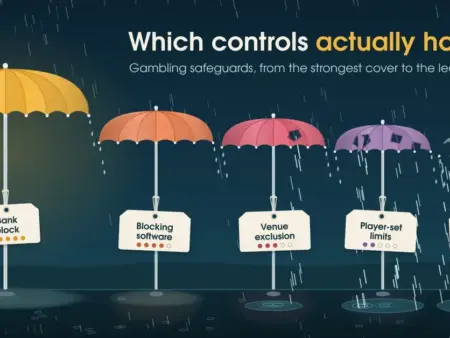
Several practical controls work regardless of any operator or regulator. The Multi-Venue Exclusion scheme lets you exclude yourself from several venues at once rather than one at a time — ask at any venue or through Safer Gambling Aotearoa. A gambling block through your bank declines gambling transactions across every merchant, and blocking software on your devices (free from registered charities) covers even sites that launched last week. For step-by-step help setting these up, see our guides to responsible gambling in New Zealand and self-exclusion, and reach the 24-hour Gambling Helpline Aotearoa whenever you need it.
A note on this guide
This page is published for information only. It is not legal, financial or gambling advice, and nothing on it is a recommendation to gamble. Laws, licensing, penalties and operator availability change — sometimes within weeks — so the position described here was accurate when the page was last reviewed against primary sources. Before you rely on any figure, confirm the current position on the regulator’s own pages and, where it matters, the Act itself. Where we get something wrong, the page is corrected rather than defended; the sources used are listed below.
Sources
- Online Casino Gambling Act 2026, in full — New Zealand Legislation
- Gambling Act 2003, including casino entry age and Class 4 rules — New Zealand Legislation
- The licensing process, the 15-licence cap, the auction result and the December deadline — Department of Internal Affairs
- Information for online casino customers — Department of Internal Affairs
- Gambling regulation, licensing and enforcement — Department of Internal Affairs
- Licence to operate: the Online Casino Gambling Act 2026, penalties and advertising rules — MinterEllison
- New Zealand bans offshore betting: the Racing Industry Amendment Act 2025 — Simpson Grierson
- Tax treatment of windfall gains and business income — Inland Revenue
- Licence verification — Malta Gaming Authority
- Public register, including enforcement action — UK Gambling Commission
- Licensees and licence status — Curaçao Gaming Control Board
- Safer Gambling Aotearoa, including the Multi-Venue Exclusion scheme — tools, self-assessment and support services
- Gambling Helpline Aotearoa New Zealand — free, confidential support, 24 hours a day
Frequently Asked Questions
Is the Online Casino Gambling Act 2026 actually in force?
Yes. It is not a bill before Parliament — it has been in force as an Act since 1 May 2026, its supporting regulations took effect on 3 July 2026, and the licence auction was completed in October 2026.
How many online casino licences will there be?
A maximum of 15, each covering a single brand and valid for up to three years with a possible renewal of up to a further five years. No company may hold more than three. In October 2026 the DIA named 11 companies that won the right to apply, between them covering all 15 licence slots; each must still pass a full assessment.
What happens on 1 December 2026?
Any operator that has not lodged a licence application must stop accepting bets, deposits or new registrations from New Zealand residents. Operators with an application under assessment may keep trading — but not advertise — until a decision is made, and the transitional exemption ends on 1 June 2027.
Can I legally bet on sport with an offshore bookmaker?
No. TAB NZ (including its Betcha sportsbook) is the only operator that may lawfully take a sports or racing bet from someone in New Zealand, and since the Racing Industry Amendment Act 2025 that monopoly covers offshore bookmakers too.
Do I pay tax on gambling winnings in New Zealand?
No, not as a recreational player — Inland Revenue treats winnings as untaxed windfall gains. The rare exception is professional gambling assessed as business income. If you use cryptocurrency, the crypto disposal can be taxable separately from the gambling.
Recent Gambling News