Most people who lose money to an online casino scam never found an obviously fake website. They found a convincing copy of a real one. The address was almost right, the logo was genuine and the games looked familiar — and the money still went somewhere it could not be recovered. This guide explains how those scams actually work, how to verify an operator before you deposit, and what to do if something has already gone wrong. It names no site as fraudulent and recommends none as safe; it is a method for checking, not a list to trust.
Key Points
- A scam site is usually a copy of a real casino on a near-identical domain. Type the address yourself, bookmark it, and use the bookmark every time after.
- Never reach a casino cashier through a link in an email, message, advertisement or article.
- No legitimate operator asks for a payment to verify your identity or to release a withdrawal.
- A licence claim with no number and no named company means nothing. Check it on the regulator’s own register, searching the company rather than the brand.
- No online casino holds a New Zealand licence yet. From 2027 the Department of Internal Affairs will publish a public register and licensed sites will display a registration mark.
- Free, confidential help: Gambling Helpline 0800 654 655 or text 8006; MoneyTalks 0800 345 123.
How a clone casino works
A clone is a copy of a legitimate casino. It reuses the real operator’s design, logo and wording, and sits on a domain that differs by only one or two characters — a swapped letter, a missing one, or a different ending such as .net in place of .com. It looks correct because almost all of it is correct. Only the address is wrong.
When you deposit, the money reaches whoever runs the clone. The genuine casino has no record of your account and cannot help you, because as far as it is concerned you were never there. Several operators have publicly warned their own customers that cloned sites on similar-looking domains were taking deposits from people who believed they were playing with them.
The defence is ordinary and effective. In order of usefulness:
- Type the address yourself, once. Then bookmark it and use the bookmark every time after.
- Never reach a cashier through a link — not from an email, a message, a search advertisement or an article, including this one.
- Read the address character by character before entering anything. Transposed and dropped letters are the entire technique.
- Treat any “verification deposit” as a stop sign. No legitimate operator requires a payment to prove who you are or to release money that is already yours.
A retired brand’s domain carries the same risk. When a casino leaves a market its domain keeps its search rankings and inbound links for years, which makes it valuable; old gambling domains are routinely bought and put back into service by unrelated operators. A name you remember from an old review is not evidence that the site you have found today is the same business. Our Royal Panda review is a worked example of how a familiar name and a changed operator can end up on the same web address.
How to check a licence properly
A licence is only meaningful if you can verify it on the regulator’s own register. A badge, a seal or a sentence in a footer proves nothing on its own, because anyone can copy a picture or type a claim. Checking properly takes four steps:
- Read the legal line in the site’s own footer — the operating company, its registered address and the licence number. If any of the three is missing, stop there.
- Go to the regulator’s website yourself by typing the address — not a link on the casino, not a seal image, not a review site.
- Search the operating company name, not the brand. One company often runs many brands, and the register lists the company.
- Confirm the licence is active, that it names the site you are on, and that it covers your country. A licence held by a different company, or one that does not name the site, is not a licence for that site.
Fake “licence registers” exist. Some websites are built to look like official registers, carry official-sounding names on near-miss domains, and will confirm whatever you type into them. Reach a regulator the same way you reach a casino — by typing the address — and check you are on a genuine government or authority site before you rely on anything it returns. The registers below are the ones that matter for casinos serving New Zealand.
Licence Regulators Compared
| Regulator | Where its register actually is (type it) | What the licence gives players |
|---|---|---|
| Malta Gaming Authority (MGA) | mga.org.mt | Ongoing compliance supervision, segregated player funds and independent dispute mediation. |
| Gambling Commission of Great Britain | registers.gamblingcommission.gov.uk | Strict supervision, with published enforcement action and lapsed-licence records. |
| Kahnawake Gaming Commission | gamingcommission.ca | A licensee register and a player dispute process; lighter oversight than MGA or GB. |
| Curaçao Gaming Authority (CGA) | cga.cw | The most easily obtained licence; direct licensing since the 2024–25 reform, with “OGL/” licence numbers. |
Two stale Curaçao claims you will meet. “Curaçao eGaming” no longer issues licences. Under a reform that took effect in late 2024, Curaçao abolished its old master-licence system; the last master licences expired at the end of January 2025, and operators are now licensed directly by the Curaçao Gaming Authority (CGA). A reference in the old “NNNN/JAZ” format comes from the abolished system; a current licence carries an “OGL/” reference you can check on the CGA register. An old-format number is not automatically a problem — many operators have transitioned and older marketing has simply not caught up — but it is a reason to check the current status rather than accept the claim.
And the regulators are not equivalent. Advice to look for “MGA, Curaçao or Kahnawake” treats them as interchangeable; they are not. Malta and Great Britain carry ongoing compliance supervision, segregated player funds and a route to independent dispute mediation. Curaçao is the most easily obtained licence and the one most often held by operators with the weakest complaints records. It is better than nothing, and the 2024–25 reform improved it, but “has a Curaçao licence” is close to the least an operator can say about itself. What matters is the number — a licence claim without a verifiable number is not a licence claim. Our New Zealand gambling laws guide explains where the local licence will sit once it exists.
The red flags, ranked by what they tell you
Most checklists give every warning sign equal weight. They are not equal. Ranked from the most to the least decisive:
- A licence claim with no number (strongest signal). Every real regulator publishes a searchable register. “Licensed and regulated” as a phrase, with no number and no named company, means nothing.
- A verification deposit (decisive on its own). Any request to pay money in to prove your identity, release a withdrawal or “activate” an account. No legitimate operator does this.
- Verification demanded only after you win (strong). Identity checks are normal, but checks that appear for the first time at the withdrawal — on an account that deposited freely for weeks — are a different thing, especially when a new requirement appears each time you satisfy the last.
- No named operating company (strong). A legitimate casino’s footer names the company, its registered address and its licence number. All three, or none of it is checkable.
- Terms that change or cannot be found (worth noticing). Screenshot the bonus terms on the day you claim. If they read differently later, you hold the original — the difference between a complaint and an argument.
- Crypto with no alternative (worth noticing). Not because crypto is untraceable — the ledger is public and exchanges verify identity — but because it is irreversible. There is no chargeback and no dispute process, so a cashier offering nothing else has removed your only route to reclaim money. Our casino deposit methods guide covers the alternatives.
- Support that does not answer (easy to test). Before depositing, ask live chat a specific question — how long a withdrawal takes, or whether a payment method works for New Zealand accounts. How they answer tells you how they will treat you when it matters.
One thing that is not a red flag: being asked for identity documents. Licensed operators are legally required to verify who you are, where you live and that the payment method is yours — passport or licence, proof of address and a payment screenshot are standard. Do it when you register rather than when you withdraw; the documents are the same either way, and doing it early removes the delay behind most payout complaints, including at operators that are entirely legitimate.
A chargeback is for fraud, not for a dispute
For genuine fraud — a clone site, an unauthorised charge, or a site that has simply vanished — contacting your bank is exactly right, and speed matters. If money left your account without your authorisation, tell your bank immediately; that is fraud, not a gambling dispute.
It is the wrong tool for a disagreement with a real casino. Attempting a chargeback over a delayed withdrawal or a voided bonus at a licensed operator usually ends in account closure, forfeiture of the balance and a flag carried across the operator’s other brands. If you are in dispute with a licensed site, do this instead:
- Stop depositing. Whatever you are told, no legitimate casino needs a further payment to pay you.
- Screenshot everything — the balance, the withdrawal request, the chat log and the terms as they appear today.
- Complain to the operator in writing first, and keep the reply. Most complaints services require this before they will act.
- Escalate to the regulator named in the footer and to a complaints mediation service. Both handle cases at no cost, and several regulators list an approved dispute-resolution provider on their own site.
- Report the site. In New Zealand, Netsafe and CERT NZ take reports of fraudulent websites, and the Department of Internal Affairs is the gambling regulator.
Why this page recommends no casinos
No online casino currently holds a New Zealand licence. Until the register opens, no site — this one included — can verify an operator against a New Zealand standard, because there is not one yet. A page about avoiding untrustworthy operators that ended by recommending two would be doing the very thing it warns against; the checks above are more use than any list.
A general point worth keeping: where a page warns you about a danger and then sells you the solution, treat the warning and the recommendation as one piece of marketing. That applies to casino review sites generally, and it applies here. Two traps are common on pages like this one. “Verified alternatives” that turn out to be two brands run by the same company, presented as independent choices — sister brands share terms, withdrawal caps, complaints handling and often a one-bonus-per-person rule. And recommendations that omit an operator’s own regulatory record: at least one operator widely presented as a safe alternative was fined by a Canadian provincial regulator in 2023 over failures to intervene with players showing signs of harm. A page teaching people to check an operator’s record cannot recommend one without mentioning that it has one.
Where New Zealand stands
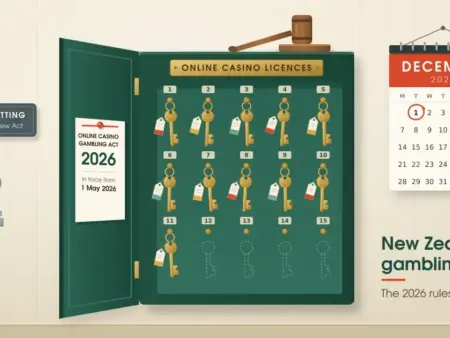
Playing at an offshore site is not an offence for a New Zealander, but no New Zealand authority supervises those operators or can help you if something goes wrong. That is changing. Online casino gambling is now governed by the Online Casino Gambling Act 2026, in force since 1 May 2026, with the Online Casino Gambling Regulations following on 3 July 2026.
Expressions of interest opened on 17 July 2026 at a non-refundable fee of NZ$19,000 plus GST, followed by a competitive auction for the right to apply for up to fifteen licences — one brand each, with no operator allowed to control more than three. From 1 December 2026, operators that have not entered the process must stop serving New Zealanders; those with a pending application may continue under an exemption until it is decided, which the department expects during 2027. Breaching the advertising and supply rules carries penalties of up to NZ$5 million for a company.
Licensed operators are expected from early 2027, when the Department of Internal Affairs will publish a public register of licensed sites and require each to display a unique registration mark. That register will be the single most useful scam check available — one authoritative list, checkable in seconds. For the wider picture, see our New Zealand online casino market overview.
A correction on this site
Four pages on this site were found to be linking to a misspelled version of a casino’s domain — the exact pattern described at the top of this page, and one the operator itself had warned its customers about. Those links have been removed. It is stated here rather than fixed quietly, because a page that tells you to check domains carefully has no business hiding the fact that it once failed to.
Getting help
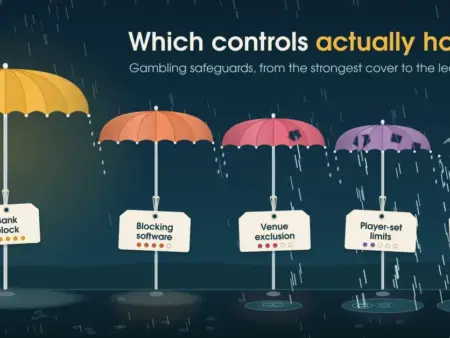
Free, confidential support is available in New Zealand at any hour. The Gambling Helpline is on 0800 654 655 or free text 8006, PGF Services on 0800 664 262, and MoneyTalks on 0800 345 123 for the financial side — all at no cost. Our self-exclusion guide covers bank gambling blocks and device-blocking software, the two protections that do not depend on any operator honouring anything. You must be 18 or older to gamble online in New Zealand.
Disclaimer
This page is published for information. It is not financial, legal or gambling advice, and nothing on it is a recommendation to gamble or an endorsement of any operator. You must be 18 or older to gamble online in New Zealand.
No operator is named on this page as fraudulent. The patterns described are general and drawn from regulator guidance, published operator warnings and consumer-protection material. Whether any particular site is legitimate is a question the checks set out here are designed to help you answer for yourself. The regulatory penalty referred to is a matter of public record, and the operator concerned was recorded as responsive to it; it is mentioned because a page about checking an operator’s record cannot recommend one without doing so, not as a suggestion of current wrongdoing.
Licensing, ownership, domain control and complaints routes all change. Regulator web addresses should be typed rather than clicked, and confirmed as government or authority sites before you rely on anything they return. Nothing here is a substitute for the licence information published in the footer of the site you are actually on. Gambling costs money over time by design. Free, confidential support is available in New Zealand 24 hours a day on 0800 654 655, or by free text to 8006.
Reference sources
- Department of Internal Affairs — online gambling information for players — the New Zealand regulator, and where the licence register will be published from 2027.
- Department of Internal Affairs — online gambling licensing for providers — the licensing process, the fifteen-licence cap and the deadlines.
- Netsafe — report an online scam — free and confidential reporting in New Zealand.
- Own Your Online — how to spot a scam website — CERT NZ guidance; it also takes reports.
- Scamwatch — Consumer Protection, New Zealand Government.
- Malta Gaming Authority — licensee register — search the operating company, not the brand.
- Gambling Commission of Great Britain — public register — includes enforcement action and lapsed licences.
- Curaçao Gaming Authority — the regulator licensing operators directly since the 2024–25 reform, with a public licence register.
- Kahnawake Gaming Commission — licensee register and player dispute process.
- eCOGRA — testing agency and an approved dispute-resolution provider for several regulators.
- Casino Guru — complaint resolution service — free mediation and a searchable record of past cases against named operators.
- MoneyTalks — free, confidential financial helpline, 0800 345 123.
- PGF Services — free counselling and financial mentoring, 0800 664 262.
- Gambling Helpline Aotearoa New Zealand — free, confidential support, 24 hours a day on 0800 654 655.
Frequently Asked Questions
What is the most common online casino scam?
A clone — a copy of a real casino on a domain that differs by a character or two. It looks correct because it is, apart from the address, and deposits reach whoever runs the copy rather than the genuine operator.
How do I check an online casino licence?
Read the operating company and licence number from the site’s footer, then type the regulator’s own address yourself and search the company name. Confirm the licence is active, names the site you are on and covers your country. A licence claim with no verifiable number is not a licence claim.
Is a Curaçao licence a good sign?
It is better than none and weaker than most alternatives. What matters is the licence number, checkable on the Curaçao Gaming Authority’s own register. Note that “Curaçao eGaming” stopped issuing licences when the system was reformed in 2024–25, so an old-format number is a reason to check the current status.
Can I get my money back after a casino scam?
Sometimes with a card, rarely with crypto, and never by paying more. No legitimate operator requires a payment to release a withdrawal. For genuine fraud, contact your bank quickly; for a dispute with a licensed casino, use the complaints and regulator route rather than a chargeback.
Where do I report a fraudulent gambling site in New Zealand?
Netsafe and CERT NZ take reports of scam websites, and the Department of Internal Affairs is the gambling regulator. If money left your account without authorisation, tell your bank immediately.