Wondering how to win jackpot on pokies NZ? Our expert guide covers RTP, volatility, and top strategies for Kiwi players to maximize their winning potential.

How to Win a Jackpot on Pokies in NZ: The Odds, the Cost and the Terms

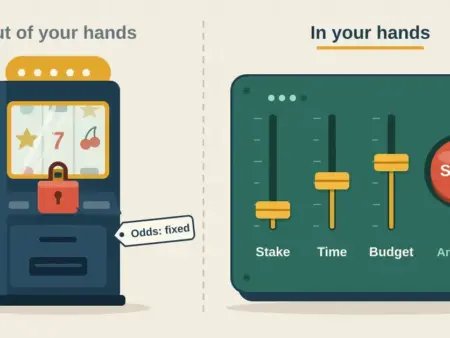
You cannot influence a jackpot. No timing, no pattern, no staking plan and no length of dry spell changes the probability of any single spin. A progressive jackpot is triggered at random, and each spin is a fresh, independent event with no memory of the ones before it.
What you can do is understand exactly what you are buying when you sit down at a jackpot pokie: the real odds of the top prize, the price you pay per spin, and the handful of terms that decide whether a win would actually reach your account. This guide walks through all three in plain language, with the responsible-gambling and legal context that matters for players in New Zealand.
Key points
- A jackpot cannot be influenced. It is triggered at random on each spin; no timing, pattern, betting system or “overdue” pool changes your odds.
- The top-tier odds are tiny. On the largest networked progressive the game’s maker states roughly one chance in fifty million per spin.
- Jackpot pokies pay back less in the base game. Often 88–93%, versus about 96% on a good standard pokie, because a slice of every wager is diverted into the pool.
- Three terms decide whether a win reaches you: whether your bet qualifies for the top tier, what a “must-drop” jackpot really means, and whether an active bonus caps or voids the win.
- You must be 18 or older to gamble online in New Zealand. Free, confidential support is available 24 hours a day on 0800 654 655.
The real odds of hitting a progressive jackpot
The number that a page like this owes you is the one the marketing never mentions: how likely the top prize actually is. On the largest networked progressives — for example Mega Moolah, the best known of them — the game’s maker states the chance of the top (mega) tier at roughly one in fifty million per spin.
That figure is hard to picture, so it helps to anchor it. A hundred spins — a fairly normal evening — gives you something like a one-in-five-hundred-thousand chance at the top tier. Spinning fifty million times, at one spin every five seconds without a single break, would take roughly eight years of continuous, round-the-clock play, or about twenty-four years at eight hours a day. The size of the prize is enormous precisely because the chance is vanishingly small.
There is a second step that the headline odds hide. On the best-known game, triggering the bonus brings up a wheel that decides which of four jackpots you win — commonly called mini, minor, major and mega. The top segment occupies only a small slice of that wheel, so triggering the feature is not the same as winning the big one. Most progressives run these four tiers, and the lower three hit far more often across the network, paying in the tens or hundreds rather than the millions.
A pool that has not paid out is not “due”. Because every spin is independent, a jackpot that has gone months without dropping is no more likely to land on your spin than one that paid out this morning. Large networked pools have been known to run for well over a year — hundreds of days — before finally dropping; on the day before they landed, they were exactly as likely to pay as on day one. The gambler’s fallacy — the belief that a result is “overdue” — is the most expensive misconception in gambling, and jackpot pokies are built to trigger it.
None of this is an argument against playing. People do win these prizes, and the ones who do were not doing anything different from anyone else — several record wins have come from stakes well under a dollar. A very small chance at a very large sum is a legitimate thing to buy, in the same way a lottery ticket is. It is only an argument against treating a jackpot as a plan rather than a long shot. The odds are what tell you which of the two you are actually doing.
What a jackpot pokie costs to play
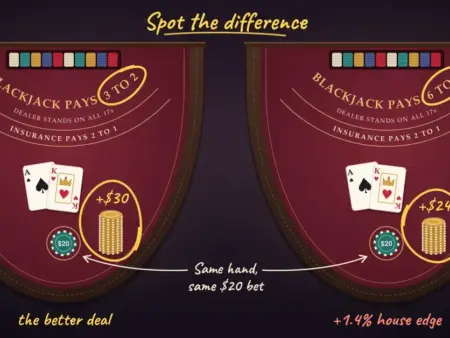
Jackpot games cost more per spin than ordinary pokies, and the reason is not a trick — it is just rarely advertised. A share of every wager is diverted into the jackpot pool instead of being returned through the base game. On the largest networked progressive that share is around 5.3% of every spin, which pulls the base-game return down well below a standard pokie.
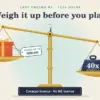
The practical effect is easiest to see as the expected cost of a session. A good standard pokie returns around 96%, so a thousand spins at NZ$1 has an expected cost near NZ$40. The best-known network progressive returns 88.12% in its base game, so the same thousand spins is expected to cost around NZ$119 — roughly three times as much. Most jackpot titles sit somewhere between, at 88% to 93%.
Cost comparison
| Game type | Base game return (RTP) | Expected cost of 1,000 spins at NZ$1 |
|---|---|---|
| A good standard pokie | around 96% | about NZ$40 |
| Many progressive jackpot games | 88–93% | NZ$70–$120 |
| The best-known network progressive | 88.12% | about NZ$119 |
RTP (return to player) is the long-run average a game pays back across millions of spins — not a prediction for any single session. The lower the base return, the more a thousand spins is expected to cost. Figures are published averages and can vary by operator.
The money diverted into the pool is not lost; it is being saved toward a prize that somebody eventually wins. It is simply very unlikely to be you on any given night, which is why the base return — not the headline jackpot — is the number that actually governs what your session costs.
One feature masks the difference. Many progressives return something on close to half of all spins, but most of those returns are smaller than the stake. That rhythm of near-constant small payouts keeps a session feeling active even on a game paying back only about eighty-eight cents in the dollar. Hit frequency and return are two separate things, and the one you notice is not the one that decides what the evening costs. Before you sit down, read the base return in the game’s own information panel — our how to play pokies guide explains exactly where to find it, and our wider online pokies guide covers game selection more generally.
Three terms worth checking before you play
The odds and the base return are fixed by the game; you cannot change them. The one part of jackpot play where reading genuinely changes the outcome is the terms. Three are worth five minutes of your time, and all three live in the same two places — the game’s information panel and the bonus terms.
What a must-drop jackpot really means
A “must-drop” jackpot is guaranteed to pay out before it reaches a stated amount, or before a stated time. It could drop on the very next spin or on the one just before the limit — but you still have to be the person spinning at that moment. “Must drop by midnight” does not mean your odds improve as midnight approaches; it means somebody’s odds are certain, and the closer the deadline, the more people are spinning for it. A larger pool is genuinely worth more for the same stake, which is real arithmetic, but it is small next to the house edge and acting on it means playing more of a game that pays back less. It is not an edge.
Whether your bet qualifies
Some progressives only pay the top tier at a qualifying stake. Below that stake you can land the winning combination and receive nothing extra, while still contributing to the pool on every spin — the worst version of this game. Others work differently: on the best-known networked progressive every stake is eligible for all four tiers, and the record wins were placed at small ones, though the game’s own rules state that a larger bet raises the chance of triggering the jackpot wheel. Either way, if the qualifying stake is above what you are comfortable wagering, play a different game rather than stretching to reach it.
Whether a bonus caps or voids the win
This is the expensive one. Many casinos exclude progressive jackpot games from bonus play entirely, and many bonuses carry a maximum-win cap that would apply to a jackpot hit landed while the bonus is active. A NZ$100 win cap sitting on top of a seven-figure jackpot is not a hypothetical. Also check the maximum bet permitted while wagering a bonus — often NZ$5 to NZ$10; if a jackpot game’s qualifying stake sits above it, playing with an active bonus can void everything. If you intend to play jackpot titles, check the bonus terms for excluded games, maximum wins and maximum bets before accepting an offer — and if any of them bite, decline the bonus and play with your own funds. Our no deposit bonuses guide explains how to read those conditions.
How progressive jackpot games work
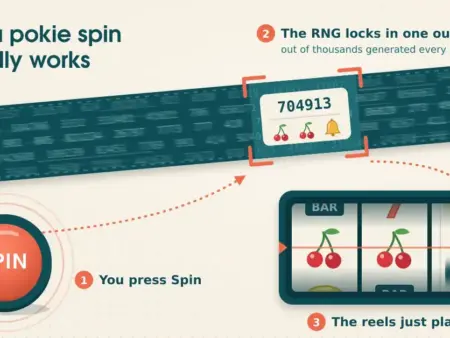
Every spin is independent. The result is fixed the instant you press the button, generated by software with no memory of what came before. A game that has not paid in months is no more likely to pay on your next spin, and no sequence of losses makes a win more likely. This is worth repeating because the whole look and feel of a jackpot pokie is designed to suggest otherwise.
Fixed versus progressive. A fixed jackpot pays a set amount listed in the paytable and hits comparatively often. A progressive grows from a share of every wager and can reach millions — with correspondingly longer odds and a lower base return, because that growth is funded by money taken out of ordinary play.
Local versus network. Network progressives pool contributions from casinos worldwide and grow enormous, which is why they make the headlines and why their odds are so long. Local progressives are funded by a single casino’s players, so they offer smaller prizes but meaningfully better odds. Neither is “better” — they are different products, and which suits you depends on whether you are buying a long shot at a life-changing sum or a more frequent, more modest win.
What you actually control
You cannot change the odds of any spin, but four decisions are entirely yours, and together they decide how much of the outcome you keep:
- Which game you choose. The base return governs your session, and on jackpot titles it is usually well below a standard pokie. Picking a higher-returning game is the single biggest lever you have.
- Whether your bet qualifies. Paying into a jackpot you are not eligible to win is the worst outcome available in this game. Confirm eligibility before you spin.
- How much you spend, and for how long. Decide both before you start and treat the money as already spent. A high-volatility game — which most jackpot pokies are — will burn through a small balance quickly; that is what high volatility means, and it is worth expecting rather than being surprised by.
- When you stop. Set a loss limit and a point at which you would walk away ahead, and act on both. Neither changes the odds; both change how much of the result you keep.
That is the complete list. Timing, patterns, dry spells, betting systems and the size of the pool are not on it. Our guide to how pokie machines work covers the general version of the same principles.
Two common claims worth correcting
“More spins means more chances at the jackpot.” True, but incomplete. More spins also means more expected loss, at the same rate per spin. A bonus can lower what the entertainment costs you, but it does not improve the underlying trade. Framing extra spins purely as extra jackpot chances quietly leaves out the half of the equation that is close to certain.
“The games aren’t rigged at a recommended casino.” Independent testing agencies verify that random number generators are genuinely random, and that verification is real and worth having. But a recommendation on any review site — including this one — is not a guarantee. Check the operator’s licence on the regulator’s own register, and follow the testing-certificate links in the casino’s own footer, rather than relying on anyone’s assurance.
Where New Zealand law stands
Online casino gambling in New Zealand is now governed by the Online Casino Gambling Act 2026, which came into force on 1 May 2026 and created a licensing regime run by the Department of Internal Affairs (DIA). It is in force — not a bill still before Parliament.
Under the regime, only up to fifteen operators will be able to offer online casino gambling to New Zealanders once licensing is complete. Expressions of interest opened in July 2026 with a NZ$19,000 fee and have since closed, followed by an auction for the available licences. Operators that already served New Zealanders before the Act may continue under a transitional arrangement until 1 December 2026, from which date only those that have entered the process may continue; all other online casinos are legally required to exit the New Zealand market, with substantial penalties for breaches. The DIA expects to begin issuing full licences from early 2027 and will publish a public register of licensed operators, each required to display a unique registration mark. Our New Zealand gambling laws guide sets out the timeline in detail.
Once licensed operators go live, they will be required to offer harm-prevention tools, including limits on deposits, spend and time, break-in-play and time-out options, loss and time alerts, and platform-level self-exclusion. You should also know how winnings are treated: recreational gambling winnings are not taxed in New Zealand, but interest earned on them is, and being paid in cryptocurrency raises a separate question. Our gambling tax guide covers both.
Staying in control
Jackpot games are designed around anticipation — the near-miss, the building pool, the tier that almost landed, the frequent small return that keeps the session moving. That is what makes them engaging, and it is also what makes them easy to keep playing for longer than you planned.
Set a deposit limit before you start. Every reputable operator offers one, and licensed New Zealand operators will be required to make limit-setting and self-exclusion tools available. Decide your spend and your stopping points in advance, while you are calm, rather than in the moment.
Free, confidential help is available at any hour. The Gambling Helpline can be reached on 0800 654 655 or by free text to 8006, and PGF Services on 0800 664 262. MoneyTalks on 0800 345 123 helps with the financial side. All of them support whānau and friends as well as the person gambling. Our self-exclusion guide covers bank gambling blocks and device-blocking software, neither of which depends on any operator. You must be 18 or older to gamble online in New Zealand.
Disclaimer
This page is published for information only. It is not financial, legal, tax or gambling advice, and nothing on it is a recommendation to gamble. You must be 18 or older to gamble online in New Zealand.
There is no strategy for winning a jackpot, and nothing on this page is one. Jackpots are triggered at random on individual spins. No timing, pattern, betting system, staking plan or length of dry spell changes the probability of any spin. What this page describes is what a jackpot game costs and what terms apply if you win — not a way to win.
Return percentages, odds, jackpot structures and bonus terms vary by game and by operator and change over time. The figures here describe published long-run averages across enormous numbers of spins, not the outcome of any session, and every game described has a negative expected return in the base game. Confirm the figures in the game’s own information panel before relying on them. Gambling costs money over time by design, and jackpot games cost more per spin than most. Free, confidential support is available in New Zealand 24 hours a day on 0800 654 655, or by free text to 8006.
Reference sources
- Wizard of Odds — slot machine mathematics — returns, volatility, hit frequency, progressive jackpots and how the house edge accumulates per spin.
- Safer Gambling Aotearoa — how gambling works, the odds and the house edge, plus tools and support, from Health New Zealand | Te Whatu Ora.
- GambleAware — on gambling product design: near misses, anticipation and why frequent small returns sustain a session.
- eCOGRA — independent testing agency for random number generators and payout verification.
- Department of Internal Affairs — information for online casino customers — the licensing timetable, the 1 December 2026 date and the public register.
- Senet — New Zealand’s Online Casino Gambling Regulations 2026 — the harm-prevention requirements for licensed New Zealand operators.
- Inland Revenue — Te Tari Taake — on the tax treatment of winnings, and of interest earned on them.
- MoneyTalks — free, confidential financial helpline, 0800 345 123.
- BetBlocker — free device-blocking software, run by a registered charity.
- PGF Services — free counselling and financial mentoring, including for whānau and friends.
- Gambling Helpline Aotearoa New Zealand — free, confidential support, 24 hours a day.
Frequently Asked Questions
What are the odds of hitting a big progressive jackpot?
Roughly one in fifty million per spin on the largest networked game, as stated by the game’s maker. A hundred spins gives you about a one-in-five-hundred-thousand chance at the top tier, and even triggering the jackpot feature only gives a small chance of landing the mega tier rather than one of the smaller ones.
Can I improve my chances of winning a jackpot?
No. On some games a qualifying stake is required to be eligible for the top tier at all, and on some the bet size scales the chance of triggering the feature, but neither is skill and neither changes what the game returns. No timing, pattern, betting system or “overdue” pool makes a win more likely.
Do jackpot pokies pay less than normal pokies?
Yes, in the base game — typically 88% to 93%, and about 88.12% on the best-known progressive, compared with around 96% on a good standard pokie. That is because a slice of every wager (around 5.3% on the best-known game) funds the jackpot pool instead of being returned through normal play.
What is a must-drop jackpot?
One that is guaranteed to pay out before it reaches a set amount or a set time. It could drop on the next spin or on the last one before the limit — but you still have to be the person spinning at that moment, and more people are spinning for it as the deadline nears, so it does not improve your personal odds.
Can I win a jackpot while using a bonus?
Often not. Many casinos exclude progressive jackpot games from bonus play, and bonus maximum-win caps can apply to a jackpot hit landed while the bonus is active. Check the bonus terms for excluded games, win caps and maximum bets before accepting, and if any of them would limit a jackpot win, play with your own funds instead.
Recent Gambling News