This page explains how money moves in and out of an account at Brango Casino for players in New Zealand — the methods, the minimums, the limits and the verification — and it does so as a neutral guide rather than a recommendation. Two warnings come before the mechanics, because both matter more than the steps themselves. No link on this page leads to a casino cashier, and none will.
Key Points
- Reach the casino by typing the address yourself. This brand has an unusually crowded field of lookalike domains, and the operator’s own support has told complainants they appear to have deposited at a copy site.
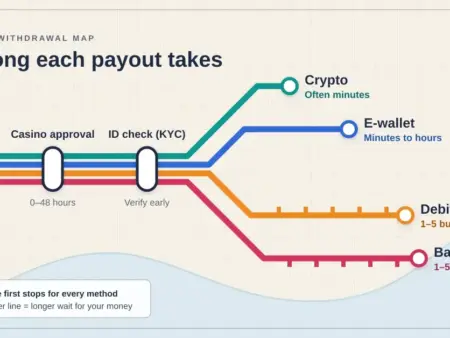
- Cards can deposit but not withdraw. Reported payout routes are cryptocurrency and a small set of e-wallets, so a card deposit usually means verifying a second method before you can be paid.
- A weekly withdrawal cap decides a large win — reported at around €4,000, it releases a big balance in instalments regardless of the fast pending time.
- The licence number in the operator’s own terms has expired under Curaçao’s late-2024 reforms; ask support for the current one and check the regulator’s register.
- Verify your identity at registration, not at cash-out, to remove the most common cause of payout delays.
- From 1 December 2026, offshore operators outside New Zealand’s new licensing process must stop serving New Zealanders — withdraw any balance well before then.
The steps are unremarkable: you log in, open the cashier, choose a method, enter an amount and confirm. Deposits generally credit immediately. What decides whether that money comes back out again is everything described below — the payout routes, a weekly cap, identity checks and the bonus terms attached to the balance.
The figures that decide a withdrawal
The numbers that matter most are not the deposit minimum but the withdrawal rules. The table collects the reported figures; treat every one as something to confirm in the live cashier, because operator material and third-party databases genuinely disagree in places.
Deposit & Withdrawal Facts
| Item | Reported detail (confirm in the cashier) |
|---|---|
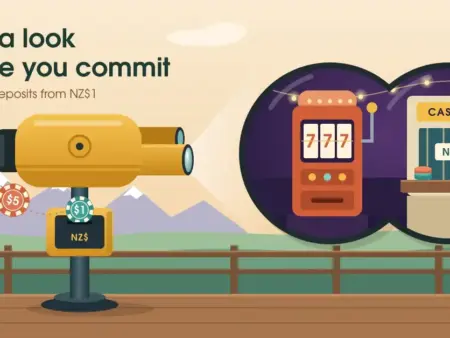
| Minimum deposit | $10, per the operator’s own FAQ. Some third-party pages give NZ$20 or NZ$25, which do not match the operator. |
| Minimum withdrawal | Widely reported at $50, though at least one database gives $20. A balance below the minimum cannot be withdrawn. |
| Deposit methods | Visa and Mastercard, a range of e-wallets and voucher cards, and a wide list of cryptocurrencies. |
| Withdrawal methods | Cryptocurrency and a small set of e-wallets. Cards do not appear on the payout list. |
| Weekly withdrawal cap | Around €4,000 per week on winnings. Progressive jackpot wins reported as exempt; VIP tiers reported to raise the cap. |
| Pending period | Reported at up to about one hour, which is fast by sector standards. |
| Time to arrive | From immediate to about five days depending on method; independent testing has recorded first payouts near six days. |
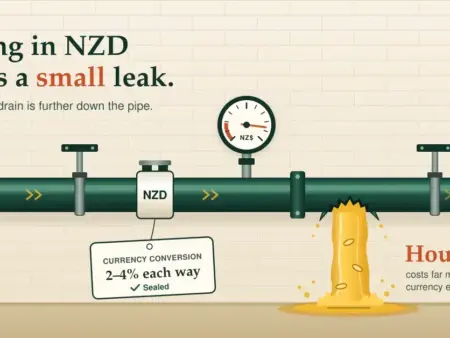
| Currencies | New Zealand dollars are supported, alongside USD, EUR and CAD. |
| Identity verification | Required before a first withdrawal in practice; complete it at registration rather than at cash-out. |
Three points stand out from that list, and each lands at the worst possible moment if it is a surprise.
Cards can deposit but not withdraw
The reported payout routes are cryptocurrency and a small set of e-wallets. Cards — Visa and Mastercard — can fund the account but do not appear on the withdrawal list. This is the single most common banking surprise at any online casino, and it arrives after you have won, requested a payout, and discovered that the method you deposited with cannot receive one. If you deposit by card, expect to nominate and verify a second method, typically an e-wallet or a crypto wallet, before you can be paid. It is worth setting that second method up at the start rather than at the point of cash-out. Our guide to casino deposit methods covers the routes that work from New Zealand, and our page on fast payout casinos explains what actually shortens a withdrawal.
The weekly cap decides a large win, not the payout speed
A pending period reported at around an hour is genuinely fast by sector standards. It is also close to irrelevant on any substantial win, because payment is released in roughly €4,000 weekly instalments. A NZ$20,000 win therefore takes about a month to reach you, and the unpaid balance sits in the account as playable funds the whole time. That structure is deliberate, not an accident of processing. Progressive jackpot wins are reported as exempt from the cap and paid as a single lump sum, and higher VIP tiers are reported to raise the weekly ceiling. Before you deposit, it is worth knowing that the cap — not the speed — is the number that governs what a big win is actually worth to you.
The minimum withdrawal can strand a small balance
The minimum withdrawal is widely reported at $50, though at least one database gives $20. A balance below that figure cannot be taken out at all. If you deposit $10 and finish with $30, you may be unable to withdraw it. This is a general feature of low-stakes play rather than anything unique to this operator; our guide to minimum deposit casinos explains how small deposits interact with payout minimums. Check the withdrawal minimum in the cashier before you commit a small amount.
Verify your identity at registration, not at withdrawal
Identity verification — proof of identity and usually proof of address, under standard anti-money-laundering rules — is required before a first withdrawal, in practice almost always. The same documents are needed whenever you do it, so doing it on day one removes the single most common cause of payout complaints. This operator’s recurring complaint themes are account restrictions and verification delays, and completing the checks at registration takes that risk off the table before any money is at stake.
The licence cited in the operator’s own terms has expired
This is the finding most worth knowing before sending money, and it comes from the operator’s own documents rather than any third party.
Brango Casino is operated by Anden Online N.V., a Curaçao company registered as number 138316 and trading since 2017. Its published terms state that the company is “licensed and regulated by Curacao eGaming” and give the number 1668/JAZ. The terms also describe 1668/JAZ as the company’s “registration number”, which it is not — the company number is 138316, stated separately in the same document.
The number 1668/JAZ was the master licence of Cyberluck Curaçao N.V., which traded as Curaçao eGaming and was one of four private master licensees under the old Curaçao system. It was never unique to any one casino — every sublicensee displayed the same figure. Curaçao overhauled its regime in late December 2024, abolishing the master-licence system and moving to direct licensing by the Curaçao Gaming Authority. Licences under the old master numbers have expired, and complaints can no longer be filed with the former master licensees.
None of this means the operator is unlicensed — it may well hold a current direct licence that its terms page has simply not been updated to reflect. It does mean the credential published to you is stale, and that the dispute route named in your contract points at a body that no longer handles complaints. The practical step is to ask support, in writing, for the current licence number and issuing authority, and then check it on the Curaçao Gaming Authority’s own register. Keep the reply.
The maximum cashout is what a bonus is worth
The number most often buried in a bracket is the ceiling on the entire offer. One documented player account at this operator described winning around $3,500 from a no-deposit bonus, completing the wagering requirement in full — and receiving fifty dollars. Nothing malfunctioned. That is a maximum cashout working exactly as written: everything above the cap is forfeited, however large the win and however completely the wagering was met.
There is a quick way to read any no-deposit offer. Find the maximum cashout first, because that figure is the real size of the offer. A thirty-dollar free chip capped at a hundred dollars is a hundred-dollar offer at absolute best, and the realistic outcome is a good deal less. Then find the wagering multiple, then the maximum bet allowed while wagering. Those three numbers together tell you what you are being given; the headline amount tells you almost nothing. As an illustration, a thirty-dollar chip at 35x turnover requires $1,050 of wagering before any withdrawal, and generating that on a game returning 96% carries an expected cost of about $42 — from a balance that began as the casino’s money. Most such offers do not survive the wagering, which is precisely what makes them affordable to give away. Our explainer on wagering requirements works through the arithmetic, and the terms behind Brango’s no-deposit bonus are covered separately.
One check is specific to this operator. Its games come from a single studio — Realtime Gaming, now trading as SpinLogic — whose model lets each casino configure the return on the same title within a range. Generic advice to “play pokies above 96%” is only useful if you open the individual game’s information panel and confirm the setting that applies here. Our guide to online pokies explains why that in-game panel is the only return figure that applies to you.
A bonus term that may outlast the bonus
A player on a long-running complaints forum reported that bonus terms at this operator are treated as remaining in force after the wagering requirement is complete, and even after a withdrawal, until a later transaction supersedes them — a condition said to appear only in a paragraph deep in the terms document. The forum’s moderator responded that similar complaints are common across casinos running this software. We could not independently confirm the current wording, and that is the point: most bonus terms end when the bonus does, but if they persist afterwards, a maximum-bet rule or a game restriction you have stopped thinking about can still apply to money you consider your own — and a breach can be raised at the moment you try to withdraw. Read the bonus terms in full before claiming, keep a copy, and if support tells you something about a bonus, ask for it in writing.
Using cryptocurrency
Crypto is often described as offering speed and privacy at this operator. Speed is a fair description. Privacy is not.
- Cryptocurrency is pseudonymous, not anonymous. The ledger is public and permanent, the exchange you buy through verifies your identity, and the casino still runs its own identity checks before paying out. Nothing about using crypto avoids that.
- There is a tax dimension. Inland Revenue treats cryptoassets as property rather than currency, so disposing of them — selling, swapping or spending — can be a taxable event. That question is separate from whether a gambling win itself is taxable; our overview of gambling and tax in New Zealand covers the win side.
- There is a mechanical risk. Sending funds on a network that does not match the receiving address is the most common way people lose cryptocurrency permanently. There is no chargeback and no reversal.
If your bank is blocking gambling transactions
If you turned a gambling block on yourself, it is working as intended, and your bank has a process for lifting it that deliberately includes a pause — that pause is the feature, not a fault. If your bank declined a transaction without you having set a block, contact the bank, because it may simply be an ordinary fraud filter on an overseas merchant. Routing around a gambling block with a different payment method is not something this page advises. Our guide to self-exclusion options covers bank blocks, device-blocking software and the New Zealand venue exclusion scheme.
What changes from December 2026
Advertising offshore online casinos to New Zealanders has been prohibited since 1 May 2026, when the Online Casino Gambling Act 2026 came into force. The accompanying regulations took effect on 3 July 2026, and expressions of interest for licences opened in July 2026, with up to fifteen licences available through a competitive process.
From 1 December 2026, operators that have not entered the licensing process must stop serving New Zealanders, with civil penalties up to NZ$5 million for a corporate breach. Operators that applied may continue to operate, without advertising, until their application is decided, and the Department of Internal Affairs expects to begin issuing licences in early 2027. Licensed operators will be barred from accepting credit-card deposits, must switch off autoplay, must prompt players to set deposit, spending and session limits, must offer self-exclusion facilities, and will have to display a unique registration icon.
If you hold a balance with an operator that may not obtain a licence, withdraw it well before December. A weekly cap means a large balance takes weeks to release, so the effective deadline arrives sooner than the calendar date suggests. Sources also conflict on whether this operator currently accepts New Zealand registrations — some list the country as eligible, at least one database shows it as unavailable — so attempt registration and look at the cashier rather than relying on a page written months ago. Our New Zealand gambling laws guide sets out the full timeline, and for a side-by-side of two operators under the new rules see Brango Casino compared with Spin Casino.
Getting help
Free, confidential support is available in New Zealand at any hour. The Gambling Helpline can be reached on 0800 654 655 or by free text to 8006, and PGF Services on 0800 664 262; both also support whānau and friends. You must be 18 or older to gamble online in New Zealand. For guidance and blocking tools, see Gambling Helpline Aotearoa, Safer Gambling Aotearoa and BetBlocker (free device blocking).
Disclaimer
This page is published for information. It is not financial, legal, tax or gambling advice, and nothing on it is a recommendation to gamble or an endorsement of any operator. You must be 18 or older to gamble online in New Zealand. No link on this page goes to an operator’s cashier; reach any casino by typing the address yourself.
Figures here are drawn from the operator’s own published material and from independent databases, and they conflict in places — where they do, this page says so rather than choosing one. Minimums, caps, payment methods, licensing and country availability all change, sometimes within weeks, so confirm everything in the cashier and the terms before you deposit. Player accounts described are individual reports, not findings. Gambling costs money over time by design; set a deposit limit before your first deposit rather than after a losing session, and never gamble money you need for something else.
Sources
Frequently Asked Questions
What is the minimum deposit at Brango Casino?
The operator’s own published FAQ gives $10. Some third-party pages state NZ$20 or NZ$25, but those figures do not match the operator, which is itself a signal about how reliable those pages are. Confirm the current figure in the cashier before depositing.
Can I withdraw to my debit or credit card?
Reported withdrawal routes are cryptocurrency and a small set of e-wallets, and cards do not appear on that list. If you deposited by card you will likely need to nominate and verify a second method, such as an e-wallet or crypto wallet, before you can be paid.
Is there a withdrawal limit?
Yes. A weekly cap reported at around €4,000 on winnings means a large win is released in weekly instalments rather than paid at once. Progressive jackpot wins are reported as exempt, and higher VIP tiers are reported to raise the cap. For a substantial win the weekly cap matters far more than the pending time, which is reported at around an hour.
Who operates Brango Casino, and is the licence current?
Anden Online N.V., a Curaçao company registered as 138316 and trading since 2017. Its terms cite a licence from “Curacao eGaming” under 1668/JAZ — a former master licence that expired when Curaçao abolished the master system in late December 2024. Ask support in writing for the current licence number and check it on the Curaçao Gaming Authority register.
Why does this page warn about the website address?
Because this brand has an unusually crowded field of lookalike domains with contradictory details, and the operator’s own support team has told complainants they appear to have deposited at a copy site. Type the address yourself, confirm it, and bookmark the result rather than reaching the cashier through any link.