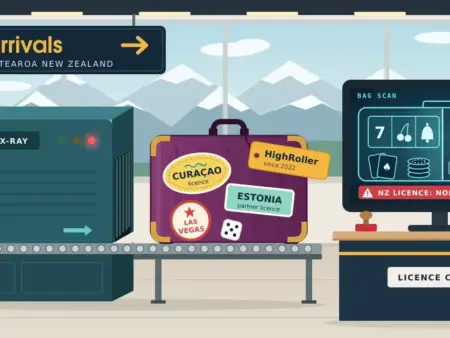
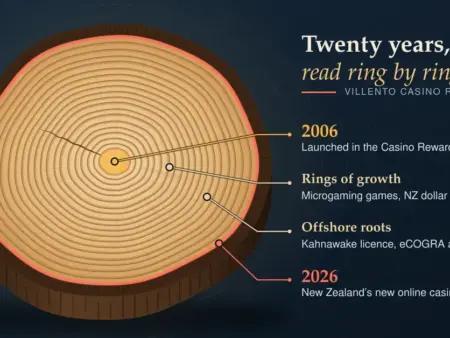
Vegasoo Casino was once a familiar name for New Zealand players who enjoyed online pokies, jackpots and live-dealer tables. Launched around 2021 under a golden-dragon theme, it was one of more than 20 gambling sites run by the Malta-based operator Genesis Global Limited. Anyone searching today for a current Vegasoo review, a login page or an active sign-up bonus needs one essential piece of information first: the brand and its parent company no longer exist.
Genesis Global collapsed into insolvency, and the Malta Gaming Authority (MGA) — the regulator that had licensed the group — cancelled its authorisation. This guide explains exactly what happened, in plain language and with verifiable dates. It also covers why any website still using the Vegasoo name is unsafe, how New Zealand’s new online casino law changes the picture for 2026 and beyond, and the practical steps players can take to protect their money and personal data. It is written as neutral consumer information, not as a promotion or a recommendation to gamble.
Key Facts
- Status: Permanently closed. Vegasoo and its sister sites shut down when parent operator Genesis Global Limited failed.
- Operator: Genesis Global Limited (Malta, company C-65325) — now insolvent and in liquidation.
- Licence: Malta Gaming Authority authorisation cancelled with effect from 11 January 2024.
- Old website: A site using the Vegasoo name is still online and still shows the cancelled licence — treat it as unsafe and do not deposit.
- New Zealand context: Under the Online Casino Gambling Act, only licensed operators may serve NZ from 1 December 2026, with licences expected from early 2027.
- Player help: Free, confidential support via the Gambling Helpline Aotearoa on 0800 654 655.
What Happened to Vegasoo Casino
Vegasoo was never a standalone business. It was one brand in a large portfolio operated by Genesis Global Limited (Maltese company registration C-65325), which held a single Malta Gaming Authority licence covering roughly 23 individual casino websites. Genesis Casino was the group’s flagship, and sister sites shared the same back-end platform, payment systems and customer-support team. When the parent company failed, every brand on that licence went down together — Vegasoo included.
The trouble became public in December 2022, when Genesis Global warned staff it might be unable to meet wages and laid off a large part of its workforce. The company then entered formal insolvency proceedings. Because an insolvent operator cannot safely hold customer money, the regulator stepped in quickly.
This kind of chain-reaction failure is a useful lesson for anyone weighing up an online casino. A site can look polished and well-funded while the company behind it is financially unstable. The licence and the corporate health of the operator matter far more than the graphics on the home page, because they determine whether your balance is protected if things go wrong. Our overview of the New Zealand online casino market puts this kind of operator risk in a wider context.
The Genesis Global Collapse: Timeline
The sequence of events is documented in the Malta Gaming Authority’s own public notices and in contemporary industry reporting:
- December 2022: Genesis Global enters financial difficulty, cuts around 140 staff and warns it may not be able to pay December wages.
- January 2023: The MGA suspends the group’s licence after insolvency proceedings begin. The suspension immediately bars new player registrations, new deposits and ongoing gaming operations, and player funds are frozen pending the Maltese court process.
- 11 January 2024: The MGA formally cancels Genesis Global’s authorisation. The operator is ordered to settle outstanding fees, prove that player funds have been returned, and remove every reference to the MGA and its licence with immediate effect. The regulator states that it is working with the appointed liquidator to return money to registered players.
In short, Vegasoo did not simply stop taking new customers — the legal basis for its entire operation was withdrawn. There is no prospect of the original brand reopening under that licence.
Why the Old Vegasoo Website Is Not Safe
Here is where many players get caught out. A domain such as vegasoo-casino.com can still load in your browser, show a casino lobby, advertise a “NZ$1,500 welcome bonus” and invite you to sign up. At the time of writing, a site using the Vegasoo name is still online and is still displaying the old Genesis Global licence number — the very same authorisation the MGA cancelled and ordered to be removed.
Displaying a cancelled licence is a serious warning sign, not a reassurance. When a gambling company goes bankrupt, its web addresses eventually lapse and can be bought by anyone on the open market. Unrelated third parties often acquire these high-traffic domains, keep the original logo and layout, and use them to collect personal and payment details or to funnel people toward unregulated, offshore servers. These are sometimes called “zombie” domains or brand clones.
If you deposit money on a site like this, there is no functioning regulator standing behind it, no audited protection of your balance, and no realistic way to recover funds or resolve a dispute. Recognising these traps is the same skill set covered in our guide to spotting and avoiding scam casino sites.
How to Check Whether a Casino Licence Is Real
A licence number printed in a website footer means nothing on its own — the number can be copied, kept after cancellation, or simply invented. To verify a claim yourself:
- Go to the regulator, not the casino. Open the licensing authority’s official website directly (for example, the Malta Gaming Authority’s public register) and search for the company name or licence reference there. Never trust a “verified” badge that only links back to pages on the casino’s own domain.
- Match the company, not just the brand. The licence should name the operating company and confirm the status is current and active, not suspended, expired or cancelled.
- Treat missing or dead links as a red flag. If footer seals do not link to a live, independent regulator or testing laboratory, assume the site is unverified.
- Check the New Zealand position. From late 2026, the most relevant question for Kiwi players is whether an operator holds a New Zealand licence at all (more on that below).
New Zealand’s New Online Casino Rules for 2026
The Vegasoo story coincides with the biggest change to New Zealand’s gambling landscape in years. For a long time there was no domestic licensing system for online casinos, which left Kiwis using offshore sites with little local protection. That is now changing under the Online Casino Gambling Act, and the Department of Internal Affairs (DIA) is the government body responsible for the new regime.
The key points confirmed on the DIA’s official guidance for players are:
- A licensing system now exists. New Zealand is moving to a regulated market in which only licensed operators may offer online casino gambling to New Zealanders.
- A limited number of licences. Up to 15 operators can win the right to a licence through a government auction process.
- A transition period. Online casinos that were serving New Zealanders before 1 May 2026 are allowed to continue operating only until 1 December 2026. From that date, all operators except the successful licence applicants must leave the New Zealand market.
- An advertising ban during the transition. Operators must not advertise online casino gambling to people in New Zealand while the new rules are being put in place. Unlawful advertising can be reported to the DIA.
- Licences from 2027. The DIA expects to begin issuing full online casino licences from early 2027, and the regime is not expected to be fully operational until then.
There is a separate, stricter rule for sports and racing betting: since 28 June 2025, online betting on racing and sports may only be offered by TAB NZ. Overseas companies are not permitted to provide it. You can read how these shifts are playing out in our analysis of New Zealand’s online gambling trends and the new rules.
NZ Casino Law Timeline
| Date | What changes | What it means for players |
|---|---|---|
| Before 1 May 2026 | No domestic online casino licensing system | Kiwis mostly used offshore sites with limited local protection |
| From 1 May 2026 | Online Casino Gambling Act in force; DIA oversees licensing | Transition begins; existing operators may keep serving NZ for now |
| During the transition | Advertising of online casinos to New Zealanders is banned | Unlawful ads can be reported to the Department of Internal Affairs |
| 1 December 2026 | Only successful licence applicants may serve NZ (up to 15) | All other operators must exit; using them loses new protections |
| From early 2027 | DIA begins issuing full online casino licences | A New Zealand licence becomes the key marker of a legal operator |
What the Changes Mean for Players
For now, the DIA says there is no immediate change for customers: overseas casinos can continue offering gambling during the transition. But the direction of travel is clear. After 1 December 2026, anyone still using an unlicensed offshore platform will not have the protections the new system is designed to provide, and the DIA warns players about that risk directly.
The sensible, low-risk approach is to treat the next licensing round as the reference point: once the DIA begins issuing licences, a New Zealand licence held by the operator becomes the single most meaningful sign of legitimacy for Kiwi players — more reliable than any overseas badge, bonus offer or marketing claim.
What a Genuinely Safe Online Casino Looks Like
Rather than naming replacement brands — which would sit awkwardly with both the advertising restrictions above and the fact that no New Zealand licences have yet been issued — it is more useful to understand the criteria that separate a well-run casino from a risky one. These are the same checks a careful player should apply to any operator:
- A current, verifiable licence. A real authorisation from a recognised regulator, confirmed on that regulator’s own register — and, from 2027, a New Zealand licence for anyone serving the local market.
- Segregated player funds. Reputable operators keep customer balances in separate accounts, ring-fenced from the company’s day-to-day operating money, so your balance is not simply lost if the business fails. The Genesis collapse shows why this matters.
- Independent game testing. Random number generators that drive pokies and virtual tables should be tested by independent laboratories such as eCOGRA or iTech Labs, with certification you can check.
- Clear, honest terms. Bonus, wagering and withdrawal conditions written plainly, without hidden caps or contradictory clauses.
- Genuine New Zealand dollar support. Accounts and cashier functions that work in New Zealand dollars, so you are not exposed to surprise currency-conversion costs.
- Real responsible-gambling tools and support. Deposit limits, time-outs, self-exclusion and 24/7 help that actually function.
If an operator cannot satisfy these basics, the quality of its welcome offer is irrelevant.
Protecting Your Money and Data After a Casino Closes
If you ever held a Vegasoo or Genesis Global account, or if a casino you use shuts down in future, a few practical steps reduce the fallout:
- Follow the official liquidation process. When a licensed operator fails, the regulator and the appointed liquidator handle the return of player funds. Keep records of your balance and transactions and watch for official instructions — not messages from unofficial sites claiming to “recover” money for a fee.
- Change reused passwords. If you used the same password elsewhere, update it immediately. Old account databases can resurface.
- Never log in through the old domain. Entering credentials on a lapsed casino address can hand them straight to whoever now controls it.
- Monitor your card and bank statements. Watch for unexpected charges and contact your bank promptly if anything looks wrong.
- Be wary of “your account is back” emails. Phishing often follows a high-profile closure. Treat any offer to restore a defunct account as suspicious.
Understanding Bonuses and Wagering Requirements
Marketing headlines such as a large percentage match or a free-spins bundle are the easiest part of a casino offer to understand and the least important. What determines whether a bonus has any real value is the wagering requirement — the number of times you must bet the bonus amount before winnings can be withdrawn.
A typical requirement sits somewhere around 30 to 40 times the bonus, but the detail matters: whether the multiplier applies to the bonus alone or to deposit plus bonus, how much each game type contributes toward it, and whether a maximum cash-out cap limits what you can actually keep. Because these terms vary so widely, it is worth reading our explainer on how wagering requirements work on NZ casino bonuses before accepting any offer. None of this is guidance to gamble — only to read the fine print if you choose to.
Paying and Withdrawing in New Zealand Dollars
One genuine advantage of a casino built for the local market is native New Zealand dollar banking, which avoids hidden currency-conversion fees. Common deposit methods for NZ players include debit and credit cards, e-wallets, prepaid vouchers and direct bank transfers; minimum deposits are usually modest and card and e-wallet deposits are typically instant.
Withdrawals are slower because they pass through a security and verification review before funds are released, and they can also be subject to identity checks and weekly or monthly caps. If payout speed matters to you, our guide to casino withdrawal times in New Zealand explains how long each method realistically takes. Any licensed operator will also require identity verification (often called KYC, or Know Your Customer) before a first withdrawal, which is a legal anti-money-laundering safeguard, not an obstacle unique to any one site.
Responsible Gambling and Important Disclaimer
This article is independent consumer information about a closed brand and New Zealand’s regulatory changes. It is not gambling advice, and nothing here encourages betting or suggests that any game, bonus or strategy improves your chances of winning. Online casino games are designed so the house keeps an edge over time, and outcomes are random. Gambling should only ever be treated as paid entertainment, using money you can afford to lose — never as a way to make money or solve financial problems. It is for adults only.
Licensed operators offer tools to help you stay in control, including deposit limits, reality-check reminders, time-outs and self-exclusion. Our guides to responsible gambling in New Zealand and self-exclusion explain how to use them.
If gambling is causing you or someone you know harm, free and confidential help is available in New Zealand. The Gambling Helpline Aotearoa can be reached 24/7 on 0800 654 655, or by texting 8006, and offers support through the Government’s Safer Gambling Aotearoa programme. Specialist lines are also available for Māori (0800 654 656), Pasifika (0800 654 657) and young people (0800 654 659).
Sources
- Department of Internal Affairs — Online Gambling for players
- Department of Internal Affairs — Online casino provider licensing
- Malta Gaming Authority — Cancellation of Authorisation for Genesis Global Limited (C-65325), 11 January 2024
- CasinoBeats — MGA suspends Genesis Global’s Malta operations following insolvency
- iGaming Business — Malta regulator cancels Genesis Global licence
- Gambling Helpline Aotearoa — Safer Gambling Aotearoa support
Frequently Asked Questions
Is Vegasoo Casino still open in New Zealand?
No. Vegasoo was one of the brands run by Genesis Global Limited, which became insolvent. The Malta Gaming Authority cancelled the group’s licence with effect from 11 January 2024, and the original casino no longer legally operates anywhere, including New Zealand.
There is still a Vegasoo website online — can I use it?
You should not. A site using the Vegasoo name remains online and even displays the old, cancelled licence number, but lapsed gambling domains are frequently taken over by unrelated parties. There is no active regulator or fund protection behind it, so entering personal or payment details is unsafe.
Can I recover money from a closed Genesis Global account?
Any return of player funds is handled through the official liquidation process that the Malta Gaming Authority said it was overseeing with the appointed liquidator. Keep your own records, follow only official instructions, and ignore third-party sites offering to “recover” funds for a fee.
Is online casino gambling legal in New Zealand now?
New Zealand is introducing a licensing system under the Online Casino Gambling Act, run by the Department of Internal Affairs. Operators that served New Zealanders before 1 May 2026 may continue only until 1 December 2026 and must not advertise locally; after that, only up to 15 licensed operators may serve the market, with licences expected from early 2027.
How can I tell if an online casino is genuinely safe?
Check the operator’s licence directly on the regulator’s own register, look for segregated player funds and independent game testing, read the full bonus and withdrawal terms, and confirm real responsible-gambling tools. From 2027, a New Zealand licence will be the clearest sign that an operator is approved to serve Kiwi players.