How pokies welcome bonuses work for NZ players: match deals, free spins, wagering multiples, max-bet rules and how to judge an offer’s real value.

Best Welcome Bonus Pokies in NZ: How the Offers and Terms Really Work

A welcome bonus is the sign-up offer a casino shows a new player: extra funds matched to a first deposit, a batch of free spins, or a mix of both. For people playing pokies — the New Zealand term for slot machines — these offers can look generous, but the headline number tells you very little on its own. What decides whether a bonus is actually worth taking is the fine print: how much you must wager before you can cash out, which games count toward that total, the cap on your bet while the bonus is live, and how long you have. This guide explains how pokies welcome bonuses work, how to read the terms, and how to compare two offers properly — written as plain information, not as a recommendation to play.
Key Points
- Read the terms, not the headline. The wagering multiple, maximum-bet cap and maximum cashout decide a bonus’s value — not the advertised percentage.
- A match needs your own money. A “200% up to $600” offer only reaches $600 if you deposit $300.
- Free spins are small. They are fixed at a low stake, so 50 spins is usually only a few dollars of play.
- Check what the multiple applies to. “Bonus x35” is half the work of “deposit + bonus x35”.
- NZ law is changing. The Online Casino Gambling Act 2026 is in force, but licensed NZ online casinos are not expected to be operational until 2027.
What a pokies welcome bonus is
A welcome bonus is a one-off promotion aimed at first-time account holders. It is a marketing tool designed to encourage a deposit, not a reliable way to make money, and it comes with conditions attached to any winnings. The most common formats fall into a few categories, and many sign-up packages combine two or more of them.
Match deposit bonuses
The casino matches a percentage of your first deposit with bonus credit. A “100% match up to $200” means that if you deposit $200, you receive $200 in bonus funds, giving a $400 starting balance. The important detail is that the headline figure usually requires you to deposit the full qualifying amount yourself: a “200% up to $600” offer only reaches $600 if you deposit $300 of your own money. Bonus credit is almost always separate from your cash and locked behind a wagering requirement before it can be withdrawn.
Free spins
Free spins let you spin a specific pokie a set number of times without staking your own money. They are nearly always fixed at a low value per spin — often $0.10 to $0.20 — so “50 free spins” is usually only a few dollars of play, not an open-ended bankroll. Winnings from standard free spins are typically paid as bonus credit and carry their own wagering requirement. You can read more about how these work in our guide to free spins in NZ.
No-deposit and no-wagering offers
A no-deposit bonus gives a small amount of credit or a handful of spins just for registering, with no deposit needed; these are modest and tightly capped. A no-wagering offer is the rarer and more player-friendly format: anything you win is paid as real, withdrawable cash with no playthrough attached. Because they cost the operator more, no-wagering deals are usually smaller than heavily-wagered packages. See how the formats differ in our breakdown of no-wagering bonuses and how to claim a no-deposit bonus.
How wagering requirements work
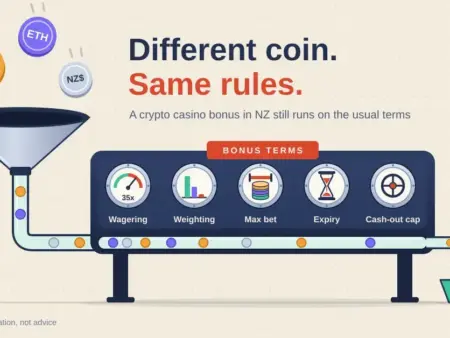
A wagering requirement — also called playthrough or a rollover — is the total amount you must bet before bonus funds (and any winnings from them) convert into cash you can withdraw. It is written as a multiple, such as 35x. The single most important thing to check is what the multiple applies to, because the wording quietly doubles the work:
- Bonus-only (e.g. “bonus x35”): you wager 35 times the bonus amount. A $100 bonus means $3,500 of total bets.
- Deposit plus bonus (e.g. “deposit + bonus x35”): you wager 35 times the combined figure. A $100 deposit and $100 bonus means $7,000 of total bets — twice as much for the same headline.
Lower multiples are easier to clear. A 35x requirement is common and realistic; industry highs of 60x or 70x mean the bonus is very unlikely to turn into cash before it runs out. To compare two offers fairly, turn each one into a turnover figure first: multiply the relevant amount by the multiple, and only then look at the headline percentage. Our page on low-wagering casinos in NZ explains why a smaller bonus with a low multiple often beats a large one with a high multiple.
The terms that decide a bonus’s real value
Two offers with the same match percentage and the same wagering multiple can still be worlds apart. These are the clauses that make the difference, and they are the ones worth reading before you deposit:
- Maximum bet while a bonus is active: most sites cap your stake per spin — commonly around $5 to $10 — while you are clearing wagering. Going over the cap, even once and even by accident, is grounds to void the bonus and everything won with it. It is one of the most frequently enforced terms.
- Game weighting (contribution): pokies usually count 100% toward wagering, but not always. Some high-return titles are weighted lower or excluded entirely, and table games often contribute little or nothing. If you play an excluded game, those bets simply do not reduce the requirement.
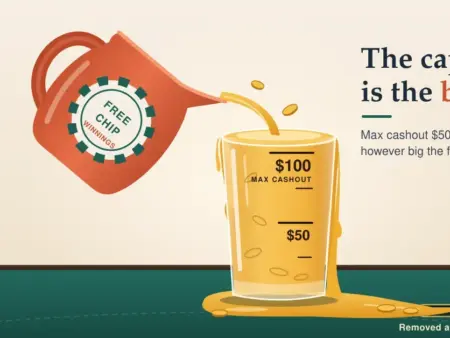
- Maximum cashout: some bonuses cap how much you can withdraw from them — for example, winnings capped at 5x or 10x the bonus. Anything above the cap is removed when you cash out.
- Expiry: the window to meet the requirement is often 7 to 30 days. Miss it and the bonus and any attached winnings are forfeited.
- Sticky vs non-sticky: a non-sticky bonus lets you withdraw your own deposit and real-money winnings without touching the bonus, so you can walk away early. A sticky bonus locks your deposit in with the bonus until wagering is complete.
- Excluded payment methods: some sites disqualify deposits made with certain e-wallets, such as Skrill or Neteller, from welcome offers. Check the qualifying list before funding your account.
Comparing the main bonus types
The table below sets out the common welcome-offer formats side by side so the trade-offs are visible at a glance. No single type is “best” — the right one depends on how you intend to play and how much effort you want to put into clearing terms.
Comparison
| Bonus type | What you get | Typical wagering | Main catch | Best suited to |
|---|---|---|---|---|
| Match deposit | Bonus credit matched to your deposit (e.g. 100% up to $200) | 30x–40x bonus, sometimes deposit + bonus | Needs a full deposit; credit locked until wagering is cleared | Longer entertainment sessions |
| Free spins (wagered) | Fixed-stake spins on a set pokie | Winnings carry their own 30x–40x | Low per-spin value; winnings paid as bonus credit | Trying a specific pokie |
| No-wagering spins | Spins whose winnings are paid as cash | None | Usually smaller; often tightly capped | Players who want winnings they can withdraw |
| No-deposit bonus | Small credit or spins just for registering | Often high (40x+) | Small amount; low maximum cashout | Testing a site risk-free |
| Cashback | A percentage of net losses returned | Low or none, depending on terms | Only pays after you have lost | Players who prefer a loss cushion to upfront credit |
How to compare two offers, step by step
When two welcome packages sit side by side, a short checklist keeps the comparison honest and stops the biggest headline from winning by default:
- Convert each to a turnover figure. Multiply the bonus (or deposit-plus-bonus, whichever the terms specify) by the wagering multiple. This is the real size of the task.
- Check the maximum bet cap. A low cap means clearing the turnover takes many more spins and more time; factor that against the expiry window.
- Read the game weighting. Confirm the pokies you actually want to play contribute 100%, and that none of them are excluded.
- Find the maximum cashout. A tight cap can make a large bonus worth far less than it appears.
- Note the expiry and whether it is sticky. A realistic deadline and a non-sticky structure both lower the risk of losing your own money to the terms.
Our wider guide to welcome bonuses in NZ and the explainer on match deposit bonuses walk through more worked examples of this calculation.
Online casino rules in New Zealand (2026)
New Zealand’s online casino market is changing, and anything you read that assumes offshore sites are the normal, settled option is now out of date. The Online Casino Gambling Act 2026 came into force on 1 May 2026 and, for the first time, creates a licensed domestic market for online casino play. The Department of Internal Affairs (DIA) is the regulator.
- Up to 15 licences will be issued, with no operator holding more than three. Each covers a single brand.
- Licences are allocated through a competitive process — expressions of interest, an auction, then full applications — which ran through the second half of 2026. The DIA has said the regime is not expected to be fully operational until 2027, so licensed New Zealand online casinos are not yet live as of October 2026.
- Offshore operators that already served New Zealand are in a transition period. Unlicensed sites must stop serving New Zealanders from 1 December 2026, or from 1 June 2027 where a licence application has been lodged.
- Licensed operators will be bound by rules on harm minimisation, age and identity verification, consumer protection and advertising limits.
The practical takeaway: the licensing picture is still settling, so check an operator’s current New Zealand status rather than relying on an overseas licence alone. For background on how the law applies to players, see our New Zealand gambling laws guide.
Common mistakes that void a bonus
When a withdrawal is refused and the balance is removed, it is usually because of a term that was in force the whole time. The recurring causes are:
- Exceeding the maximum bet while the bonus is active — the most common single reason.
- Playing an excluded or low-weighted game, so the wagering never completes.
- Letting the bonus expire before the turnover is met.
- Depositing with a non-qualifying method, which disqualifies the offer from the start.
- Trying to withdraw before wagering is complete, which can forfeit the bonus portion.
- Holding more than one account or breaching the one-bonus-per-household rule.
None of these are hidden if you read the terms first; almost all of them are avoidable.
Who a welcome bonus suits
A welcome bonus can extend playing time for someone who plans to deposit, play pokies for entertainment over several sessions, and accepts that the money is being spent on that entertainment. In that situation, a low wagering multiple, a sensible bet cap and a 100% pokies weighting make the offer easier to clear.
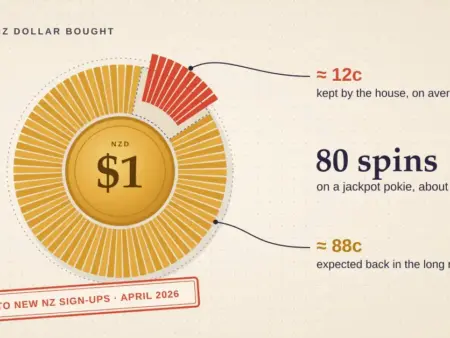
It suits you less if you intend to deposit, play briefly and withdraw. In that case a standard bonus locks your balance behind a requirement and can block the withdrawal entirely, so declining the offer — or choosing a non-sticky or no-wagering deal — keeps the money yours to take out at any point. A welcome bonus is never a strategy for winning: pokies outcomes are random, and the house edge is unchanged by any promotion.
Responsible gambling
This article is information only, not advice or encouragement to gamble. Gambling involves real financial risk, outcomes on pokies are determined by random number generators, and no bonus, system or “tip” improves your chances of winning. Only ever play with money you can afford to lose, and treat any deposit as spent. You must be 18 or over to gamble online.
If gambling is causing harm to you or someone you know, free and confidential help is available in New Zealand. The Gambling Helpline Aotearoa is available 24/7 on 0800 654 655 (or text 8006), and the Problem Gambling Foundation offers free counselling on 0800 664 262. Most reputable sites also provide deposit limits, time-outs and self-exclusion tools — our page on responsible gambling in NZ explains how to use them.
Sources
Frequently asked questions
How do I compare two welcome offers properly?
Turn each one into a turnover figure before anything else. Multiply the bonus by the wagering multiple, and check whether the deposit is included. A $100 bonus at 35x is $3,500 of betting; the same bonus at “deposit plus bonus” 35x is $7,000. That number tells you more than the headline percentage ever will.
What is a maximum bet rule?
It is a cap on how much you may stake per spin while a bonus is active, often somewhere between $5 and $10. Exceeding it, even once and even by accident, is grounds to void the bonus and any winnings from it, and it is among the most frequently enforced terms.
Should I always take the welcome bonus?
No. If you plan to deposit, play briefly and withdraw, a standard bonus locks your balance behind a wagering requirement and can prevent that withdrawal. Declining the offer, or choosing a non-sticky or no-wagering deal, keeps the money yours to take out at any time.
Does my deposit count toward the wagering?
It depends on the wording. “Bonus x35” applies the multiple to the bonus only, while “deposit plus bonus x35” applies it to both — roughly double the work for the same headline. This is the single most useful phrase to check in the terms.
Can I play at a licensed New Zealand online casino right now?
Not yet. The Online Casino Gambling Act 2026 is in force, but the Department of Internal Affairs has said the licensing regime is not expected to be fully operational until 2027, and licences are still being allocated. Offshore operators are in a transition period, so check an operator’s current New Zealand status rather than relying on an overseas licence.
Recent Gambling News