No-wagering casino bonuses let NZ players keep winnings with no playthrough. How free spins and bonus cash work, the caps to watch, and the 2026 rules.

No Wagering Bonus NZ: How Wager-Free Casino Offers Work

A no-wagering bonus is a casino promotion whose winnings are paid out as ordinary, withdrawable cash instead of being locked behind a playthrough requirement. For New Zealand players weighing up offers in 2026 — the year the country began building its first dedicated online-casino licensing system — knowing exactly how these “wager-free” deals pay out, and which terms still apply, matters far more than the size of the headline number. This guide explains what the term means, how free spins differ from bonus cash, the clauses worth reading before you opt in, the mistakes to avoid, and how the current regulatory shift affects Kiwi players.
What a no-wagering bonus actually means
To see what makes a bonus “wager-free”, it helps to understand the thing it removes. A standard bonus carries a wagering requirement (also called playthrough or turnover): before any bonus money or the winnings from it can be withdrawn, you must bet it a set number of times. A 35x requirement on a $20 bonus, for example, means staking $700 in total before a cash-out is possible. Until that target is met, the balance is “bonus money” rather than your own cash.
A no-wagering bonus strips that step out. Any winnings land directly in your real-money balance and can be withdrawn immediately, subject only to the operator’s normal identity checks and a few caps covered below. In practice this makes the offer far easier to value, because what you see on screen is close to what you can actually take out. If you want the mechanics of turnover explained in full, see our guide to wagering requirements; offers with a small but non-zero multiplier sit in a related category we cover under low-wagering casinos.
One term worth separating out is the sticky bonus. A sticky (or non-cashable) bonus can be used for betting but can never itself be withdrawn — only the winnings it generates may be, and often only after playthrough. A true no-wagering bonus is the opposite: there is no sticky balance to clear and no turnover to grind, so the winnings are yours as cash.
How no-wagering bonuses work in practice
No-wagering promotions in the New Zealand-facing market usually arrive in one of two forms, and the difference affects both what you can play and how much you can keep.
Free spins vs bonus cash
Free spins are the more common wager-free format. You receive a fixed number of spins at a set stake on one or a handful of nominated pokies, and any winnings are credited as cash. Because the eligible titles are chosen by the operator, your choice of game is limited. Our overview of free spins covers how spin value and eligible games are set.
Bonus cash is less common as a genuine no-wagering offer but more flexible when it appears: the credited amount can usually be spread across a wider range of games, including some table games, rather than a single pokie. Whichever form you take, check whether the stake itself is also cash or merely a one-off playing credit, because that changes what ends up withdrawable.
No-deposit vs deposit-based offers
A no-deposit wager-free offer requires no money of your own — typically a small number of spins or a modest credit for registering — so you risk none of your own funds, though the amount you can convert to cash is almost always capped. A deposit-based no-wagering offer triggers after your first qualifying deposit and tends to be larger, with higher or no conversion caps, because the operator is matching a real transaction. Neither is automatically “better”; they suit different goals, which the key points below summarise.
Key Points
- Winnings pay as cash: no-wagering winnings go to your real-money balance, not a locked bonus wallet.
- No playthrough: there is no turnover target to clear before a withdrawal.
- Two main formats: free spins (tied to set pokies) and bonus cash (more flexible but rarer as wager-free).
- Caps still apply: maximum win/conversion limits, max bet rules, eligible-game lists and expiry windows remain in force.
- Check the fine print: an “x” multiplier anywhere in the terms means the offer is not truly wager-free.
The terms that still apply
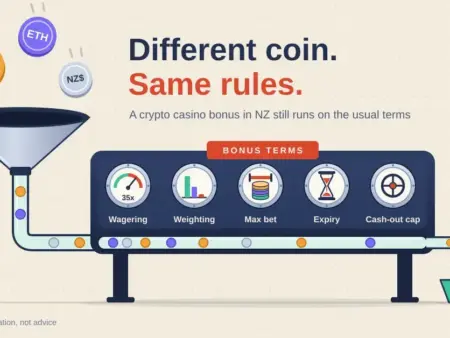
“No wagering” refers only to the absence of playthrough. Several other conditions can still shape what you keep, and reading them before you opt in is the single most useful habit:
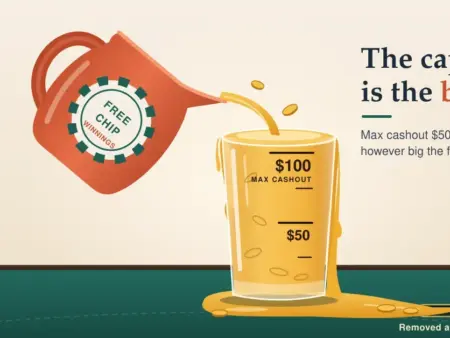
- Maximum win or conversion cap: many offers, especially no-deposit ones, limit the total you can withdraw — anything above the cap is forfeited even though there was no turnover rule.
- Maximum bet per spin or round: staking above a stated limit while the offer is active can void the winnings.
- Eligible games: free spins are usually tied to specific pokies; some higher-return titles are excluded.
- Expiry: wager-free spins and credits often expire quickly, sometimes within 24–72 hours.
- Deposit or verification conditions: some “no-deposit” offers still require one successful deposit, or completed identity (KYC) verification, before a first withdrawal is released.
- The “no wagering on the spins, but wagering on the winnings” trap: a minority of promotions advertise no-wagering spins yet attach a small multiplier (for example 1x–5x) to the resulting winnings. If any turnover figure appears in the terms, the offer is not fully wager-free.
None of these clauses is a red flag on its own; they are simply the real terms of the deal. The problem only arises when an offer is marketed as wager-free but hides a conversion cap or a winnings multiplier in the fine print.
No-wagering versus standard wagering bonuses
Neither type is universally superior. A standard bonus often advertises a larger headline figure, but that value is only realised if you complete the turnover; a no-wagering bonus is usually smaller but its value is liquid from the moment you win. The table compares the two on the points that decide which is worth more to a given player.
Comparison
| Feature | No-wagering bonus | Standard (wagering) bonus |
|---|---|---|
| Playthrough | None | Required (often 30x–45x) |
| Where winnings sit | Real cash balance, withdrawable | Bonus balance until turnover is met |
| Typical headline size | Often smaller | Often larger |
| Value you actually keep | Clear from the outset (minus any cap) | Only realised if turnover is completed |
| Time pressure | Short expiry on spins/credit | Expiry plus time to grind turnover |
| Best suited to | Cautious or occasional players | Players chasing maximum promo value |
As a rule of thumb, a smaller wager-free amount can return more real money than a large wagering bonus that is unlikely to be cleared — but only after you have checked the caps above. Treat the headline number as a starting point, not the deciding factor.
Online casino rules for New Zealand players in 2026
The legal backdrop changed significantly in 2026, so any guide written before then is now out of date. Historically, New Zealand had no domestic online-casino licence: residents could lawfully play at offshore sites, but operators could not be based in New Zealand or advertise to New Zealanders. That framework is being replaced.
The Online Casino Gambling Act 2026 came into force on 1 May 2026 and hands oversight of a new licensing system to the Department of Internal Affairs (DIA). Key points, accurate at the time of writing (October 2026):
- The regime allows a capped number of licences — up to 15 — allocated through suitability checks and a competitive auction of application rights.
- That auction concluded in early October 2026; the DIA confirmed on 13 October 2026 that 11 companies had secured the right to apply, at NZ$15 million each. Winning the auction grants only the right to apply; licences themselves are expected to be granted from 2027.
- Advertising of online casino gambling to New Zealanders remains prohibited during the transition.
- From 1 December 2026, operators that have not lodged a licence application must stop offering online casino services to New Zealand players. Those with applications under assessment may keep operating under transitional arrangements until a decision is made.
For players, two practical consequences follow. First, the operator behind any bonus you are considering may change status over the coming months, so it is worth checking that a site is either applying for or holds a DIA licence rather than relying on an overseas licence as the benchmark. Second, recreational gambling winnings — including anything kept from a no-wagering bonus — are generally not taxed for players in New Zealand. For the wider legal picture, see our New Zealand gambling laws guide, and check the DIA directly for the latest dates, as the transition timetable is still unfolding.
How to read a bonus offer before you claim
A short, consistent checklist removes most of the risk of an unpleasant surprise at the cashier:
- Confirm the offer is genuinely wager-free — search the terms for any “x” multiplier on the bonus or its winnings.
- Find the maximum win or conversion cap and decide whether it is high enough to be worth your time.
- Check the maximum bet allowed while the offer is active so you do not void it by accident.
- Note the expiry window and the list of eligible games.
- Confirm whether a deposit and completed identity verification are required before a first withdrawal.
- Check that the offer is valid for New Zealand accounts and pays in NZD to avoid conversion costs.
Common mistakes to avoid
- Chasing the biggest headline figure without reading the conversion cap — a large wager-free credit with a low cap can be worth less than a small one with none.
- Assuming “no wagering” also means “no limits”; bet caps, game weightings and expiry still apply.
- Leaving identity verification until a win, which can delay the first payout.
- Treating an overseas licence or a fairness seal as proof the bonus is fair — those cover game randomness and operator conduct, not the promotion’s terms.
- Playing an excluded title with the bonus balance, which can forfeit the winnings.
Who no-wagering bonuses suit
Wager-free offers suit cautious or occasional players who value certainty over a large but conditional headline figure, and anyone who dislikes the grind of turnover. Players chasing the maximum possible promotional value, and who are comfortable meeting high playthrough targets, may still prefer a larger standard bonus. For most newcomers, a modest no-wagering offer is the simplest way to understand how an individual site handles deposits, play and withdrawals before committing more.
Responsible Gambling
This article is general information, not advice, and it does not suggest that any bonus improves your chances of winning. Casino games carry a built-in house edge, and a promotion changes only the terms of play, not the odds. Gambling in New Zealand is for adults only — you must be at least 18 — and it should stay within a budget you can afford to lose.
Free, confidential support is available 24/7 from the Gambling Helpline New Zealand on 0800 654 655 (or text 8006), and from the Problem Gambling Foundation of New Zealand. Reputable sites also offer tools such as deposit limits, time-outs and self-exclusion. For a fuller rundown of the help available, see our page on responsible gambling in New Zealand.
Sources
Frequently Asked Questions (FAQ)
Are no-wagering casino bonuses really free of playthrough?
A genuine no-wagering bonus has no turnover requirement, so winnings go straight to your cash balance. The important check is the fine print: a small number of offers advertise no wagering on the spins but attach a low multiplier to the winnings. If any “x” figure appears, the offer is not fully wager-free.
Can I withdraw no-wagering winnings straight away?
Usually yes, once any current round of play is finished. The main things that can delay a payout are completing identity verification, a minimum withdrawal amount, and the operator’s standard processing time. A maximum win or conversion cap may also limit how much of the winnings you can take out.
What is the difference between a sticky bonus and a no-wagering bonus?
A sticky bonus can be used to place bets but can never be withdrawn itself; only the winnings it produces may be cashed out, often after playthrough. A no-wagering bonus has no sticky balance and no turnover, so the winnings are treated as your own cash from the start.
Do New Zealand players pay tax on no-wagering bonus winnings?
Recreational gambling winnings, including anything kept from a bonus, are generally not taxed for players in New Zealand. Tax situations can differ for professional gamblers, so anyone in doubt should seek independent advice.
Is it legal to claim an online casino bonus in New Zealand in 2026?
New Zealand is transitioning to a licensed online-casino market under the Online Casino Gambling Act 2026, overseen by the Department of Internal Affairs. Players are not penalised for using online casinos, but which operators may lawfully serve New Zealanders is changing during the transition, with unlicensed operators that have not applied required to stop from 1 December 2026. Check an operator’s licensing status and the DIA for current dates.
Recent Gambling News