
This is a factual operator profile of a casino brand listed on this site. It carries no rating, no offer and no link to any operator’s cashier. Its purpose is narrow: to set out who runs Wildz Casino, what the publicly circulated figures about it actually mean, and how New Zealand’s new online-casino rules apply to a brand of this kind.
Two things set this brand apart from most others profiled here. The operating company and the licence number have both changed recently, and a large share of the material still circulating online has not caught up. Where those figures are wrong, several of them run in the operator’s own disfavour rather than in its favour — an unusual pattern that says something useful about how casino listings are produced and why they should be read with care.
Key Facts
| Brand | Wildz Casino (wildz.com) |
| Launched | 2019 |
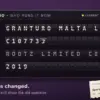
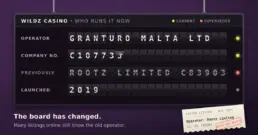
| Current operating company | Granturo Malta Ltd — Malta, company no. C107733 |
| Previous operating company | Rootz Limited — Malta, company no. C83903 |
| Current licence | MGA/B2C/1079/2025 (Malta Gaming Authority, Tier 1, issued September 2025) |
| Superseded licence | MGA/B2C/599/2018 (still shown on many third-party pages) |
| Sister brands | Wheelz, Caxino, Spinz and others under the same company and licence |
| Welcome offer in circulation | 100% up to NZ$500 + 200 free spins, 35x wagering on the bonus (not a NZ-licensed offer) |
| Cryptocurrency | Not supported — prohibited under the MGA licence condition |
| New Zealand status | No operator is licensed for online casino gambling in NZ; the DIA register opens from early 2027 |
| Free NZ help | Gambling Helpline 0800 654 655, or free text 8006, 24/7 |
The licence and operating entity
Wildz is widely described as “established in 2019 by Rootz Limited.” The launch year is correct and the original operator is correct, but the entity behind the brand has since changed. Public reporting and the MGA licence record now place the brand under Granturo Malta Ltd (Malta company number C107733), holding Malta Gaming Authority licence MGA/B2C/1079/2025, a Tier 1 authorisation issued in September 2025. The earlier Rootz Limited licence, MGA/B2C/599/2018, has been superseded.
The practical consequence is the one worth carrying away: checking the MGA public register for “Rootz Limited” will not return the current authorisation. The entity to search is Granturo Malta Ltd. Reporting notes that many third-party sites still display the old company and licence number, and that in at least one case a sister brand’s own licensing page did too. That is a clean illustration of a wider point: a licence number printed on a website is a claim about a moment in time, not a guarantee of current status. The register, not the footer, is the authoritative source.
A Tier 1 MGA licence is not nothing. It requires player-fund segregation — customer balances kept separate from the operator’s working capital — and it provides access to independent dispute resolution through the MGA’s own player-support function. That is a meaningfully stronger position than an operator with no accessible complaints route at all. It remains, however, a Maltese remedy rather than a New Zealand one, a distinction that matters a great deal under the country’s current rules.
The welcome bonus and what the terms actually require
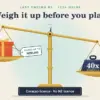
The offer most often attached to this brand is a first-deposit match of 100% up to NZ$500 plus 200 free spins, carrying 35x wagering. On its own, “35x wagering” tells a reader almost nothing, because the figure that matters is what the multiplier is applied to.
If 35x applies to the bonus only on a NZ$500 bonus, that is NZ$17,500 of required turnover. If it applies to deposit plus bonus — a NZ$500 bonus on top of a NZ$500 deposit — the requirement doubles to NZ$35,000. Listings almost always quote the multiplier without the base, which leaves the headline number impossible to interpret. For this brand the rule is reported as bonus-money-only, in a non-sticky structure, which is the more favourable of the two arrangements.
That non-sticky detail is worth understanding, because it is rarely spelled out. In a non-sticky structure your own deposit is spent first and stays withdrawable, and you can forfeit the bonus to release it. In a sticky structure the whole balance is locked until the wagering requirement is cleared. The difference is substantial, and our casino bonuses page explains how these terms interact in practice.
The free-spin figure is subject to the same trap. “200 free spins” sounds generous, but the number of spins means nothing without the spin value. Reported at NZ$0.10 per spin and released 25 per day over eight days, the package amounts to NZ$20 of covered stakes in total — the subject our free spins page covers in detail.
One term specific to this brand deserves its own warning: the maximum bet during bonus play is reported as a percentage of the bonus rather than a fixed figure, and the way that scales catches smaller players out.
Bonus Terms
The maximum bet during bonus play is reported as a percentage (around 10%) of the bonus credited, rather than a fixed figure. That produces very different stake limits depending on how much bonus you hold — and the smallest bonuses carry the tightest caps.
| Bonus credited | Maximum bet at 10% | Risk of breaching it |
|---|---|---|
| NZ$20 | NZ$2.00 | Very high — below many games’ default stake |
| NZ$50 | NZ$5.00 | High |
| NZ$200 | NZ$20.00 | Moderate |
| NZ$500 | NZ$50.00 | Lower |
Breaching this limit — even accidentally — is the most common stated reason for a voided withdrawal at this brand. Always confirm whether the maximum bet is a fixed figure or a percentage, and whether it counts the total stake per round, before you play.
The trap sits at the small end. A player who claims a modest bonus can face a stake cap of only a couple of dollars — below the default bet on plenty of pokies, and easy to exceed without noticing. The smaller the bonus, the tighter the constraint. This is not a hypothetical concern: as the complaint record below shows, breaching the maximum-bet rule is the single most common reason a withdrawal at this brand is voided.
None of this describes an offer a New Zealand player can lawfully claim from a licensed operator. Under New Zealand’s regulations, an inducement from a licensed online casino is capped: where a customer must spend their own money to qualify, the offer cannot exceed the lower of NZ$100 or 200% of the deposit or bet. A NZ$500 match has no lawful equivalent in the licensed market.
One offer, two currencies: a localisation signal
The same welcome offer is routinely described several times over on the same page, in two different currencies and with three different totals. It is worth setting out, because it is the clearest available signal that a casino listing has been adapted from another market rather than researched for New Zealand.
A typical page carries a hero banner reading “100% up to NZ$500 + 200 free spins,” an introduction promising “a package worth up to CA$2,000,” a quick-overview table repeating the NZ$500 figure, a welcome-bonus section quoting “100% up to CA$500, then 50% up to CA$500,” and a bonus table reverting to NZ$500. Three of those references are left in Canadian dollars. Worse, the figures disagree even among themselves: a two-deposit structure of CA$500 plus CA$500 totals CA$1,000, not the CA$2,000 the introduction claims.
The most likely explanation is a New Zealand page generated by find-and-replacing currency symbols on a Canadian template, with several instances missed. This is worth carrying as a reader’s tool. A page that quotes one offer in two currencies has been adapted rather than checked, and every other figure on it — payout times, game counts, return percentages — should be treated with the same suspicion.
The group behind the brand
Wildz is the flagship of a group that also operates Wheelz, Caxino, Spinz and other brands, all under the same company and the same MGA licence. Two consequences follow, and — unusually for the group structures profiled on this site — one of them works in the player’s favour.
- Regulatory decisions apply across the group. A ruling or licence condition affecting one brand affects the framework governing all of them, because they share a single authorisation.
- Self-exclusion operates network-wide. Excluding yourself at one brand excludes you across the group. That is a genuine harm-reduction feature and is stronger than a per-site exclusion, which can be undone simply by moving to a sister brand.
That network-wide design is the opposite of the arrangement covered on our Lucky Nugget page, where it is the withdrawal cap that is shared across brands while the sites market themselves independently. If you want to understand how closely these sister brands overlap on games, bonuses and terms, our Wildz vs Spinz comparison sets them side by side, and the broader mechanics of blocking yourself across a group are explained on our self-exclusion page.
The group also runs a shared cashback pool, reported at 10–20% weekly with a 1x wagering requirement. A loss rebate is still a loss rebate — our cashback bonuses page sets out what the research says about that structure — but a 1x requirement is unusually low, and any claim of “no wagering requirements” overstates it.
The public complaint record
Independent complaint platforms carry published accounts from players at this casino. They are worth reading not as proof of wrongdoing but because they show a specific mechanism in operation rather than a vague grievance.
The most instructive account reproduces the operator’s own email. The player was told that bets had been placed exceeding 10% of the bonus credited to the account, that this breached the bonus terms, and that the withdrawal had been cancelled and the winnings voided. The player’s account states they had read the terms and had written confirmation from support that they were compliant before the withdrawal was refused. Whatever the rights and wrongs of the individual case, the mechanism is exactly the percentage maximum-bet rule described above — the clearest reason to confirm that limit before playing, not after.
A separate complaint describes a withdrawal request cancelled after ten days, with the balance no longer available and live chat unable to explain why. Delayed or reversed withdrawals are a recurring theme in the public record, and they are the single thing most worth checking an operator’s reputation for before depositing anywhere.
Game returns and what the RTP numbers mean
Four games are routinely listed for this brand with their return-to-player (RTP) figures side by side: 96.21%, 88.12%, 95.97% and 96.01%. RTP is the long-run percentage of total stakes a game is designed to pay back; the remainder is the house edge.
The 88.12% figure is a progressive jackpot pokie, and it is correct for base play — a slice of every stake is diverted to fund the jackpot pool rather than returned through ordinary wins. Presented in a list beside three games in the 96% range with no annotation, it reads as directly comparable. It is not. In round terms, that is roughly NZ$11.90 lost per NZ$100 staked against roughly NZ$3.20 to NZ$4.00 for the others — a threefold difference hidden in a tidy column of numbers.
The same unannotated 88.12% figure turns up on other brands in this section too, which strongly suggests it comes from a shared dataset rather than from anyone verifying it per site. Listings also tend to lump French, American and European roulette together without distinguishing them, even though their house edges differ markedly: French roulette with the half-back rule on even-money bets is among the best value in any casino, while American roulette carries roughly double the house edge of the European wheel. Our live casino page sets out those figures in full.
Where New Zealand’s rules leave this
New Zealand’s online-casino market is mid-restructure, and that context governs how any overseas brand should be described. The Online Casino Gambling Act 2026 came into force on 1 May 2026. Operators that were already serving New Zealand before that date fall within a transitional arrangement and may continue until 1 December 2026. From that date, only operators that have come through the Department of Internal Affairs’ licensing process may continue, under a transitional exemption, while their applications are assessed. The number of licences is capped at 15, and the DIA expects to begin issuing them from early 2027, alongside a public register of licensed operators.
Advertising to people in New Zealand is prohibited during the transition, and licensed casinos will be required to display a unique registration marker once the regime is running. A Malta licence, however strong, is not a New Zealand authorisation. It does carry independent dispute resolution through the MGA — more recourse than most operators profiled here offer — but that is a Maltese remedy, not a New Zealand one.
The bottom line is simple: until the DIA register opens from early 2027, no operator can accurately be described as licensed for online casino gambling in New Zealand. Our New Zealand gambling laws guide sets out the full timeline and what each stage means for players.
What to check for yourself
If you take anything practical from this profile, make it a short verification checklist that applies to any brand, not just this one:
- The operating entity shown in the site footer, and whether it matches what the licence register actually returns — not what a third-party listing says.
- What the wagering multiplier applies to: bonus only, or deposit plus bonus.
- Whether the bonus is sticky or non-sticky.
- Whether the maximum bet during bonus play is a fixed figure or a percentage, and whether it counts the total stake per round.
- The spin value sitting behind any “free spins” headline.
- Whether self-exclusion applies to the single brand or the whole group, and which payment routes genuinely work from New Zealand — a point our casino deposit methods page covers.
Our casino reviews hub sets out the same checklist applied consistently across every brand in this section.
Disclaimer
This page is published for information only. It is not financial, legal or gambling advice, and nothing on it is a recommendation to gamble or an endorsement of any operator. You must be 18 or older to gamble online in New Zealand.
No link on this page goes to an operator’s cashier, and none will. Licensing, ownership, bonus terms, withdrawal limits and country availability all change — sometimes within weeks — and this page covers a period in which the New Zealand market is being restructured. Confirm the current position in the operator’s own terms and on the regulator’s own register before acting on anything here. Player accounts described above are individual reports rather than findings.
Free, confidential help is available in New Zealand from the Gambling Helpline on 0800 654 655, or by free text to 8006, 24 hours a day. PGF Services offers free counselling on 0800 664 262, and support is available to whānau and friends as well as to players.
Sources
Operator and licensing research, legislation and public-health guidance used in this article. No link below goes to a gambling operator’s cashier.
- Wildz Casino: operating entity, MGA licence and bonus terms — GambleLogic
- Caxino Casino: the same operator entity change and superseded licence details — GambleLogic
- Malta Gaming Authority public licence register — Malta Gaming Authority
- Mega Moolah: base-game return and the jackpot contribution — Bonus.com
- House edge of casino games compared — Wizard of Odds
- Online Casino Gambling Act 2026 — New Zealand Legislation
- Information for online casino customers, transitional dates and the public register — Department of Internal Affairs
- Online Casino Gambling Regulations 2026: inducement caps and player-protection rules — Senet Group
- Guide to casino games — Safer Gambling Aotearoa, Health New Zealand | Te Whatu Ora
- Gambling Helpline Aotearoa New Zealand — free, confidential support
Frequently Asked Questions
Who operates Wildz Casino?
It launched in 2019 under Rootz Limited (Malta, C83903) and is now reported as operated by Granturo Malta Ltd (Malta, C107733), under MGA licence MGA/B2C/1079/2025, a Tier 1 authorisation issued in September 2025. Searching the Malta Gaming Authority register for the old Rootz entity will not return the current authorisation, so the name to look for is Granturo Malta Ltd.
Does 35x wagering apply to my deposit as well as the bonus?
It is reported as bonus money only, in a non-sticky structure. On a NZ$500 bonus that is NZ$17,500 of turnover rather than the NZ$35,000 it would be if deposit and bonus were combined, and your own deposit stays withdrawable. Any listing that gives the multiplier without stating the base leaves the figure impossible to interpret.
How much are 200 free spins actually worth?
Reported at NZ$0.10 per spin and released 25 per day over eight days, the package comes to NZ$20 of covered stakes in total. The number of spins tells you nothing on its own; only the spin value does.
Is Wildz licensed in New Zealand?
No, and no operator is. A Malta licence is not a New Zealand authorisation, although it does provide access to independent dispute resolution through the MGA. Under the Online Casino Gambling Act 2026, the Department of Internal Affairs expects to begin issuing New Zealand licences and publishing its public register from early 2027, with the number of licences capped at 15.
Where can I get help if gambling is causing problems?
The Gambling Helpline is free and available 24 hours a day on 0800 654 655, or by free text to 8006. PGF Services offers free counselling on 0800 664 262. Support is available to whānau and friends as well as to the person gambling.