
LeoVegas is one of the most widely licensed online casino brands in the world and, at the same time, one of the most heavily penalised. Founded in Sweden and now owned by the American casino group MGM Resorts International, it is a large, publicly accountable operator with a strong mobile product and a deep game library. This profile sets out who owns it, which regulators license it, what those regulators have actually found, what the brand does well, and — the question that matters most for readers here — whether any of it reaches players in New Zealand under the country’s new 2026 online casino rules.
Who owns LeoVegas, and how big it is
LeoVegas was founded in 2011 in Stockholm, Sweden, by two Swedish entrepreneurs who built the product for mobile phones before most of the industry did. That mobile-first origin is not just marketing history: it is the reason the brand repeatedly won mobile-casino awards in its early years and still runs one of the smoother phone experiences in the category.
The casino and its sister brands are owned and operated by LeoVegas Mobile Gaming Group, with the head office in Stockholm and further offices in Malta, the United Kingdom and Milan. In 2022, the group was acquired by MGM Resorts International, the large US casino and hospitality company, through a recommended public tender offer at SEK 61 per share — a premium of roughly 44% over the prior share price, valuing the business at about US$607 million. LeoVegas was subsequently delisted from the Nasdaq Stockholm exchange and now operates as an MGM subsidiary.
By scale, the library runs to around 2,500 games from more than 60 studios. That figure is worth stating plainly, because a lot of the material circulating about this brand quotes a much lower “1,500+” count. The larger number is the accurate one, and it reflects a genuinely broad catalogue rather than a padded total.
Key facts
| Detail | Verified information |
|---|---|
| Brand operator | LeoVegas Mobile Gaming Group |
| Parent company | MGM Resorts International (acquired 2022, ~US$607 million) |
| Founded | 2011, in Stockholm, Sweden |
| Head office | Stockholm, with offices in Malta, the UK and Milan |
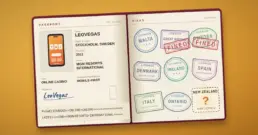
| Licences held | Malta (MGA), United Kingdom (UKGC), Sweden, Denmark, Italy, Netherlands and Ontario (Canada) |
| Games | Around 2,500 from more than 60 studios |
| Live casino | Evolution and Pragmatic Play Live (two studios) |
| New Zealand availability | Not independently confirmed; no New Zealand licence as at late 2026 |
| Minimum age | 18+ |
Which regulators license LeoVegas
LeoVegas holds licences across several regulated markets rather than relying on a single permissive jurisdiction. The brand is licensed by the Malta Gaming Authority (licence reference MGA/CRP/237/2013) and the UK Gambling Commission, and it also holds authorisations in Sweden (where it trades as Roar Vegas), Denmark, Italy, the Netherlands and the Canadian province of Ontario.
This is a meaningful point of difference from the many offshore casinos that operate on a single Curacao licence with little oversight. Licences in Malta, the UK, the Nordics, the Netherlands, Italy and Ontario mean the operator can be identified, held to account and, if it falls short, fined — and all of these registers can be checked publicly by anyone. The flip side, covered below, is that none of those licences is a New Zealand authorisation.
A licence, though, is a mechanism for finding and correcting problems. It is not, on its own, proof that no problems exist. The record shows exactly why that distinction matters.
The regulatory record
The same breadth of licensing that the brand presents as a trust signal has also produced a run of enforcement actions — and the recurring theme across them is player protection, which is precisely the thing the licences are cited as guaranteeing. The table below sets out the confirmed penalties, what each regulator found, and where each case now stands.
Regulatory record
| Regulator & year | Penalty | What was found | Status |
|---|---|---|---|
| UK Gambling Commission, 2018 | ~£600,000 package | 41 misleading adverts (April 2017–January 2018) and self-exclusion failings, including self-excluded customers not refunded and some allowed to gamble again without checks | Settled; funds in self-excluded accounts returned or donated |
| UK Gambling Commission, 2022 | £1.32 million | Anti-money-laundering and responsible-gambling failings (October 2019–October 2020); safer-gambling and AML triggers set too high to work | Paid, with an official warning and a required independent audit |
| Netherlands (Kansspelautoriteit) | €500,000 | Duty-of-care breaches found in every player file the regulator reviewed (October 2023–May 2024) | Under appeal; LeoVegas disputes the findings |
| Sweden (Spelinspektionen) | ~SEK 8 million (about US$850,000) | Alleged late and inadequate intervention with high-loss players under the duty of care | Overturned — annulled by the Administrative Court in Linköping (June 2025) |
The fair reading is twofold. On one hand, these are regulators doing their job, and that scrutiny is itself the argument for a licensed operator over an unlicensed one: a casino running on a weak offshore licence with identical failings would face no comparable investigation at all. On the other hand, the Swedish penalty was annulled on appeal and the Dutch fine is being contested, so the picture is not one-sided. What does not survive the record is the marketing claim that the licence list proves player protection is assured. Independent complaint databases also track well over a hundred complaints against the brand, with verification and withdrawal delays the most common theme.
What LeoVegas genuinely does well
The strengths are real, and they are usually buried under adjectives, so it is worth stating them plainly:
- The mobile product is among the best in the category. The company built for phones first, and the experience shows it. If you play primarily on a phone, this is a serious point of difference. Our guide to LeoVegas compared with Casumo looks at how two mobile-led brands stack up.
- Two live-dealer studios. Most casinos carry one. Evolution plus Pragmatic Play Live means the full game-show range alongside conventional live blackjack, roulette and baccarat tables.
- A large, varied game library — around 2,500 titles from more than 60 developers, not a short list padded with duplicates.
- An independently approved responsible-gambling framework. The safer-gambling tools are reviewed by the same kind of independent testing body that audits the games for fairness, which is unusual and arguably more meaningful than the length of the licence list.
- Publicly accountable ownership. As an MGM subsidiary with licences in several jurisdictions, the operator can be found, complained about and fined. A large share of the casinos marketed to New Zealanders cannot.
Games, live casino and the mobile app
The catalogue is built around slots, which make up the bulk of the roughly 2,500 titles and are supplied by more than 60 studios. That breadth matters because it brings in both the big-name developers players recognise and smaller studios that supply the more unusual mechanics, so the library does not feel like one provider’s back catalogue repeated under different names. Alongside the slots sit classic table games — blackjack, roulette, baccarat and casino poker variants — and a bank of jackpot games, including the widely networked progressive titles where the top prize pools across many casinos.
The live-dealer section is the clearest technical strength. Running two live studios — Evolution and Pragmatic Play Live — is unusual, because most casinos integrate only one. In practice that means the full range of streamed blackjack, roulette and baccarat tables plus the game-show formats (money-wheel and similar presenter-led games) that have become a category of their own. If live play is the reason you are looking at a casino at all, two studios is a genuine point of difference rather than a marketing line.
The mobile experience is where the brand originally made its name, and it remains strong: the site is built to run in a phone browser and through dedicated apps, with the same game library and cashier rather than a cut-down version.
What MGM ownership does not do for New Zealanders
MGM ownership and a long licence list make LeoVegas a substantial, accountable business. None of that regulation, however, reaches New Zealand.
The UK, Dutch, Swedish, Danish, Italian and Ontario regulators act for their own residents. A person in New Zealand cannot use their complaints procedures, is not covered by their deposit-protection arrangements, and has no standing under their self-exclusion schemes. In practice this means the protections most often cited in the brand’s favour are protections you would not actually hold.
No New Zealand authority licenses this operator today. That position is changing, but it has not changed yet — and until it does, any dispute route is an overseas one.
New Zealand’s 2026 online casino rules
New Zealand is moving from an unregulated offshore market to a licensed one under the Online Casino Gambling Act 2026. Up to 15 licences are being made available, each covering a single brand, running for up to three years with a possible renewal, and no operator may hold more than three. Licences are being awarded through a competitive process rather than on quality grounds.
The timetable, in brief: an expressions-of-interest window ran from 17 July to 14 August 2026; accepted applicants moved to an ascending-clock auction in September 2026; full applications follow from October. Crucially, any operator that does not secure a licence — or that chooses not to take part — must stop serving New Zealanders from 1 December 2026. Licensed operators are expected from early 2027, published on a public register maintained by the Department of Internal Affairs.
An operator already licensed in several jurisdictions is, in principle, better placed than most to apply here, but whether this particular brand appears on the New Zealand register is not yet known and should not be assumed. The practical takeaway is simple: if you hold a balance with any offshore operator, withdraw it well before December. Our New Zealand gambling laws guide sets out the full timeline and what it means for players.
Is LeoVegas available in New Zealand?
This could not be confirmed independently. The operator’s stated core markets are the United Kingdom and the Nordic countries, and its licences are concentrated in regulated European jurisdictions plus Ontario. Since the MGM acquisition, the group has been oriented toward markets where it holds a local licence, and it has no New Zealand licence today.
Some affiliate sites publish New Zealand dollar figures for the brand, but those could not be verified against the operator’s own materials, and unverified New Zealand availability is a common failure across this category. The only reliable check is to attempt registration and look at the currency list in the cashier yourself — not to rely on this or any other review. For context on how New Zealand dollar play and banking actually work, see our pages on online casinos and New Zealand dollars and casino deposit methods.
How to check a casino’s licence for yourself
Because a licence is only as good as the register it sits on, it is worth knowing how to confirm one rather than taking any review’s word for it — including this one. The method is the same for any operator:
- Find the licensing statement. Scroll to the footer of the operator’s own site, where the licensing company name and licence number are usually printed. For LeoVegas this points to a Malta Gaming Authority licence and, for UK customers, a UK Gambling Commission account.
- Check it against the regulator’s public register, not against the casino’s own claim. The UK Gambling Commission and the Malta Gaming Authority both publish searchable registers where a licence can be confirmed as active, suspended or lapsed. The links are listed in the sources at the end of this page.
- Confirm the licence covers your country. This is the step most readers skip. A valid Maltese or UK licence does not authorise an operator to serve New Zealanders, and from 1 December 2026 serving New Zealand without a New Zealand licence is not permitted. A licence that looks impressive can still be irrelevant to you.
If a casino’s footer licence number does not appear on the matching register, or the register shows it as inactive, treat that as a reason to stop rather than a technicality.
Bonuses, verification and withdrawals
LeoVegas markets “tiered welcome bonuses” and “no-wager free spins” across most of the material that circulates about it — usually without a single wagering figure, maximum bet or cashout cap attached. That absence is the point to notice. An offer is only as good as its terms, so read the wagering requirement, the maximum qualifying bet and any withdrawal cap before you treat a headline bonus as value. Our explainer on how wagering requirements work shows what to look for.
Two practical habits reduce the most common problems reported against the brand:
- Complete identity and address verification at registration, not at withdrawal. Verification and payout delays are the recurring complaint, and clearing checks on day one removes most of that risk.
- Set deposit limits before you play, not after. The tools exist and are independently approved; they only help if you use them early.
Withdrawal speed varies by method and by the operator’s own processing and caps, so a large balance can take weeks to clear even where each individual payout is quick. Payout timing also differs by method, so it is worth checking the operator’s stated processing times for your chosen option before you deposit.
Disclaimer
This page is published for information only. It is not financial, legal or gambling advice, and nothing on it is a recommendation to gamble or an endorsement of any operator. You must be 18 or older to gamble online in New Zealand.
No link on this page goes to an operator’s cashier. Licensing, ownership, bonus terms, withdrawal limits and country availability all change, sometimes within weeks, and this page covers a period in which the New Zealand market is being restructured. Confirm the current position in the operator’s own terms and on the regulator’s own register before acting on anything here.
If gambling is causing harm, free and confidential help is available in New Zealand from the Gambling Helpline on 0800 654 655 or by free text to 8006, 24 hours a day, and from PGF Services on 0800 664 262. A practical starting point is our self-exclusion guide, which covers bank gambling blocks and device-blocking software that work regardless of what any operator offers.
Sources
- Public register of licensees — UK Gambling Commission
- Online gaming licence verification — Malta Gaming Authority
- eCOGRA — independent testing and dispute-resolution body
- LeoVegas fined over AML and responsible gaming violations in the UK — Casino.org (2022 £1.32m penalty)
- UKGC fines LeoVegas for marketing and advertising failures — CasinoBeats (2018 penalty)
- Dutch regulator fines LeoVegas €500,000 over player protection breaches — Gambling News
- Swedish court overturns the regulator’s decision to fine LeoVegas — Gambling News
- MGM to acquire LeoVegas — GGB News (acquisition terms)
- Online Casino Gambling Act 2026 — New Zealand Legislation
- New Zealand online casino licence auction and timeline — Gambling.com
- Information for online casino customers — Department of Internal Affairs
- Gambling Helpline Aotearoa New Zealand — free, confidential support, 24 hours a day
Frequently Asked Questions
Who owns LeoVegas?
MGM Resorts International, the US casino and hospitality group, which acquired it in 2022 for around US$607 million. It runs as a subsidiary, operated by LeoVegas Mobile Gaming Group from Stockholm and Malta.
Has LeoVegas been fined by regulators?
Yes, several times. The UK Gambling Commission imposed a penalty package of about £600,000 in 2018 (misleading advertising and self-exclusion failings) and a £1.32 million penalty in 2022 (anti-money-laundering and responsible-gambling failings). The Dutch regulator fined it €500,000 for duty-of-care breaches, a decision the company is appealing. A Swedish penalty of roughly SEK 8 million was later annulled by a court.
Do those overseas protections apply to me in New Zealand?
No. Those regulators act for their own residents only. No New Zealand authority licenses this operator today, so a player here cannot use their complaints procedures, deposit protections or self-exclusion schemes.
Does LeoVegas accept New Zealand players and New Zealand dollars?
This could not be confirmed independently. Its stated core markets are the UK and the Nordics, and its licences are concentrated in regulated European jurisdictions and Ontario. Attempt registration and check the cashier’s currency list before planning around it, and remember that unlicensed operators must stop serving New Zealanders from 1 December 2026.
Where can I get help if gambling is causing problems?
The Gambling Helpline is free and available 24 hours a day on 0800 654 655, or by free text to 8006. PGF Services offers free counselling on 0800 664 262.