How reload bonuses work at NZ online casinos: typical match percentages, wagering terms, weekend and VIP reloads, and what New Zealand’s 2026 rules mean.

Reload Bonuses at New Zealand Online Casinos Explained

A welcome bonus is claimed only once, yet most of a player’s deposits happen long after sign-up — and that is the gap reload bonuses are designed to fill. A reload bonus is a deposit-match promotion aimed at existing customers rather than new accounts, adding a percentage of extra funds (or sometimes free spins) when you top up a balance you already hold. For New Zealand players, understanding how these recurring offers are built — and how New Zealand’s changing online-gambling rules affect them — matters far more than the headline percentage on the banner. This guide explains what reload bonuses are, how their terms work, how they compare with other promotions, and how to read an offer critically before deciding whether it is worth claiming at all.
Key Points
- A reload bonus is a deposit-match offer for existing players, applied to top-ups rather than your first deposit.
- Typical matches run about 25%–100% up to a capped amount, often on a weekly, weekend, midweek or VIP schedule.
- The wagering requirement — and whether it applies to the bonus only or to deposit plus bonus — decides whether funds can ever be withdrawn.
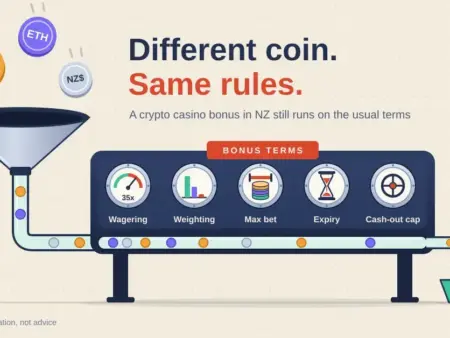
- Maximum bet rules, game weighting, expiry dates, excluded payment methods and maximum-cashout caps all change an offer’s real value.
- Under New Zealand’s Online Casino Gambling Act 2026 (in force 1 May 2026), advertising of online casino offers to New Zealanders is restricted during the transition to a licensed market.
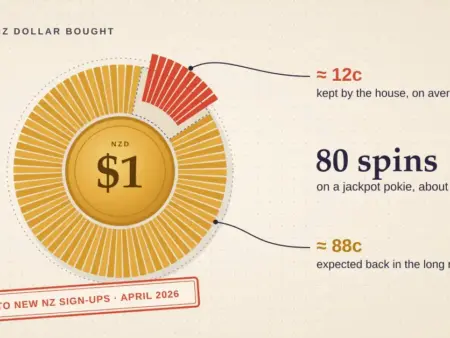
- No bonus changes a game’s odds or house edge; reloads extend play, they do not improve your chances of winning.
What a reload bonus actually is
A reload bonus rewards a repeat deposit. Where a welcome (or sign-up) offer applies to your very first payment, a reload applies to a later top-up — a “reload” of your account. Mechanically it is a form of deposit-match bonus: the operator credits bonus funds equal to a set percentage of the money you put in, usually up to a capped amount.
The practical difference is cadence. Welcome offers are one-time events, while reloads are intended to recur — often on a weekly, weekend or monthly schedule, and frequently tied to a loyalty tier. Because they repeat, individual reloads are usually smaller than a headline welcome package, but the terms attached to them can be either friendlier or stricter, so each offer has to be judged on its own fine print rather than on the percentage alone.
How reload bonuses are structured
Nearly every reload offer is built from the same handful of parts. Reading them in order tells you what the bonus is really worth before you deposit:
- Match percentage: The share of your deposit added as bonus funds. Reloads commonly sit in the 25%–100% range, lower than a typical first-deposit match.
- Minimum qualifying deposit: The smallest top-up that triggers the offer, often around NZ$10–$20. Deposit less and the bonus simply will not apply.
- Maximum bonus amount: A cap on the extra funds. A “100% up to NZ$100” reload gives no more than NZ$100 of bonus no matter how much you deposit.
- Opt-in or bonus code: Many reloads must be activated — by ticking a box, entering a code, or clicking a link — before you deposit. Depositing first can forfeit the offer entirely.
- Eligible games and wagering: The rules that decide whether and how bonus funds can ever become withdrawable cash, covered in the next section.
Wagering requirements and the real value of a reload
The single most important term on any reload is its wagering requirement (also called rollover or playthrough). It states how many times the bonus must be bet before it, and anything won from it, can be withdrawn. Our full explainer on wagering requirements covers the detail, but a short worked example shows why the headline percentage can be misleading.
Imagine a 50% reload on an NZ$50 deposit, giving NZ$25 in bonus funds, with 35x wagering. If the requirement applies to the bonus only, you must place NZ$25 × 35 = NZ$875 in bets before cashing out. If it applies to deposit plus bonus, the figure becomes (NZ$50 + NZ$25) × 35 = NZ$2,625 — three times the turnover for the same NZ$25. A smaller match with low wagering is therefore often better value than a large match buried under a high multiplier, which is why some players specifically seek out low-wagering casinos.
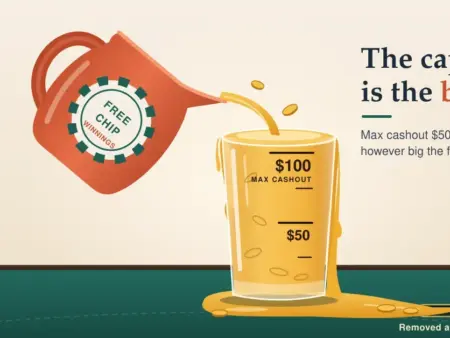
Two related terms change the maths again. Game weighting sets how much each game type counts toward the requirement — pokies usually count 100%, while table games such as blackjack may count 10% or nothing at all. A maximum cashout clause can cap how much of your bonus winnings you are allowed to withdraw, regardless of how much you actually win.
Common reload formats
“Reload bonus” is an umbrella term. The same basic mechanic appears in several recurring formats, each with a different trigger and rhythm.
Weekly reloads
A fixed offer that resets every week — for example a set match on your first deposit each Monday. These are the most predictable type and are easy to plan around because the terms rarely change week to week.
Weekend reloads
Promotions timed for Friday to Sunday, when player activity is highest. Our guide to weekend casino bonuses looks at these in more depth; the key point is that a weekend window is short, so the opt-in and expiry timing matter more than usual.
Midweek and “reload of the day”
Smaller, frequent boosts used to spread activity across quieter days. Values tend to be modest, and some are delivered as free spins on a named pokie rather than a cash match.
VIP and loyalty reloads
Higher-tier players are sometimes offered bespoke reloads with better percentages or lower wagering than the public version. These are usually linked to a rewards scheme — see how casino loyalty points accumulate — and are automated rather than advertised openly.
Crypto and payment-specific reloads
Some offers apply only when you deposit with a particular method. Just as often, certain methods are excluded: e-wallets such as Neteller and Skrill are frequently barred from qualifying for bonuses, so the small print on payment methods is worth checking before you fund the account.
Reload bonuses compared with other promotions
Reloads are only one entry in a casino’s promotional menu, and they are not automatically the best deal. The table below sets out how the main bonus types typically differ so you can see where a reload fits. Figures are general ranges for illustration, not an offer from any operator — actual terms vary site by site.
Bonus Type Comparison
| Bonus type | Typical trigger | Usual value (illustrative) | Wagering tendency | Best suited to |
|---|---|---|---|---|
| Welcome bonus | First deposit only | 100%–200%, larger caps | Moderate to high | New players making a first deposit |
| Reload bonus | Later top-ups, recurring | 25%–100%, smaller caps | Varies; often mid-range | Regular depositors on a budget |
| Weekend reload | Friday–Sunday deposits | 25%–75% | Short window, standard rollover | Weekend players who opt in on time |
| Cashback | Net losses over a period | 5%–20% of losses | Low or none | Players who prefer loss-based rebates |
| No-deposit bonus | Sign-up, no payment | Small fixed amount or spins | High, with tight win caps | Cautious players testing a site |
| Free spins | Deposit or promo-linked | Set number on named pokies | Depends; some carry none | Pokies players wanting extra rounds |
In short, a welcome bonus is usually the largest one-off boost, a no-deposit bonus is the lowest-risk taster but comes with the tightest caps, and a reload is the workhorse that rewards ongoing deposits. No bonus type changes the underlying odds of the games; they only change how long a given bankroll lasts.
Reading the fine print before you claim
A high match percentage means little if the conditions make the bonus hard to use. Before opting in, it is worth checking each of the following, which are the clauses that most often catch players out:
- Maximum bet while a bonus is active: Often capped at NZ$5–$10 per spin or hand. Exceeding it can void the bonus and any winnings from it.
- Game weighting: Confirm your preferred games contribute 100% toward the requirement; many table and live games count for far less.
- Expiry: Reloads commonly lapse within 7–14 days. Unused bonus funds and any attached spins simply disappear after that.
- Excluded payment methods: Check whether your deposit method qualifies at all, as some are ineligible for promotions.
- Sticky vs non-sticky: With a non-sticky bonus your own cash and the bonus stay separate, so you can withdraw real-money winnings without clearing the bonus first; a sticky bonus locks the two together until wagering is met.
- Maximum cashout: Note any cap on how much of your bonus-derived winnings you are allowed to withdraw.
Reload bonuses and New Zealand’s new online-gambling rules
How reload offers reach New Zealanders is changing, and any current guide has to reflect that. For years online casinos serving New Zealand operated from offshore under foreign licences because domestic law did not provide for licensed online casino gambling. That position has now shifted. New Zealand’s Online Casino Gambling Act 2026 came into force on 1 May 2026, with the Department of Internal Affairs (DIA) as the regulator. Our overview of New Zealand’s gambling laws tracks the wider framework.
A few features of the new regime are directly relevant to bonuses:
- A capped, licensed market: Up to 15 licences are being issued through a competitive process run by the DIA, with the licensed market expected to be operating from 2027.
- A transition deadline: Offshore providers that have not applied for a licence must stop offering online casino gambling to New Zealanders from 1 December 2026.
- Advertising restrictions: Advertising of online casino gambling to New Zealand customers is currently restricted during the transition, so you may see far fewer public bonus promotions than in previous years.
- Player-protection duties: Licensed operators are expected to offer harm-minimisation tools such as deposit and spending limits and self-exclusion, and to meet consumer-protection and integrity standards set in the regulations.
The practical takeaway is that the aggressive, heavily advertised reload offers common in loosely regulated markets are not the model New Zealand is moving toward. Treat any current offer with extra care, and expect the availability and promotion of bonuses to keep changing as licences are granted.
Responsible play and the limits of any bonus
It is easy to read a reload as “free money”, but that framing is misleading. Bonus funds extend how long a bankroll lasts; they do not improve the odds of a game or reduce its built-in house edge. Over time the mathematics of casino games favours the operator whether or not a bonus is attached.
A sensible approach treats a reload purely as entertainment value. Set a deposit limit before you play, decide in advance what you are willing to spend, and never deposit money specifically to chase a bonus or to recover a loss. If meeting a wagering requirement would mean betting more than you are comfortable losing, the honest conclusion is that the bonus is not worth claiming.
Who a reload bonus suits — and who should skip it
Reload bonuses make most sense for players who were going to deposit regularly anyway and who read terms carefully. For that group, a modest match with fair wagering genuinely stretches a planned budget. They make far less sense for occasional players, for anyone who finds the conditions confusing, or for anyone tempted to deposit more than planned just to qualify.
- May suit: regular players who already deposit on a schedule, compare terms, and stick to a fixed budget.
- Usually not worth it: one-off or casual players, those who dislike wagering requirements, and anyone whose play is already feeling like a way to win money back.
Responsible Gambling and a Note on New Zealand Rules
This article is general information, not advice, and it is not an encouragement to gamble. Online gambling is for adults only and carries real financial risk; the odds of casino games favour the operator over time. Bonuses do not change that. New Zealand’s online casino market is in transition under the Online Casino Gambling Act 2026, and the availability and promotion of offers is restricted during this period. If gambling is causing harm to you or someone you know, free, confidential support is available 24/7 from the New Zealand Gambling Helpline on 0800 654 655, which can also help arrange venue or multi-venue self-exclusion.
Sources
Frequently Asked Questions
Are reload bonuses only for new players?
No. Reload bonuses are the opposite of a welcome offer: they are aimed at existing customers and apply to deposits you make after sign-up. A welcome bonus is a one-time offer for your first deposit, while reloads are intended to recur, for example weekly or at weekends, to reward continued play.
How is a reload bonus different from a welcome bonus?
A welcome bonus applies once, to your first deposit, and is usually the largest match on offer. A reload applies to later top-ups and is typically smaller but repeatable. The two can have very different wagering terms, so a reload is not simply a smaller copy of the welcome deal and should be judged on its own conditions.
Do reload bonuses improve my chances of winning?
No. A bonus only adds funds to play with; it does not change a game’s return-to-player percentage or its house edge. Extra bonus money lets you play longer, but over time the maths of casino games still favours the operator, with or without a bonus.
What counts as a fair wagering requirement on a reload?
There is no fixed number, but lower is better and how the requirement is calculated matters as much as the figure. A requirement that applies to the bonus only is friendlier than one applied to deposit plus bonus, and you should also check game weighting, maximum bet limits, expiry dates and any maximum cashout cap, because each of those affects whether the bonus is realistically clearable.
Can New Zealand players still get reload bonuses right now?
The market is changing. New Zealand’s Online Casino Gambling Act 2026 came into force on 1 May 2026, the Department of Internal Affairs is issuing a limited number of licences, and advertising of online casino offers to New Zealanders is restricted during the transition. Offshore providers that have not applied for a licence must stop serving New Zealanders from 1 December 2026, so the range and visibility of reload offers is expected to keep shifting as the licensed market takes shape.
Recent Gambling News