Keno is one of the few gambling products aimed at players here that is actually run from inside the country. It is operated by Lotto New Zealand — the state-owned operator behind Lotto and Powerball — under a licence issued through the Gambling Act 2003, with published rules, independently audited draws and a fixed prize table. That sets it apart from most of what this site covers, which is offshore online casinos holding no local licence at all.
This page explains the game rather than duplicating a results feed we cannot keep current: how a draw works, what a “spot” is, the real odds, what the optional multiplier does, where to play, and how to check and claim a result. For live winning numbers and prize breakdowns, MyLotto is the official source — results appear there immediately after each draw, and it is the only record a retailer will pay against.
How Keno works in New Zealand
Keno is a numbers game. Twenty balls are drawn from a pool of eighty, and your ticket wins or loses on how many of your chosen numbers appear among those twenty. Everything else — the odds you face and the prize you stand to win — flows from one decision you make before the draw.
Quick Facts
| Operator | Lotto New Zealand (state-owned), licensed under the Gambling Act 2003 |
| Draws | Four times daily — currently about 10:00 am, 1:00 pm, 3:00 pm and 6:00 pm |
| The draw | 20 numbers drawn at random from a pool of 80 |
| Your ticket | Choose a “spot” of 1 to 10 numbers and a stake per line (from $1); multi-draw enters several draws in advance |
| Top prize | $250,000 for matching 10 of 10 on a $1 ten-spot line |
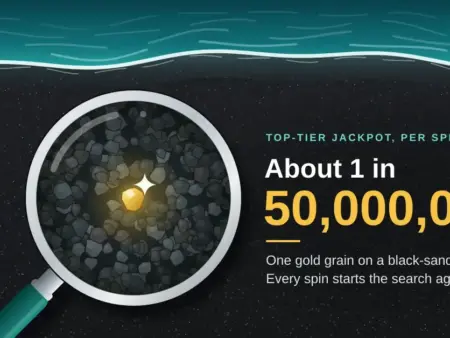
| Odds of the top prize | About 1 in 8.9 million (roughly 1 in 8,911,711) |
| Multiplier | Optional paid add-on that multiplies a winning prize; does not change the odds |
| Where to play | MyLotto online and app, and at Lotto NZ retailers with Keno terminals |
| Minimum age | 18 to hold a MyLotto account |
| Prizes & tax | Prizes untaxed; interest earned on a prize is taxable; unclaimed prizes forfeited after 12 months |
The 80-number grid and the 20-ball draw
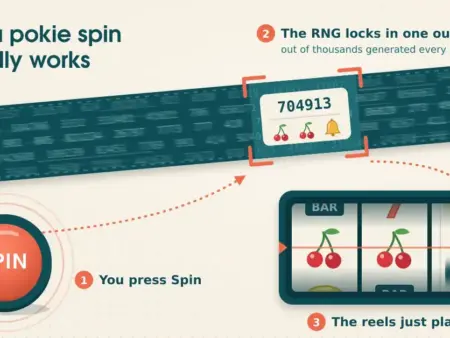
A Keno coupon shows the numbers 1 to 80. Each draw, Lotto New Zealand’s system randomly selects twenty of them. There is no jackpot that rolls over and no shared pool to split — Keno is a fixed-odds game, meaning the prize for each winning outcome is set in advance and published, not decided by how many other people played or won.
Spots, lines and stakes
Before you buy, you choose two things. First, how many numbers to play — a “spot” of one to ten. A three-spot line plays three numbers; a ten-spot line plays ten. Second, how much to stake per line, from a minimum of a dollar upward. Those two choices together fix your odds and the size of every prize on that line. You can play several lines on one ticket, and “multi-draw” lets you enter the same numbers into a run of upcoming draws in advance.
The detail that trips people up
How many numbers you need to match to win depends entirely on the spot you chose. Match three numbers on a six-spot line and you win. Match the same three on a ten-spot line and you win nothing. The same three matched balls can be a prize on one ticket and worthless on another.
This is why there is no single “Keno payout.” Each spot has its own match-and-win table with its own odds and its own prizes. Read the table for the spot you are playing before you buy — it is the only reliable guide to what counts as a win on your ticket, and on some spots you can even collect a small prize for matching very few of the drawn numbers.
The “every four minutes” figure is wrong for this country
Some pages claim Keno draws every four minutes from early morning to midnight, producing well over 250 draws a day. That describes keno in other markets — several US state lotteries run rapid-fire draws like that — not the game run by Lotto New Zealand, which holds four scheduled draws a day. If a page quotes the four-minute figure, it is not describing the game you are actually playing here.
Draw times and how often Keno runs
At the time of writing, Lotto New Zealand runs four Keno draws every day, currently at approximately 10:00 am, 1:00 pm, 3:00 pm and 6:00 pm. Entry for a draw stays open right up until it closes, and the next draw is available immediately afterward, so there is rarely a wait to play again. Because draw times can be adjusted, confirm the current schedule on MyLotto before planning around it.
The odds, and what choosing a spot actually does
Matching all ten numbers on a ten-spot line is roughly 1 in 8.9 million (about 1 in 8,911,711, for the arithmetic-minded). That outcome pays a fixed $250,000 for every $1 staked — the game’s top prize. For perspective, those are longer odds than taking Lotto First Division.
A low spot wins often and pays little; a high spot rarely and big
Choosing your spot does not change whether you come out ahead over time — it changes the shape of the result. A one-spot or two-spot line hits frequently and returns a small multiple of the stake. A ten-spot line almost never reaches its top tier but pays enormously on the rare occasion it does. Neither is the smarter bet: each spot carries its own published odds and prize scale, and the operator’s margin is built into every one of them. Picking a spot selects how you would prefer the losses to arrive — slowly and steadily, or rarely and dramatically — not whether they arrive.
Keno is one of the poorer-value products available
As a game class, keno carries one of the highest house edges of any common gambling product. The “house edge” is the share of money wagered that the operator keeps on average over time; the mirror figure is return to player (RTP), the share paid back out. Keno’s RTP is typically far lower than a slot machine’s and dramatically lower than blackjack played with correct strategy. The comparison below puts those figures side by side; our guide to how online casino algorithms work explains where numbers like these come from.
House Edge Compared
Typical, illustrative figures for how much each game class returns to players over time. Actual returns vary by paytable, variant and operator; keno figures in particular depend heavily on the spot and prize table. “RTP” is the average share of wagers paid back; “house edge” is the share kept.
| Game | Typical RTP | Typical house edge | Notes |
|---|---|---|---|
| Keno (as a game class) | Roughly 65–80% | Roughly 20–35% | Among the highest house edges of any common gambling product; varies a lot by spot and paytable |
| Slot machines / pokies | Roughly 90–96% | Roughly 4–10% | Online slots usually sit near the top of that range; venue machines lower |
| European roulette | About 97.3% | About 2.7% | Fixed by the single-zero wheel layout |
| Blackjack (basic strategy) | About 99%+ | Under 1% | Requires playing each hand with correct strategy; errors raise the edge |
Lotto New Zealand publishes odds and prizes for each spot rather than a single return figure, so read the table for the spot you are playing and treat the ticket price as the cost of the entertainment — because, on average, that is what it is.
No selection method changes any of it
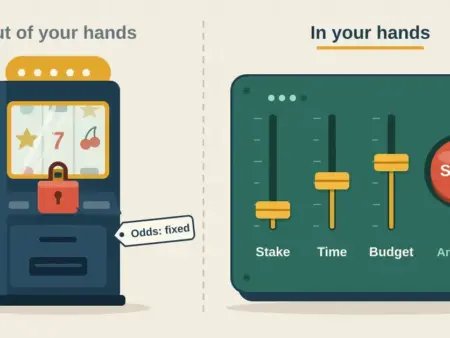
Advice to play “four to eight” numbers, buy multiple cards, or split a bankroll across several spots is presented as strategy. It is not. Keno is a fixed-odds game with a published prize table and a random draw: the table and the draw mechanics determine the return, and no selection method moves it. Playing more tickets does not improve your odds — it stakes more money at the same odds.
Hot and cold numbers tell you nothing
Frequency data from past draws — which numbers have appeared most and least — is genuinely interesting to browse, and it has no predictive value whatsoever. Each draw is independent. A ball that has come up six times this week is exactly as likely next draw as one that has not appeared all month. The machine has no memory of the last draw, and neither do the balls.
Why some numbers always look “hot”
Over any short run, some numbers will always appear more often than others. That clumping is what randomness actually looks like, not a signal hidden inside it. A perfectly even spread over a small number of draws would be the surprising result; uneven spread is the expected one.
Check the date on any list you are shown
Hot-and-cold lists are frequently published once and never updated. A list labelled “the last 30 draws” on a page last edited a year ago is not describing the last thirty draws — and at four draws a day, thirty draws is about a week of play. A stale list presented as current data is worse than no list, because it looks like information. If you enjoy the history, Lotto New Zealand publishes full draw archives; just read them as a record of what happened, not a guide to what will.
The multiplier add-on
The multiplier is an optional extra you pay for that can increase a winning prize on your line. It is applied to the draw and multiplies any prize that line wins; it does not change which numbers are drawn, your odds of matching them, or whether the line wins at all. Like everything else on the ticket, it adds to the cost at the same underlying odds. The exact multiplier values and what the add-on costs are set by Lotto New Zealand and shown at the point of purchase — check them on MyLotto rather than relying on a third-party summary.
Where to play, and how to check results
Online with MyLotto
MyLotto is the official platform. The website and app let you pick numbers or take a Quick Pick, enter one draw or several, scan a paper ticket to check it, and see winning numbers after each draw. An online account requires you to be 18 or older, and setting one up involves the usual identity and payment verification.
In person at retailers
Keno is also sold at Lotto NZ retailers — supermarkets, dairies and self-service terminals. Staff can print a ticket, and can check an existing ticket against the latest draw.
Checking and claiming a win
MyLotto publishes winning numbers and prize breakdowns for every draw. Third-party sites republish them, but for anything that matters — confirming a win or checking a prize tier — use the official source. Republished results carry no guarantee and are not what a retailer will pay against. How a prize is paid depends on its size: smaller amounts can be credited or paid at a retailer, while larger prizes are claimed directly through Lotto New Zealand.
Tax, benefits and unclaimed prizes
In New Zealand, lottery prizes are not taxed — a win from Lotto NZ is not treated as income for a New Zealand tax resident. However, any interest or investment income you earn on a prize is taxable in the normal way, so a large win parked in a bank account will generate taxable interest. Our overview of gambling and tax in New Zealand covers the wider picture.
If you receive a benefit, Work and Income has separate guidance on declaring one-off payments such as a lottery win, so it is worth checking how a prize interacts with any entitlement. Separately, prizes not claimed within 12 months of the draw are forfeited and returned to the Prize Reserve Fund, so a winning ticket is not valid indefinitely.
Keno here, and keno at an offshore casino
Keno sits a little oddly on a site about online casinos, and it is worth being straight about why. The game described on this page is a New Zealand product, run by a New Zealand operator, under New Zealand law, with prizes paid in New Zealand dollars and draws audited independently. That places it alongside licensed domestic gambling such as the land-based SkyCity Auckland casino, and apart from the offshore operators that make up most of this site. How those different categories are treated is set out in our guide to New Zealand gambling law.
The keno-style games in an offshore casino lobby are a different product entirely. They share a name and a grid of eighty numbers, and nothing else that matters. They do not share the published prize table, the audited draw, the domestic regulator or the recourse. Odds and returns vary by studio and are set by the game supplier, not by Lotto NZ. Do not read anything on this page across to one of those — they are not the same game.
Playing within your limits
Four draws a day, entry open right up to each one, and the next draw available immediately make Keno a product designed for frequent play. A spend that accumulates in small amounts across a day is easy not to notice, which is worth being aware of before you start.
Because Lotto NZ is a licensed domestic operator, the spend limits and self-exclusion tools it offers through MyLotto work as promised — it is required to honour them. That is a meaningful difference from an offshore site, where the same tools depend on the operator choosing to respect them. Our self-exclusion guide covers bank blocks, device-blocking software and the venue exclusion scheme available here.
Free, confidential support is available in New Zealand around the clock. The Gambling Helpline is open 24 hours a day on 0800 654 655 or by free text to 8006, and supports whānau and friends as well as the person gambling. PGF Services, on 0800 664 262, offers free counselling and financial mentoring during business hours on weekdays.
Disclaimer
This page is published for information. It is not financial, legal, tax or gambling advice, and nothing on it is a recommendation to play. You must be 18 or older to hold a MyLotto account.
Nothing here improves anyone’s chance of winning. Keno is a fixed-odds game of chance with a negative expected return. No number selection, spot choice, multi-card arrangement or staking pattern alters the odds of any draw, and as a game class keno carries one of the highest house edges of any common gambling product.
This is not a results service. Draw times, prize tables, odds and game rules can change — confirm them on Lotto New Zealand’s own site. Republished results carry no guarantee and are not what a retailer will pay against; for anything that matters, confirm a win against the official source. Set a limit before you start. Free, confidential support is available in New Zealand 24 hours a day on 0800 654 655, or by free text to 8006.
Sources
Official game information, regulator guidance, legislation and New Zealand support services. No link below goes to an offshore gambling operator.
- MyLotto — Keno results, prize tables and draw archive — Lotto New Zealand’s official channel, and the only source a retailer will pay against.
- Lotto New Zealand — playing responsibly, limits and self-exclusion — the operator’s own tools, which work because it is a licensed domestic operator required to honour them.
- DIA — gambling in New Zealand, and how lotteries are regulated — Department of Internal Affairs.
- Gambling Act 2003 — New Zealand Legislation, under which Lotto New Zealand operates.
- Wizard of Odds — keno mathematics and house edge — how spot selection, prize tables and the operator’s margin interact.
- Work and Income — declaring lottery and gambling wins while on a benefit — prizes are untaxed, but a benefit has separate reporting rules.
- Inland Revenue — Te Tari Taake — on the tax treatment of prizes, and of interest earned on them.
- Safer Gambling Aotearoa — Health New Zealand | Te Whatu Ora.
- PGF Services — free counselling and financial mentoring, including for whānau and friends.
- Gambling Helpline Aotearoa New Zealand — free, confidential support, 24 hours a day.
Frequently Asked Questions
What time are the Keno draws in New Zealand?
Lotto New Zealand currently runs four draws a day, at approximately 10:00 am, 1:00 pm, 3:00 pm and 6:00 pm. Entry closes at draw time and you can enter the next draw immediately. Draw times can change, so confirm the current schedule on MyLotto.
What are the odds of matching all 10 numbers?
Roughly 1 in 8.9 million (about 1 in 8,911,711) on a ten-spot line. That outcome pays a fixed $250,000 for every $1 staked, which is the game’s top prize.
Is there a strategy that improves my chances?
No. Keno is a fixed-odds game with a published prize table and a random draw. Choosing fewer or more spots changes the shape of the outcome, not the expected return, and hot-and-cold numbers have no predictive value because each draw is independent. Playing more tickets simply stakes more money at the same odds.
Are Keno winnings taxed in New Zealand?
Lottery prizes are not taxed here for a New Zealand tax resident, though any interest or investment income you earn on a prize is taxable. If you receive a benefit, Work and Income has separate guidance on declaring one-off payments, and prizes not claimed within 12 months are forfeited.
Is Keno here the same as an online casino keno game?
No. Keno here is run by Lotto New Zealand under New Zealand law with a published prize table and independently audited draws. Keno-style games at offshore operators only share the name and the grid of eighty numbers; their odds and returns are set by the game supplier and carry no domestic oversight or recourse.