Learn how to play blackjack with our expert NZ guide. Master the rules, card values, and basic strategy to play at top NZD online casinos safely.

How to Play Blackjack: Rules, Strategy and NZ Guide

Blackjack is the one casino game where your own decisions genuinely change what you pay to play. At a good table, played correctly, the house edge drops below half a percent — the best deal available anywhere in an online casino.
Three things decide whether you actually get that deal, and only one of them is about how you play your cards. This guide walks through all three: the table rules that set your edge before you touch a card, the bets that quietly undo everything, and the strategy that gets the number as low as it goes.
The rules that set your edge
Before any strategy matters, the table itself decides most of your edge. Two games that look identical can cost very different amounts, because the printed rules change the maths. The single biggest one is the blackjack payout: a table that pays 3:2 on a natural returns $30 on a $20 bet, while a 6:5 table returns only $24 for the same win. That one change adds roughly 1.4% to the house edge — several times the entire cost of a good game.
Every online blackjack game has an information or rules button, usually a question mark or an “i” in a corner. It lists the payout, the dealer’s soft-17 rule, the number of decks and whether doubling after splits and surrender are allowed. Thirty seconds reading that panel is worth more than any amount of strategy practice, because perfect play at a bad table loses more than sloppy play at a good one.
Table rules and the house edge
| Table rule | Effect on the house edge | What to look for |
|---|---|---|
| Blackjack pays 6:5 instead of 3:2 | adds roughly 1.4% | 3:2 — always |
| Dealer hits a soft 17 | adds about 0.2% | Dealer stands on all 17s |
| No doubling allowed after a split | adds about 0.14% | Doubling after split allowed |
| No surrender option | adds about 0.08% | Late surrender available |
| More decks in the shoe | adds a little with each | Fewer decks, all else equal |
What the numbers look like: a favourable eight-deck game where the dealer stands on all 17s, doubling after splits is allowed and surrender is offered runs at roughly 0.36% against perfect basic strategy. The same table paying 6:5 on a blackjack runs closer to 1.8% — about five times the cost, for a rule most players never check.
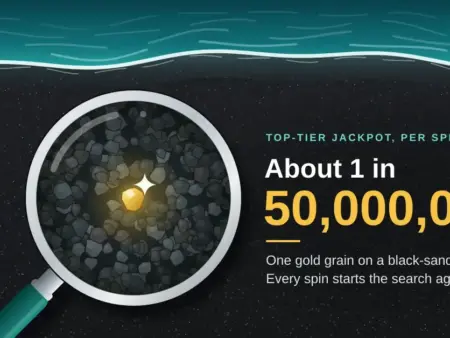
To put those figures in context: a 0.5% edge is remarkable next to a pokie at around 4% or a progressive jackpot game nearer 12%. Our guide to how online casino algorithms work sets those numbers alongside each other. But 0.5% is still an edge, it still applies to every hand, and every figure here is a long-run average across huge numbers of hands — not a prediction of any single session.
Side bets and insurance: the bets to skip
Almost every online blackjack table offers extra wagers alongside the main hand — a small circle marked with a name like 21+3, Perfect Pairs or Any Pair. They are optional, they are heavily promoted, and they are the most expensive thing on the felt. Where the main hand costs around half a percent, these typically run several percent against you.
Bets to skip
| What you are betting on | Approximate house edge |
|---|---|
| The main blackjack hand (good rules) | around 0.5% |
| Typical side bets (21+3, Perfect Pairs, Any Pair) | roughly 2% to 8%, depending on the bet and deck count |
| Insurance, and “even money” | roughly 7.5% in a six-deck game |
A side bet can cost ten times what the hand beside it costs. Placing one on every hand does more damage to your balance than every basic-strategy error combined. The simple rule is to play the hand and skip the extras.
Why do they exist? Blackjack is the cheapest game in the lobby, which makes it the least profitable one for the operator. Side bets are how that gets corrected — a high-edge wager bolted onto a low-edge game and offered to a player who has already sat down. They pay out rarely and generously, which is exactly the shape that feels exciting and costs the most over time.
Insurance belongs in the same category. It is offered as protection when the dealer shows an Ace, but it is simply a separate side bet at roughly 7.5% against you in a six-deck game. Decline it every time — including when you hold a blackjack yourself and are offered “even money”, which is the identical bet under a friendlier name. If you enjoy side bets occasionally, that is a legitimate choice; just treat them as a separate, more expensive game, and decide what you will spend on them before you sit down.
How the game is played
Card values. Cards 2 through 10 count at face value, picture cards (Jack, Queen, King) count as 10, and an Ace counts as either 1 or 11 — whichever helps your hand.
The aim is to beat the dealer without going over 21. You are not playing against the other seats at the table, and their decisions never affect your own hand.
A natural blackjack — an Ace plus any ten-value card on your first two cards — pays 3:2 at a good table. A $20 bet returns $30 in winnings.
Hard and soft hands. A soft hand counts an Ace as 11, so Ace-6 is a “soft 17” and you cannot bust by taking one more card. A hard 17 is something like 10-7, where one more card can bust you. This distinction drives most strategy decisions, so it is worth getting straight early.
The dealer must hit on 16 or lower and stand on 17 or higher — they have no choices to make. Some tables have the dealer hit a soft 17, which costs you about 0.2% more.
Your own options on each hand are:
- Hit — take another card.
- Stand — keep your total and end your turn.
- Double down — double your bet for exactly one more card.
- Split — separate a pair into two hands, each with its own bet.
- Surrender — where offered, give up the hand for half your bet back.
Basic strategy
Basic strategy is not a theory or a betting system. It is the mathematically correct play for every combination of your hand and the dealer’s upcard, derived from a complete calculation of the game. Followed exactly, it reduces the house edge to the low figures quoted above; ignored, it hands several percent back to the casino.
The core decisions cover most hands:
- Hit a hard 8 or lower.
- Stand on a hard 17 or higher.
- Double on a hard 11.
- Double on a hard 10 unless the dealer shows a 10 or an Ace.
- Stand on hard 13–16 when the dealer shows 4, 5 or 6.
- Hit hard 12–16 when the dealer shows 7 or higher.
Splitting has a few rules worth memorising:
- Always split Aces — two Aces as one hand is only a soft 12, but split they become two live hands.
- Always split 8s — a hard 16 is the worst hand in the game, so breaking it up is an improvement.
- Never split 10s — a 20 is very strong, so do not break it.
- Never split 5s — a pair of 5s is really a 10, and a good hand to double on instead.
Hard 12 is the exception inside the 12–16 range. Stand against a dealer 4, 5 or 6, but hit against a 2 or 3. It is the most commonly simplified-away rule in short strategy lists, and it is worth carrying separately.
Why the dealer’s upcard matters. Showing a 4, 5 or 6, the dealer busts most often, so you stand and let them take the risk. Showing a 7 or higher, the dealer is strong and you have to build a hand of your own. That is why “stand on 16 against a dealer 7” feels safe and quietly costs money — the maths says hit.
Print a chart. The core rules above cover the majority of hands, but a full basic-strategy chart covers all of them, including every soft total and pair. Generating one that matches your exact table rules takes about a minute, and keeping it beside you while you learn removes the guesswork entirely.
Card counting and betting systems
The question everyone asks is whether you can count cards. The honest answer for online play is no — and it is worth understanding exactly why, because a lot of products are sold on the opposite claim.
Counting itself is real. It is the one genuine advantage technique in casino gambling, it is not cheating, and it has been documented and taught for sixty years. At a physical table, cards are dealt from a shoe that is not reshuffled after every hand. As high cards leave the shoe the remaining deck gets worse for the player; as low cards leave, it gets better. Tracking that shift lets a skilled player bet more when the odds have moved in their favour, which over a long enough run can turn a small disadvantage into a small edge.
None of that survives online. There are two formats, and the door closes in both:
- Software (RNG) blackjack reshuffles the entire virtual shoe before every single hand. There is no depletion to track because the composition resets each time — the count is always zero.
- Live dealer blackjack streams a real table, but studios use continuous shuffling machines or shuffle at a shallow penetration point that leaves nothing worth counting. The cards are real; the countable advantage is not there.
Treat anything sold as an online counting “system” accordingly. The reshuffle is not a difficulty to be overcome — it removes the thing being counted. The same applies to progressive betting patterns such as doubling your stake after a loss: they change how your losses are distributed across a session, not how large they are. No sequence of bet sizes alters the house edge on the next hand. Our live casino guide explains how those streamed tables actually work.
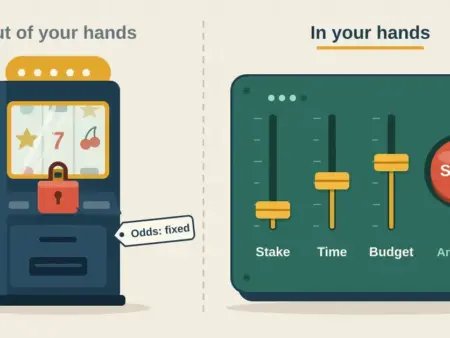
What is genuinely in your control is short and worth more than any system:
- Choosing a 3:2 table — worth about 1.4%, the single biggest decision you make.
- Playing basic strategy correctly — worth roughly 1.5% against playing by instinct.
- Declining insurance and side bets — worth several percent on every hand you skip them.
- Deciding your budget before you start — worth more than all of the above combined.
Playing blackjack in New Zealand
RNG blackjack deals instantly, accepts very low stakes and is the right place to practise strategy. Live dealer blackjack streams a real table and feels closer to a venue, usually with higher minimum bets. Demo mode is available on RNG tables and is the correct way to learn a chart before you wager anything; live tables have no demo mode.
One thing worth knowing about bonuses: blackjack usually contributes 10% or less toward wagering requirements, and is often excluded entirely. In practice a casino bonus is effectively a pokies bonus, so if blackjack is your game, declining the bonus is frequently the better decision. If you do want to play, our blackjack casinos guide covers where to find it.
On payments, POLi has been widely offered and connects to your bank without a card — by having you enter your internet-banking username and password into a third party’s interface. Consumer NZ has warned this probably breaches your bank’s terms and conditions, and the major New Zealand banks have told customers not to share their login details. Regulated open banking went live here on 1 December 2025 and keeps the authorisation inside your own bank’s app. Our casino deposit methods page covers the safer alternatives.
Where the law stands
Online casino gambling in New Zealand is governed by the Online Casino Gambling Act 2026, which came into force on 1 May 2026, with supporting regulations following on 3 July 2026. It is in force law — not a bill still before Parliament.
Expressions of interest opened on 17 July 2026 with a NZ$19,000 fee, followed by an auction and full applications, for up to fifteen licences. From 1 December 2026, operators that have not entered the process must stop serving New Zealanders, with civil penalties of up to NZ$5 million for companies; operators that did apply may keep serving customers until their application is decided or 1 July 2027, whichever comes first.
Licensed operators are expected to go live during 2027, alongside a public register, mandatory limit prompts and self-exclusion that must take effect within 24 hours. Our New Zealand gambling laws guide sets out the full timeline and what it means for players.
Staying in control
Decide your budget before you start, and keep each bet small relative to it — 2% to 5% is a common guideline, so $2 to $5 a hand on $100. That does not protect you from the edge; it decides how long a session lasts before the money is gone.
Chasing losses — raising your bets to recover a bad run — is the most expensive mistake available, and it is not a strategy error. It is the thing that turns a planned session into an unplanned one.
Set a deposit limit in your account rather than in your head, before you play rather than after a losing run. Our self-exclusion guide covers bank gambling blocks and device-blocking software, neither of which depends on any operator.
Free, confidential help is available in New Zealand at any hour: the Gambling Helpline on 0800 654 655 or free text 8006, and PGF Services on 0800 664 262. You must be 18 or older to gamble online in New Zealand, and 20 or older to enter the gambling floor of a New Zealand casino.
Disclaimer
This page is published for information only. It is not financial, legal or gambling advice, and nothing on it is a recommendation to gamble.
Basic strategy is not a way to win. It is the mathematically correct play for each hand, and it reduces the house edge to about half a percent at a good table — it does not remove it. Blackjack played perfectly still has a negative expected return on every hand, and no betting system, staking plan or online counting method changes that.
House-edge figures are long-run averages calculated from published rules, not predictions of any session, and every figure quoted assumes correct basic strategy throughout. Table rules, payouts, side bets and bonus terms vary by game and by operator — read the rules panel in the game you are actually playing rather than relying on any figure here. Gambling costs money over time by design; decide what you will spend before you start and treat it as spent.
Sources
- Wizard of Odds — blackjack basics and basic strategy — the rules, terminology and the standard chart.
- Wizard of Odds — basic strategy calculator — generates the correct chart for any rule set in about a minute.
- Wizard of Odds — house edge by rule set — source for the payout, soft-17, deck-count and surrender figures.
- Wizard of Odds — blackjack side bets and their house edges — 21+3, Perfect Pairs and the rest, bet by bet.
- Wizard of Odds — card counting: how it works and where it does not — including why reshuffling removes the effect entirely.
- Safer Gambling Aotearoa — how gambling works — odds, randomness and the house edge, from Health New Zealand | Te Whatu Ora.
- DIA — information for online casino customers — the licensing timetable and where the register will be published.
- DIA — online gambling licensing for providers — the three-stage process and the 1 December 2026 cut-off.
- Senet — New Zealand online casino gambling regulations 2026 — the harm-prevention requirements for licensed operators.
- Consumer NZ — POLi payments and your banking security — why sharing internet-banking credentials can breach your bank’s terms.
- BetBlocker — free device-blocking software, run by a registered charity.
- PGF Services — free counselling and financial mentoring, including for whānau and friends.
- Gambling Helpline Aotearoa New Zealand — free, confidential support, 24 hours a day.
Frequently Asked Questions
What is the lowest house edge I can get at blackjack?
Around 0.36% at a favourable eight-deck table with 3:2 payouts, the dealer standing on all 17s, doubling allowed after splits and surrender available — while playing perfect basic strategy. It is still a negative-expectation game, just the cheapest one in the casino.
Does a 6:5 payout really matter?
Yes. Paying 6:5 instead of 3:2 on a natural blackjack adds roughly 1.4% to the house edge — several times the total edge at a good table. Check the payout in the rules panel before you sit down.
Should I ever take insurance?
No. Insurance is a separate bet running roughly 7.5% against you in a six-deck game. Decline it every time, including the “even money” offered when you hold a blackjack — that is the same bet renamed.
Can I count cards at online blackjack?
No. Software blackjack reshuffles before every hand and live studios use continuous shufflers, so there is no card depletion to track. Anything sold as an online counting system is selling something that cannot work.
Does basic strategy mean I will win?
No. Basic strategy gets the house edge down to about half a percent at a good table, which is the best deal in the building, but every hand still carries a negative expected return. It saves money; it does not make it.
Recent Gambling News